

 Travel Essentials
 Travel Essentials

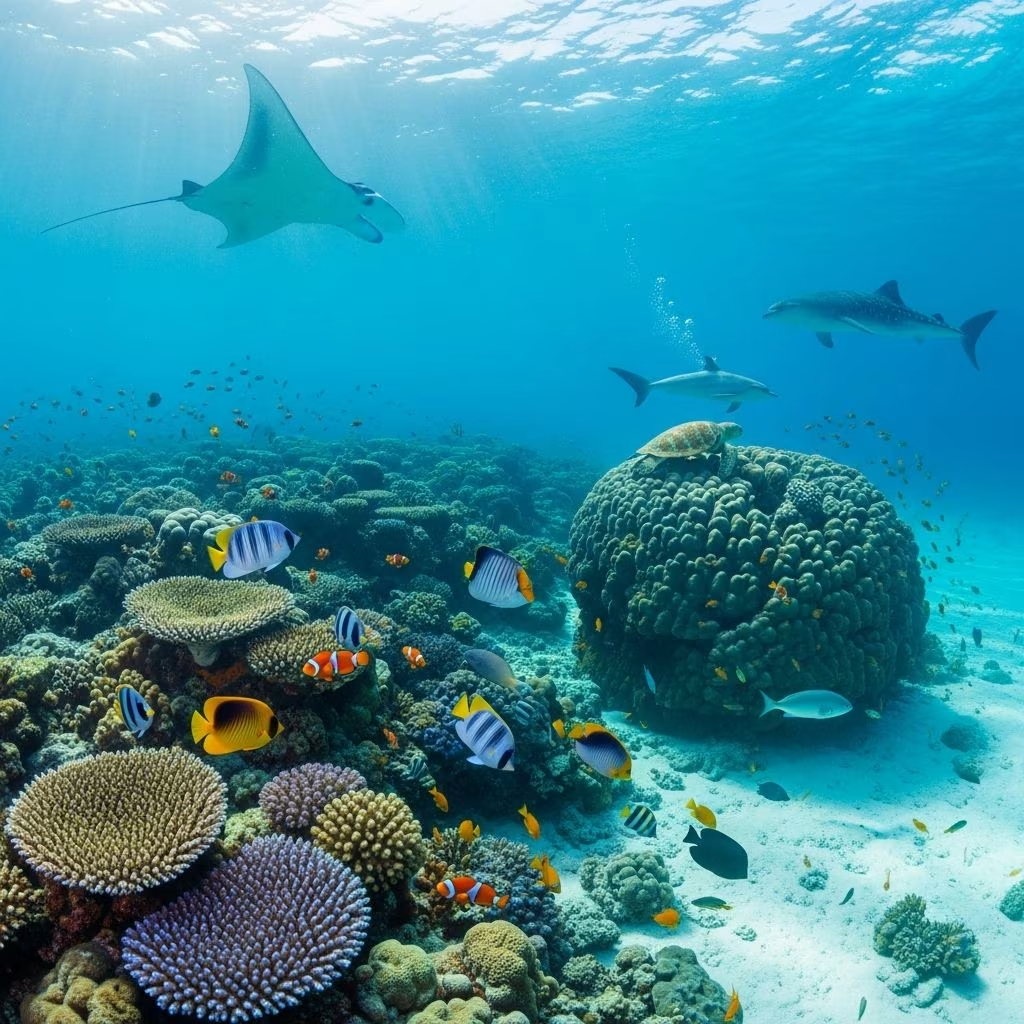
Explore the Maldives' rich aquatic life, including diverse coral reefs, colorful reef fish, sharks, rays, turtles, and conservation efforts preserving this Indian Ocean paradise.
 Travel Essentials
The Maldives, an archipelago of over 1,000 coral islands scattered across the Indian Ocean, harbors one of the planet’s most biodiverse marine environments. Crystal-clear lagoons and vibrant reefs support thousands of species, making it a premier destination for snorkelers and divers seeking immersive encounters with ocean life.
Coral reefs form the backbone of Maldivian marine ecosystems, often likened to underwater cities bustling with activity. These structures, built by tiny polyps over millennia, create habitats for countless organisms in the nutrient-rich waters stretching from East Africa to Indonesia.
The Maldives hosts more than 180 coral species, including brain, finger, plate, and staghorn varieties, forming the world’s seventh-largest reef system and fifth most diverse. Healthy reefs sustain over 2,000 fish species, crustaceans, and larger predators, while producing the white sands that define the islands’ beaches.
These reefs thrive in warm, shallow waters but face threats from warming oceans, underscoring the need for protective measures.
Beneath the waves, a kaleidoscope of reef fish brings the Maldives’ corals to life. Warm Indian Ocean currents deliver nutrients, attracting species that dart among branches and nibble on algae.
Common sights include orange clownfish hiding in sea anemones, neon-blue surgeonfish grazing on algae, and yellow snappers schooling in tight formations. Angelfish glide elegantly, while parrotfish—key architects of the ecosystem—munch coral skeletons, excreting sand that builds beaches. A single large parrotfish can produce up to 200 kg of sand annually.
| Fish Species | Distinctive Features | Ecological Role | Best Viewing Spots |
|---|---|---|---|
| Parrotfish | Vibrant colors, beak-like mouths | Sand production, algae control | House reefs, shallow lagoons |
| Picasso Triggerfish | Unique patterned markings | Territorial, reef aeration | Reef flats, lagoons |
| Clownfish | Orange with black stripes | Symbiotic with anemones | Coral bommies |
| Butterflyfish | Elongated snouts, spotted patterns | Coral polyp feeders | Fringing reefs |
Picasso triggerfish, with their fingerprint-like spots, defend territories aggressively, adding drama to dives. These fish not only dazzle but maintain reef health by controlling algae and invertebrates.
The whale shark, the ocean’s largest fish reaching 12 meters, epitomizes the Maldives’ megafauna. These filter-feeders cruise plankton-rich channels, their white-spotted skins unique as fingerprints.
Found year-round but peaking November to April, they gather at sites like South Ari Atoll. Peaceful and approachable, they pose no threat, making encounters magical for swimmers. UNESCO recognizes key aggregation areas, aiding conservation.
Manta rays, with wingspans up to 7 meters, perform balletic dances over cleaning stations. They visit reefs to have parasites removed by small fish, filtering plankton through cavernous mouths.
Hanifaru Bay in Baa Atoll is renowned for mass gatherings during manta seasons, where dozens converge in whirlpools of food. These encounters highlight the rays’ vulnerability, with populations protected under global agreements.
Five turtle species inhabit Maldivian waters, including green and hawksbill, thriving in seagrass beds and nesting on beaches. North Malé and Thaa Atolls offer prime viewing in protected lagoons.
Turtles graze leisurely, their slow pace a reminder of unhurried ocean life. Nesting sites demand careful observation to avoid disturbance during vulnerable egg-laying periods.
Over 20 shark species, from blacktip reef sharks to grey reefs, patrol Maldivian waters. Non-aggressive, they regulate fish populations, circling pinnacles and channels.
Night dives reveal nurse sharks resting on sandy bottoms, while oceanic whitetips venture deeper. Sharks underscore the food web’s balance, with tourism funding anti-finning initiatives.
Beyond megafauna, macro wonders captivate. Octopuses camouflage masterfully, squids jet through water, and giant clams anchor reefs with colorful mantles. Nudibranchs—sea slugs in electric hues—crawl delicately, while feather duster worms retract at shadows.
These small residents reveal upon close inspection, rewarding patient snorkelers with a micro-universe of intrigue.
Resorts like those in Sun Siyam offer house reefs for easy access.
Maldivian marine life faces bleaching, overfishing, and plastics. Government bans on reef fishing, marine protected areas (MPAs) covering 1% of waters, and NGO efforts like Manta Trust track populations.
Visitors contribute via reef-safe sunscreen, no-touch policies, and supporting eco-resorts. Recent bleaching events (e.g., 2016) highlight urgency, but resilient corals recover with reduced stress.
Snorkeling requires calm seas (dry season, November-April); rentals abound at resorts. Divers need PADI certification for deeper sites, with liveaboards accessing remote atolls.
Guided tours enhance safety and education.
Yes, shallow house reefs and lagoons suit novices, with guides available.
November to April, especially new moon phases in South Ari.
No, resident species are non-aggressive; attacks are virtually unknown.
Choose operators following no-touch, reef-safe practices.
Mask, snorkel, fins; buoyancy vests aid beginners.
