

 Travel Essentials
 Travel Essentials

Discover essential travel information for visiting the Maldives including climate patterns, accommodation options, transportation methods, and cultural considerations.
 Travel Essentials
The Maldives represents one of the world’s most coveted travel destinations, offering pristine beaches, vibrant marine ecosystems, and unparalleled luxury experiences. Comprising 26 coral atolls and over 1,100 islands spread across the Indian Ocean approximately 250 miles southwest of India, this tropical paradise attracts honeymooners, diving enthusiasts, and leisure travelers seeking ultimate relaxation. Before embarking on your journey to this island nation, understanding key practical information will help you maximize your experience and avoid common travel pitfalls.
The Maldives consists of a unique double chain formation of coral atolls stretching across the Indian Ocean. Rather than a single landmass, the nation comprises thousands of islands distributed across its 26 atolls, creating a distinctive archipelago structure. The capital city, Malé, serves as the primary entry point for most international travelers and represents the main hub for accessing resort islands and local communities.
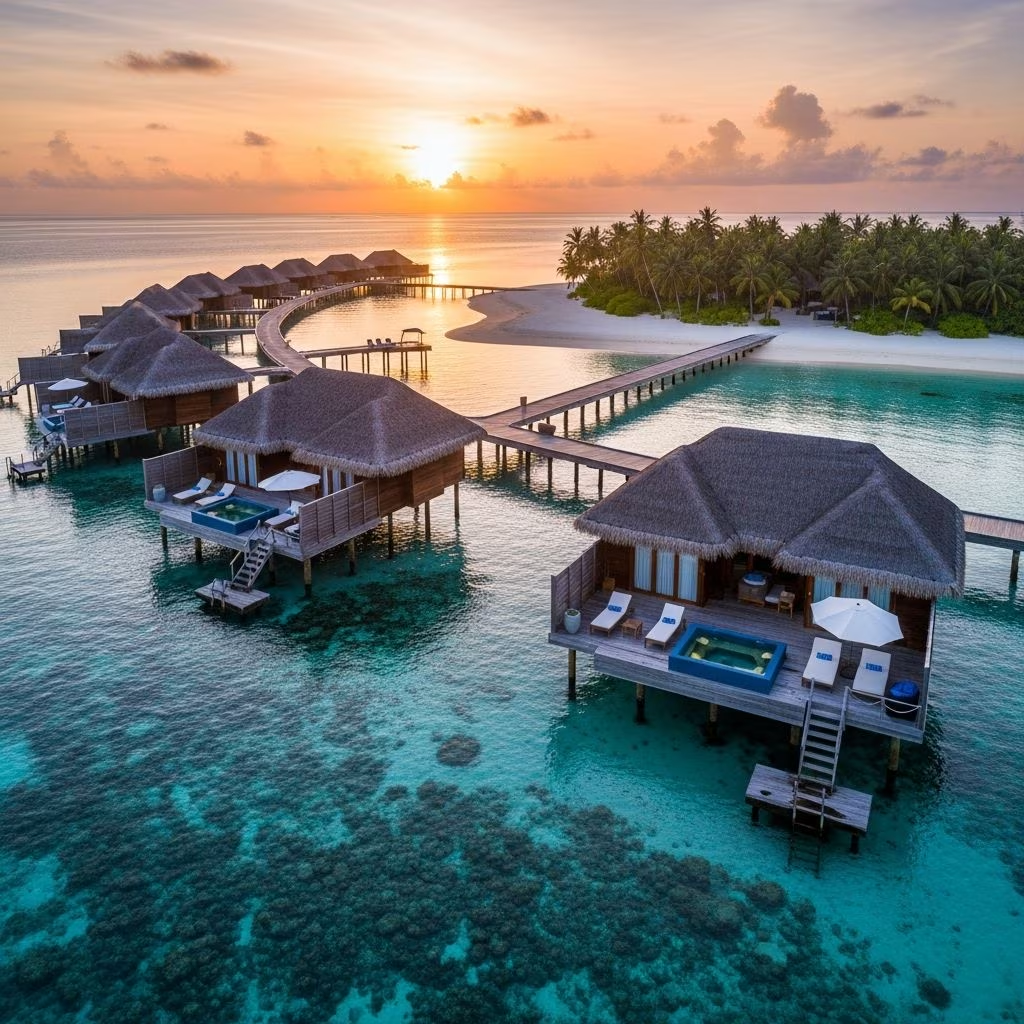
The fundamental characteristic that distinguishes the Maldives from other tropical destinations is the “one island, one resort” concept predominant throughout the nation. This arrangement means each resort occupies its own private island, eliminating the crowded resort clusters found in many other beach destinations. This structure guarantees exclusivity, privacy, and a curated environment where each establishment functions as a self-contained world offering fine dining, spa facilities, water sports, and personalized services.
The Maldives maintains warm temperatures year-round, but seasonal variations significantly impact weather conditions, water clarity, and pricing structures. Understanding these patterns allows travelers to align their visit with personal preferences and budget constraints.
The Dry Season (November to April) represents the most popular visitation period, characterized by minimal rainfall, clear skies, and calm seas. During these months, humidity levels drop considerably, creating comfortable conditions for outdoor exploration and water activities. The water achieves its maximum clarity during this window, revealing underwater environments with exceptional visibility. Consequently, accommodation prices peak during this period, with premium resorts commanding their highest rates.
The Wet Season (May to October) brings increased precipitation and higher humidity levels, though rainfall typically occurs in brief bursts rather than extended downpours. This season offers significant advantages for specific travelers: marine life activity intensifies, particularly manta ray and whale shark sightings, making it ideal for diving enthusiasts. Resort rates decrease substantially during these months, allowing budget-conscious travelers to access luxury accommodations at reduced prices. The sea remains swimmable despite seasonal variations, and many consider the dramatic skies and vibrant marine activity worth the occasional showers.
Fortunately, the Maldives maintains relatively relaxed entry requirements for international visitors. Most travelers receive a complimentary 30-day tourist visa upon arrival at Velana International Airport in Malé, regardless of nationality. This automatic visa grants permission for leisure activities and tourism but does not permit employment or business operations.
To qualify for visa-free entry, travelers must present a valid passport with at least six months of validity remaining beyond their intended departure date. Additionally, immigration officials may request proof of accommodation booking and return transportation arrangements, though these requirements are not consistently enforced. Travel insurance is not legally mandated but remains highly recommended for comprehensive protection.
Upon arriving at Velana International Airport in Malé, travelers face a crucial decision regarding their transfer to island resorts. The Maldives offers three primary transportation options, each with distinct advantages and considerations.
Speedboat Transfers suit travelers heading to resorts located within 30 kilometers of Malé. These transfers typically require 15 to 45 minutes, depending on destination proximity. Speedboats operate throughout daylight and evening hours, offering flexibility for various arrival times. This economical option suits budget-conscious travelers and those staying at nearby resorts.
Seaplane Transfers provide a luxurious and scenic alternative for distant resort locations. These aircraft operate exclusively during daylight hours, typically from morning until late afternoon, offering spectacular aerial perspectives of the atolls and surrounding waters. While significantly more expensive than speedboat alternatives, seaplane transfers create memorable arrival experiences and suit travelers visiting remote resorts. The journey itself doubles as a sightseeing experience, revealing the archipelago’s geographic scale and natural beauty.
Domestic Flights connect Malé to regional hub islands that maintain ferry services to outlying resorts. This option suits specific geographic locations and provides an alternative when seaplanes face scheduling constraints.
The Maldives offers contrasting accommodation philosophies, each delivering different vacation experiences and financial implications.
Resort Island Stays represent the archetypal Maldives experience, where travelers book entire islands or substantial portions thereof. These establishments feature overwater bungalows, beachfront villas, underwater restaurants, sophisticated spas, and personalized butler services. The privacy, luxury amenities, and organized activities appeal to travelers prioritizing relaxation and indulgence. However, costs remain substantial, with premium resorts exceeding several hundred dollars nightly.
Local Island Accommodation provides alternative experiences on inhabited islands where Maldivian communities maintain traditional lifestyles. Guesthouses and budget hotels on local islands offer significantly reduced rates while enabling cultural immersion and interaction with residents. This option suits travelers seeking authentic experiences, culinary exploration, and economic accessibility. Local islands feature markets, restaurants, and cultural sites that contrast sharply with resort environments.
Beyond beach relaxation, the Maldives offers diverse activities capitalizing on its marine environment and geographic characteristics.
Water Sports and Marine Activities dominate the experience portfolio. Snorkeling directly from resort beaches reveals colorful coral formations and tropical fish species within minutes of accommodation. Diving expeditions target deeper sites like Broken Rock, renowned for encounters with sharks, manta rays, and eagle rays. Hanifaru Bay provides exceptional seasonal opportunities for manta ray interactions during specific months. Dolphin cruises depart regularly from resorts, often yielding multiple sightings of spinner dolphins performing acrobatic displays.
Specialized Experiences extend beyond standard water activities. Sunset sailing combines romance with scenic beauty, while sandbank picnics provide intimate dining on uninhabited islands. Spa treatments harness traditional wellness practices and natural ingredients, often incorporating ocean views and overwater settings. Island hopping excursions allow exploration of multiple destinations within single visits.
Understanding Maldivian culture enriches travel experiences while demonstrating respect for local traditions and values. The Maldives practices Islam as the official religion, with 99 percent of the population adhering to this faith. This religious foundation influences social norms, dress codes, and behavioral expectations.
Visitors should dress modestly when visiting cultural sites, religious monuments, and local islands. Swimwear appropriate for beach environments becomes inappropriate in populated areas and sacred locations. Respectful photography practices require permission before photographing individuals, particularly during religious observances.
The coral-stone Old Friday Mosque in Malé represents the nation’s oldest mosque and welcomes respectful visitors who observe appropriate dress and conduct. Adjacent graveyards deserve similar reverence. Alcohol consumption remains restricted to resort environments, where visitors may purchase and consume beverages freely. Importing alcohol onto local islands or public spaces violates local regulations.
The Maldivian Rufiyaa (MVR) serves as the official currency, with exchange rates fluctuating based on international markets. Current rates approximate 15.40 MVR per US dollar, though these fluctuate regularly. Major resort islands accept US dollars and credit cards seamlessly, eliminating currency exchange necessities for typical resort visitors.
Travel planning should account for resort costs substantially exceeding typical tropical destinations, with accommodation rates among the world’s highest. Budget allocation should prioritize accommodation and transportation costs, which consume the majority of typical Maldives budgets. Meals, activities, and transfers typically operate through resort billing systems.
The Maldives maintains excellent healthcare standards, with resorts providing onsite medical facilities and emergency services. Tourism infrastructure receives continuous investment ensuring visitor safety and comfort. Petty theft remains uncommon, with violent crime directed at tourists essentially non-existent. Standard travel precautions apply regarding valuables and personal belongings.
A valid passport with at least six months of remaining validity suffices for most nationalities. The 30-day tourist visa is granted automatically upon arrival. No advance visa applications are required for citizens of most nations.
November through April offers optimal conditions with clear skies and calm seas. May through October provides lower prices and enhanced marine life activity. Your choice depends on weather preference and budget constraints.
Resort stays typically range from $150 to over $1,000 nightly depending on category. Local island accommodations cost significantly less, typically $30 to $100 nightly. Budget should account for accommodation as the primary expense.
Most resorts feature direct snorkeling from beaches, with vibrant coral and fish visible within minutes. Diving expeditions depart regularly from all resorts, catering to various skill levels.
Yes, many resorts offer excursions to inhabited islands where cultural experiences and local interactions occur. These trips reveal authentic Maldivian life beyond resort environments.
The Maldives welcomes travelers with accessible entry requirements, diverse accommodation options, and world-class experiences spanning relaxation, adventure, and cultural engagement. Whether seeking romantic seclusion, diving exploration, or cultural immersion, this island nation accommodates various travel styles and budgets. Understanding seasonal patterns, transportation logistics, accommodation choices, and cultural considerations enables travelers to craft personalized itineraries maximizing satisfaction and creating lasting memories.
