

 Travel Essentials
 Travel Essentials

Roosevelt Island's Manhattan Healing Forest represents a breakthrough in urban environmental restoration, combining innovative forest-building techniques with community wellness and climate resilience.
 Travel Essentials
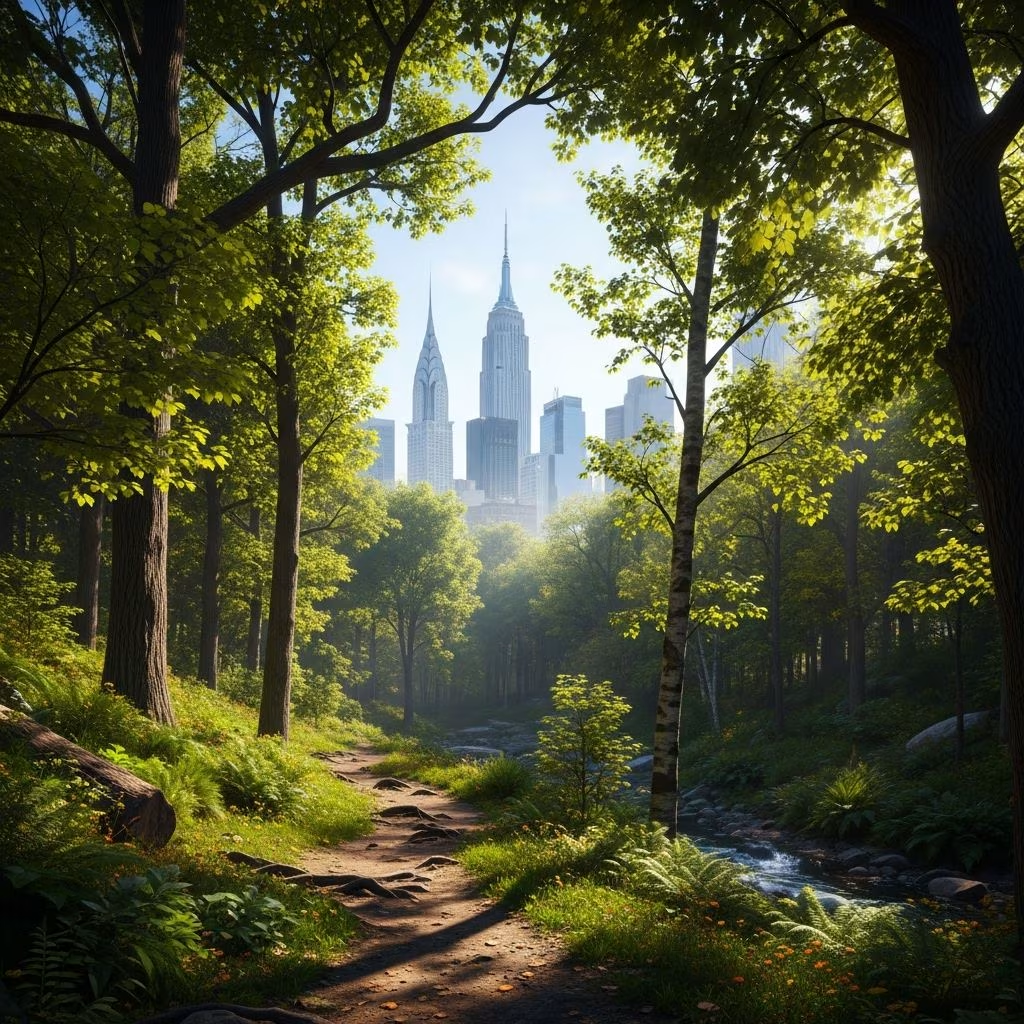
In the heart of New York City’s bustling landscape, a transformative environmental project has taken root on Roosevelt Island. The Manhattan Healing Forest represents a groundbreaking approach to urban green space development, offering residents and visitors alike a tranquil retreat while simultaneously addressing critical environmental challenges. This innovative forest, known as a pocket or micro-forest, demonstrates how cities can reclaim their ecological heritage through modern conservation techniques.
A pocket forest is a densely planted miniature woodland designed to maximize biodiversity within a limited urban footprint. Unlike traditional park landscapes or scattered tree plantings, these forests employ a specialized methodology that creates multi-layered ecosystems capable of reaching maturity in just 20 to 30 years. The technique draws from natural forest development patterns, creating environments where multiple plant species support one another through interconnected root systems and canopy layers.
The Manhattan Healing Forest occupies approximately 4,000 square feet—roughly the size of a single tennis court—yet contains nearly 1,500 individual plants representing 47 distinct native species. This remarkable density of botanical diversity stands in sharp contrast to conventional urban landscaping approaches, where spaces are typically planted with fewer species spread over greater distances.
The forest’s design philosophy stems from the Miyawaki method, a forest-building approach developed by Japanese botanist and plant ecology specialist Akira Miyawaki. This methodology diverges significantly from conventional reforestation practices by prioritizing speed, density, and ecological authenticity. Rather than planting trees at standard intervals and allowing decades to pass before meaningful forest development occurs, the Miyawaki approach accelerates natural succession processes through careful species selection and intensive initial planting.
The technique works by positioning saplings closely together so their root systems intertwine and share nutrients. This intimate planting density encourages rapid growth and creates a self-supporting ecosystem where plants nurture one another as they mature. Within just a few years, the initial seedlings transform into a functioning forest complete with emergent canopy layers, understory vegetation, and forest floor dynamics.
Roosevelt Island serves approximately 12,000 residents and occupies a unique geographic position along the East River, also known as the New York Estuary. This riverside location brings both aesthetic appeal and environmental vulnerability. The island faces increasing threats from storm surge activity and flooding events intensified by climate change, making ecological resilience projects particularly urgent.
The Manhattan Healing Forest was strategically positioned along Roosevelt Island’s southern banks to directly address these climate vulnerabilities. By stabilizing soil, capturing water runoff, and creating a living barrier against erosion, the forest functions as both a community amenity and critical infrastructure. The project transforms what might otherwise be exposed shoreline into a vegetated landscape capable of absorbing and filtering stormwater before it enters surrounding waterways.
The Manhattan Healing Forest represents the first pocket forest established in New York City and marks the 200th global forest project undertaken by SUGi, a London-based forest-building organization founded in 2019. The organization’s mission centers on greening cities and reimagining urban life through miniature forests that simultaneously improve biodiversity, strengthen community connections, and enhance climate resilience.
The planting initiative brought together volunteers and community partners including Trees New York and iDig2Learn, organizations dedicated to urban environmental education and restoration. Their collaboration reflects the broader movement toward community-driven environmental stewardship, where residents actively participate in transforming their urban environment rather than remaining passive observers.
The forest’s botanical palette reflects Roosevelt Island’s original pre-urban ecology. The 47 native species planted include Eastern White Pine, New York Fern, White Oak, hemlock, beach plums, and shagbark hickories. This species diversity wasn’t selected randomly but carefully curated to recreate the multi-layered structure of old-growth forests that existed before urban development transformed the landscape.
By reintroducing authentic native species, the project addresses a fundamental ecological deficit: cities worldwide have replaced complex, biodiverse forests with simplified landscaping dominated by ornamental species of limited ecological value. The Manhattan Healing Forest reverses this trend by restoring plants that evolved specifically to thrive in the region’s climate and soil conditions.
The restored forest ecosystem will support diverse wildlife populations far beyond what conventional urban landscaping provides. Ecologists predict that the Roosevelt Island pocket forest will attract peregrine falcons, squirrels, and various butterfly species. These charismatic fauna serve as indicators of broader ecosystem health, but the forest’s benefits extend far deeper into the ecological community.
Below the visible canopy, the forest hosts an invisible but essential fungal network that improves soil health and stability. These mycorrhizal associations allow trees to access nutrients more efficiently and communicate through underground pathways, creating an interconnected biological system far more sophisticated than traditional planted landscapes. The forest thus functions as a complete ecosystem rather than a collection of individual plants.
Birds, insects, and other creatures utilizing the pocket forest contribute to local biodiversity in surrounding areas as well, creating ecological benefits that ripple throughout Roosevelt Island’s environment. The forest becomes a source population from which wildlife can disperse to other green spaces, gradually increasing the island’s overall ecological connectivity.
Beyond aesthetic and recreational value, the Manhattan Healing Forest serves essential environmental infrastructure purposes. The project directly addresses stormwater management challenges by capturing rainfall and allowing it to infiltrate through soil layers rather than overwhelming drainage systems during heavy precipitation events. This natural filtration also removes pollutants before they enter the East River, improving water quality in surrounding waterways.
The dense vegetation stabilizes shoreline soils against erosion, creating a living buffer against storm surge impacts. As climate change intensifies extreme weather events, such green infrastructure increasingly complements or replaces conventional gray infrastructure approaches. The forest’s root systems physically bind soil particles together while reducing wave energy impact through vegetation density.
The forest also contributes to air quality improvement by capturing airborne particles and producing oxygen through photosynthesis. Trees and other vegetation reduce ambient air temperatures through transpiration, creating localized cooling effects that mitigate urban heat island phenomena common in dense cities.
Roosevelt Island’s population inhabits one of New York City’s most densely developed neighborhoods, where access to natural environments often requires traveling to distant parks. The Manhattan Healing Forest provides nearby residents with immediate access to a tranquil green space within their community. The forest offers psychological and physiological health benefits associated with nature exposure, including stress reduction, improved mood, and enhanced cognitive function.
The project aligns with Trees New York’s mission of prioritizing tree planting near schools, parks, and playgrounds, recognizing that equitable access to green space should not depend on socioeconomic status or geographic privilege. Urban residents—particularly those in historically underserved neighborhoods—deserve abundant nature connections comparable to those available in wealthier areas or suburban communities.
The Manhattan Healing Forest’s emergence on Roosevelt Island reflects a broader global shift in urban environmental thinking. Cities worldwide increasingly recognize that ecological restoration isn’t merely a supplementary amenity but an essential component of sustainable urban development. SUGi’s presence on every continent except Antarctica demonstrates the universal applicability of pocket forest methodology across diverse climates and urban contexts.
This project represents a departure from conventional urban planning approaches that treated cities and nature as inherently opposed. Instead, it demonstrates that cities can actively restore ecological function while maintaining their urban character. The forest concept challenges the false dichotomy between human settlement and environmental conservation, suggesting instead that well-designed urban environments can incorporate authentic ecological systems.
Perhaps the most compelling aspect of pocket forest methodology is its temporal efficiency. Traditional forest restoration projects typically require 50 to 100 years before meaningful ecological maturity is achieved. The Miyawaki method compresses this timeline to just three to five years for initial forest structure development. This accelerated pace means that current Roosevelt Island residents will witness transformation during their tenure rather than waiting for distant future generations to experience the forest.
This temporal advantage becomes increasingly important as climate change urgency intensifies. Cities cannot afford to wait multiple decades for ecological benefits to materialize. The Manhattan Healing Forest’s rapid development schedule allows Roosevelt Island to begin experiencing environmental and community benefits almost immediately while demonstrating the technique’s viability to other urban areas considering similar projects.
While pocket forests represent genuine innovation, their establishment in urban environments requires careful attention to site conditions and ongoing management. Initial establishment success depends on proper species selection for specific microclimatic conditions, appropriate soil preparation, and adequate moisture during critical growth phases. The Manhattan Healing Forest’s successful implementation reflects careful planning by experienced environmental organizations and community partners.
Long-term forest health requires monitoring and adaptive management as the ecosystem develops. Early-stage management typically focuses on weed suppression, moisture maintenance, and addressing any species that struggle under actual site conditions. As the forest matures, management shifts toward selective thinning and diversity monitoring to ensure the ecosystem develops appropriate structure and composition.
The Manhattan Healing Forest’s success on Roosevelt Island establishes a template for pocket forest development throughout New York City and beyond. Numerous underutilized urban spaces—parking lot corners, unused lot edges, park margins, and institutional grounds—represent potential pocket forest sites. The relatively modest land area requirements and rapid development timeline make pocket forests feasible interventions for cities facing space constraints.
As cities increasingly confront climate change impacts, stormwater management challenges, and public health consequences of nature-deficient urban environments, pocket forests emerge as versatile solutions addressing multiple priorities simultaneously. The Manhattan Healing Forest demonstrates this multifunctionality, simultaneously enhancing community wellness, improving stormwater management, increasing urban biodiversity, and advancing climate resilience.
