

 Travel Essentials
 Travel Essentials

A comprehensive guide to exploring Marrakech, covering accommodations, transportation, cultural attractions, dining, and day trip options for travelers.
 Travel Essentials
Nestled at the foot of the Atlas Mountains, Marrakech stands as one of North Africa’s most captivating destinations, blending centuries of Islamic heritage with vibrant contemporary culture. The city pulses with sensory richness—the aromatic blend of spices wafting through narrow alleyways, the rhythmic calls to prayer echoing from minarets, and the constant flow of humanity through medieval streets create an atmosphere unlike anywhere else in the world. For first-time visitors, Marrakech presents both an exhilarating adventure and a potential labyrinth of confusion, making careful planning essential for maximizing your experience in this enchanting metropolis.
Marrakech’s geography divides into distinct zones, each offering different experiences and atmospheres. The medina, or old town, represents the historical and cultural epicenter where most visitor attractions cluster. This ancient quarter, enclosed within red clay walls, contains the majority of riads (traditional guesthouses), bustling markets, and landmark monuments that define Marrakech’s character. Beyond these walls lies the nouvelle ville, the modern city developed during the French protectorate, where contemporary hotels, restaurants, and amenities cater to different travel preferences. Understanding this division helps travelers decide where to base themselves and how to structure their daily movements.
The medina itself functions as a living organism rather than a static museum. Moroccan families continue their daily lives alongside merchants, artisans, and tourists, creating an authentic environment that rarely feels staged or overly commercialized. Walking through the medina requires embracing a certain spontaneity—GPS systems frequently malfunction in the narrow alleyways, and printed maps become less reliable than local knowledge. This unpredictability transforms navigation into part of the adventure, with unexpected discoveries around every corner offsetting the occasional disorientation.
Moving through Marrakech requires understanding multiple transportation modes suited to different contexts. Within the medina, foot traffic dominates completely. The narrow passages, many barely wide enough for two people side by side, accommodate only pedestrians, motorcycles, motorbikes, and the occasional donkey cart. Wearing supportive, comfortable footwear becomes essential, as cobblestone surfaces and endless stairs challenge unprepared feet. Navigation through the medina transforms into a meditative experience when approached without rigid schedules or destination fixation.
For distances beyond the medina’s boundaries, taxis and ride-sharing services become necessary. Traditional metered taxis operate throughout the city, though drivers typically prefer negotiating fixed fares rather than using meters. The journey from Menara Airport to the medina typically requires twenty to thirty minutes by taxi, depending on traffic conditions. Uber services also function in Marrakech, offering transparent pricing that removes negotiation hassles. Alternatively, many riads provide arrangement services for transportation, coordinating reliable drivers familiar with the city’s layout and tourist needs.
Marrakech’s built environment tells stories spanning centuries of Islamic civilization, with several monuments deserving priority on any visitor’s itinerary. The Ben Youssef Madrasa showcases exceptional examples of traditional Moroccan design, with intricate hand-carved wood, elaborate zellige tilework in geometric patterns, and detailed plaster sculpting adorning every surface. Originally functioning as an Islamic college training scholars in jurisprudence and Quranic studies during the sixteenth century, this structure once ranked among North Africa’s largest educational institutions. Following comprehensive restoration completed in 2022, visitors can now explore the vestibule, prayer rooms, and student quarters, gaining intimate understanding of historical Islamic education.
The Bahia Palace represents another essential cultural stop, showcasing nineteenth-century royal architecture and decoration. Built for the Pasha of Marrakech, this palatial complex demonstrates the wealth and influence commanded by Morocco’s regional governors through its elaborate tilework, carved plasterwork, and geometric patterns. The palace’s multiple courtyards, each featuring orange trees and fountains, reveal how Moroccan architecture integrates interior garden spaces as cooling mechanisms and aesthetic focal points.
The Confluences Museum, housed within the Dar El Bacha Palace, occupies a 1910 structure that subsequently became the residence of Thami El Glaoui, the Pasha of Marrakech. Known for lavish entertainment of international dignitaries, the palace’s numerous rooms now exhibit Moroccan cultural artifacts and artistic traditions. The main courtyard, with its fragrant orange groves and melodious bird calls, evokes both historical splendor and contemporary cultural significance.
Beyond these primary attractions, the Koutoubia Mosque and El Badi Palace merit inclusion for those with extended exploration time. These landmarks contribute to understanding Marrakech’s development as a significant Islamic cultural and political center.
Marrakech’s food culture extends far beyond simple sustenance, representing centuries of culinary refinement combining indigenous Berber ingredients with Arab, Jewish, and Mediterranean influences. For visitors seeking interactive culinary experiences, cooking classes offer invaluable cultural immersion. La Maison Arabe, a renowned culinary institution, teaches traditional techniques for preparing tajines, couscous, and regional specialties within an authentic riad setting. These classes typically include market visits for ingredient selection, providing understanding of both preparation methods and ingredient sourcing.
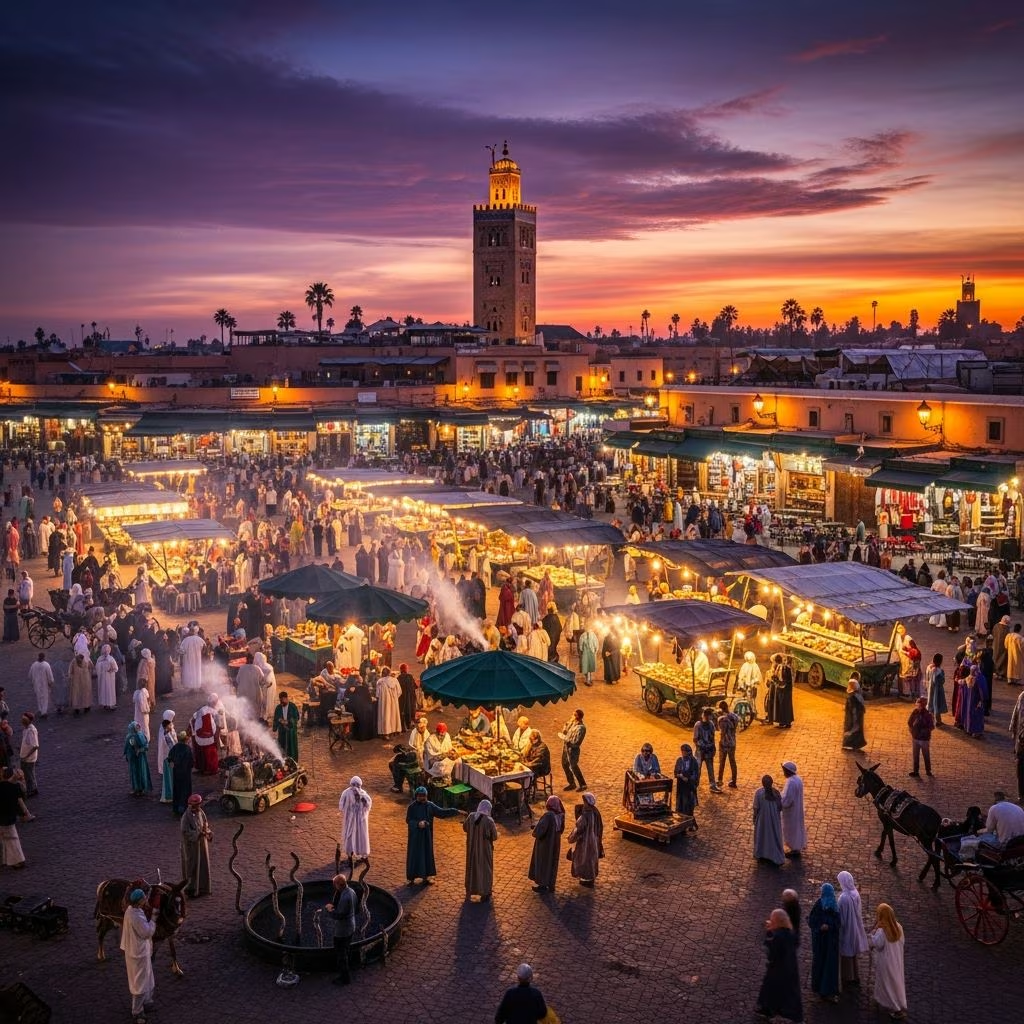
Jemaa el-Fnaa Square functions as Marrakech’s primary culinary gathering point, where food vendors prepare traditional Moroccan dishes at numerous stalls surrounding the plaza. While the environment appears chaotic to uninitiated visitors, vendors generally maintain reasonable hygiene standards, and the high volume of customer turnover ensures fresh food preparation. The square’s evening transformation into a storyteller’s venue creates a uniquely atmospheric dining experience, blending gastronomy with cultural performance.
Numerous restaurants throughout the medina range from casual establishments serving traditional fare to elegant riads offering refined interpretations of Moroccan cuisine. Coffee culture deserves special attention—Moroccan coffee accompanies social interaction and hospitality throughout daily life. Taking time to sit at a café with mint tea or strong coffee provides insight into the rhythm and values shaping Moroccan society.
Hammam visits represent distinctly Moroccan wellness practices integrating bathing, exfoliation, and massage within communal spaces. These traditionally gender-segregated facilities have evolved to include tourist-friendly establishments while maintaining cultural authenticity. The hammam ritual follows a specific progression—entering a warm room to open pores, moving to increasingly hotter chambers for perspiration and relaxation, then receiving vigorous exfoliation that removes dead skin cells with surprising effectiveness. Many visitors initially find the intensity shocking but emerge refreshed and invigorated.
Beyond traditional hammams, Marrakech’s luxury spa industry offers upscale variations on traditional treatments, often incorporating regional ingredients like argan oil, rose water, and mineral-rich waters from natural springs. These establishments cater specifically to tourist preferences while maintaining fundamental wellness principles underlying hammam culture.
The medina’s souks represent living marketplaces where commerce has occurred for centuries, offering everything from spices and textiles to pottery and metalwork. Rather than tourist-oriented shops, most stalls serve local clientele, meaning prices reflect genuine value rather than inflated tourist rates. Haggling represents an expected component of transactions, with merchants viewing price negotiation as part of social interaction rather than adversarial commerce.
Handmade Moroccan rugs display exceptional craftsmanship, with prices varying dramatically based on materials, design complexity, and weaver reputation. Purchasing directly from artisans or established merchants provides greater assurance of authenticity compared to tourist-focused shops. Similarly, traditional pottery, metalwork, and textiles offer opportunities to support local craftspeople while acquiring unique, culturally significant items.
Wandering through the medina without specific shopping objectives often proves more rewarding than searching for particular items, as unexpected discoveries and spontaneous conversations with merchants create memorable interactions. Allow yourself to become temporarily lost—the experience generates authentic understanding of how the medina functions as both commercial center and community gathering place.
Marrakech’s surrounding regions offer diverse experiences extending beyond urban exploration. The High Atlas Mountains provide dramatic scenery, cooler climates, and Berber village experiences distinct from city life. Day trips to mountain communities reveal agricultural practices, traditional architecture, and hospitality customs that predate modern tourism infrastructure.
The Ourika Valley, accessible via short drive from the city, features cascading waterfalls, agricultural terraces, and Berber settlements offering insights into rural Moroccan life. Several trekking routes accommodate various fitness levels, from leisurely valley walks to challenging mountain ascents.
Glamping experiences in the Agafay Desert, located relatively close to Marrakech, provide desert immersion without extreme remoteness. These accommodations offer comfort amenities within traditional Bedouin tent settings, allowing visitors to experience desert atmosphere while maintaining access to city amenities. Evening entertainment often includes traditional music, storytelling, and stargazing in unpolluted night skies.
Nearby Berber villages and salt mines represent alternative day trip options, with organized tours supporting local communities through direct economic benefit. Quad bike tours through palm oases combine adventure activities with cultural encounters, appealing to more active travelers seeking different perspectives on regional geography and settlement patterns.
Marrakech’s climate varies significantly throughout the year, affecting visitor experience substantially. Spring represents the optimal travel period, offering pleasant temperatures, minimal rainfall, and blooming vegetation that beautifies gardens and parks throughout the city. Autumn similarly provides comfortable conditions for exploration without summer’s intense heat.
Summer temperatures frequently exceed 40°C (104°F), making midday exploration exhausting and potentially dangerous for unprepared visitors. However, summer offers lower accommodation prices as tourism decreases. Winter temperatures remain mild by most standards but can occasionally dip to uncomfortable levels, especially in evening hours.
Choosing accommodation location dramatically influences your Marrakech experience. Staying within the medina places you at the cultural heart, facilitating easy access to attractions, markets, and dining while immersing you in authentic atmosphere. Traditional riads offer intimate guesthouse experiences with personalized service and authentic architectural settings. Modern hotels outside the medina provide contemporary amenities and potentially quieter environments at the cost of experiencing less of the city’s character.
Budget considerations range from modest riads offering clean, basic accommodations to luxury establishments providing world-class services. Mid-range options frequently offer exceptional value, combining comfort and authenticity without requiring premium budgets.
