

 Travel Essentials
 Travel Essentials

Explore Matsusaka's legendary beef heritage, feudal castle grounds, spiritual hiking trails, and rich Edo-period history in central Mie Prefecture.
 Travel Essentials
Nestled in the heart of Mie Prefecture, Matsusaka City represents far more than its international reputation for premium wagyu might suggest. This central Japanese destination seamlessly blends culinary excellence with historical depth, natural beauty, and spiritual significance. Whether you dedicate a single day or extend your visit to multiple nights, Matsusaka rewards travelers with experiences that engage all the senses and connect visitors to centuries of Japanese tradition.
Located in central Japan near Kyoto and Nara Prefectures, Matsusaka occupies a strategically important position that shaped its development across centuries. During the Edo period, the city functioned as the final post town for travelers embarking on pilgrimages to Ise-mairi, visits to Japan’s most revered Shinto shrine. This role transformed Matsusaka into a bustling commercial hub where merchants thrived by trading locally-produced cotton goods to buyers in Edo (modern-day Tokyo). The prosperity generated by these merchants left permanent marks on the city’s architecture, layout, and cultural identity that remain visible today.
The region benefits from a mild climate and access to pure water sources, factors that would later prove instrumental in establishing Matsusaka’s reputation for premium cattle raising. The Ise Plains and Kushida River system created an ideal natural environment for agriculture and animal husbandry, contributing to the area’s long history of prosperity and refinement.
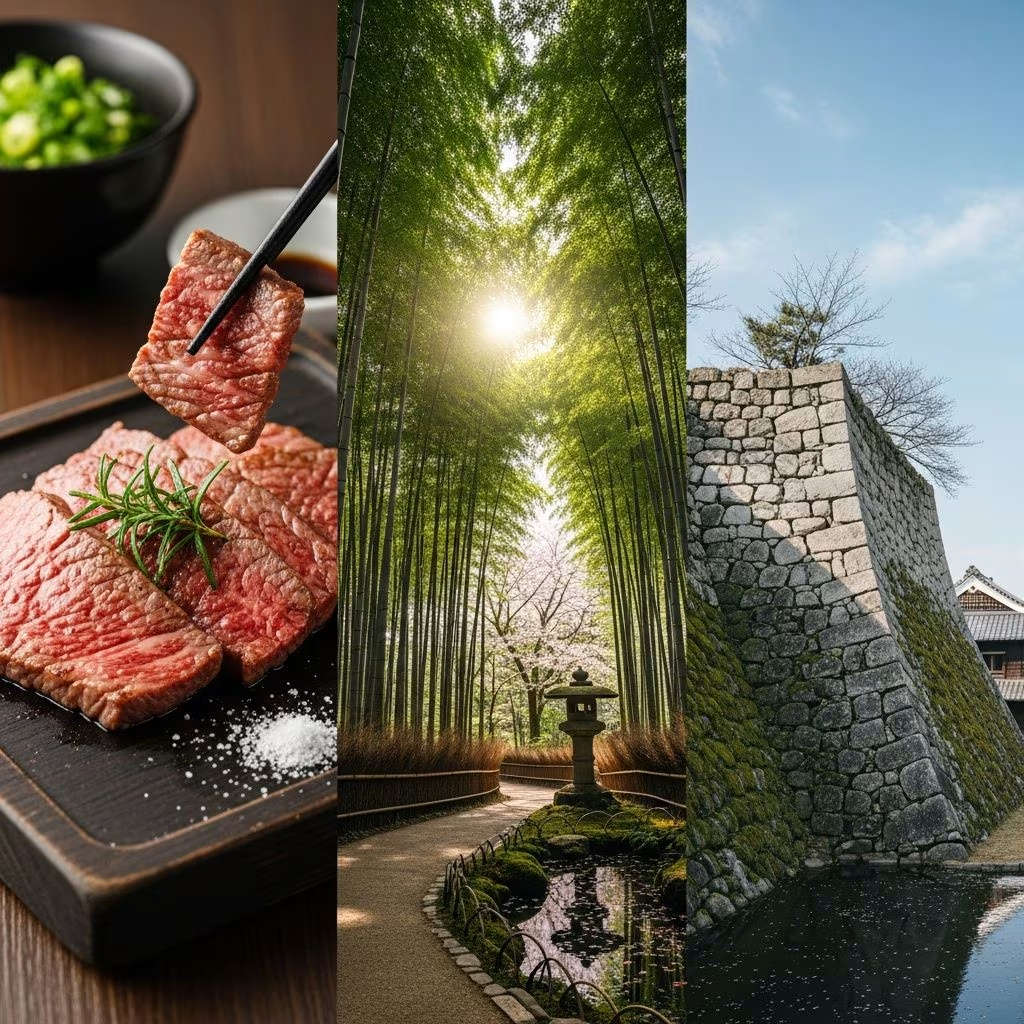
The physical heart of Matsusaka’s historical narrative centers on Matsusaka Castle, constructed in 1588 during Japan’s period of unification and warfare. Though the original five-story tower collapsed during a powerful windstorm in 1644 and was never reconstructed, the castle’s magnificent foundation stones, ceremonial stairways, and defensive walls have endured. These remarkable stone structures, recognized among Japan’s 100 Best Castles, showcase the engineering sophistication and ambitious architectural vision of the late Edo period.
Walking among the ruins today offers visitors a tangible connection to the feudal era. The castle grounds have been developed as a public park and garden, creating spaces where history and nature intertwine. During spring, cherry blossoms transform the grey stone walls with delicate pink blooms, creating a poignant contrast between the permanence of ancient stone and the ephemeral beauty of flowering trees. The elevated position of the ruins provides panoramic views across the modern city, offering perspective on how dramatically the urban landscape has evolved while the castle foundations remain essentially unchanged.
Beyond the castle, the town itself reflects the social hierarchies of the Edo period. Historic accounts describe how a small river once divided residential areas, with samurai families occupying one bank while merchants and commoners lived on the opposite side. This physical separation embodied the rigid class structures that characterized feudal Japanese society. Modern visitors can explore preserved neighborhoods where traditional merchants’ houses and small shops selling locally-made cotton garments (momen fashion) and regional souvenirs maintain connections to this commercial past.
Beyond castle ruins, Matsusaka’s natural landscape provides opportunities for physical engagement with the region’s spiritual heritage. Approximately 40 minutes inland from the city center, the Ibuta-ji temple complex offers a compelling hiking destination that combines exercise with religious and aesthetic appreciation.
The temple’s most distinctive feature is the Iwaya hall, an impressive structure positioned beneath a dramatic rocky overhang that creates a natural architectural frame. This striking setting combines human construction with natural geology, reflecting Buddhist principles of harmony between human activity and the natural world. Surrounding forested hills and valleys create vistas that justify the physical effort required to reach this elevated sanctuary.
The hiking experience accommodates various fitness levels and time commitments. Visitors can complete the full loop trail in approximately two hours, or alternatively hike directly to the hall and return in under one hour. The mountain entrance requires a modest ¥500 fee, making the spiritual experience accessible across economic backgrounds. The trail itself qualifies as beginner-friendly, featuring nature paths with panoramic views suitable for travelers without specialized mountaineering experience.
While Kobe beef enjoys greater international brand recognition, within Japan, Matsusaka beef commands equal prestige and arguably superior reputation for consistency and quality. This distinction reflects the beef’s unique production history and the meticulous farming methods that have been maintained for centuries.
The Matsusaka beef production system originated during the Edo period when young female calves born in the Tajima region of Hyogo Prefecture were transported through Wakayama Prefecture to Matsusaka for raising and fattening. These calves were initially valued as draft animals for agricultural labor, but farmers’ exceptional care and respect for the animals produced an unintended consequence: meat of extraordinary quality developed naturally through careful husbandry practices.
Farmers treated cattle as family members, reflecting deeply rooted Japanese values regarding the human-animal bond. This philosophy extended to every aspect of care: cattle were allowed to mature naturally over three to four years rather than being forced through accelerated growth cycles. The region’s abundant natural resources—clean water and favorable climate—supported the cattle’s development without artificial inputs or industrial methods.
Matsusaka beef gained international recognition following a decisive moment in 1935 when samples won the highest honor at the National Competitive Exhibition of Wagyu Cattle held in Tokyo. This prestigious award catapulted the product into global consciousness, with both domestic and international media celebrating its excellence and establishing it as a luxury commodity. The timing coincided with Japan’s modernization and growing meat consumption, allowing Matsusaka beef to establish itself as the apex of Japan’s wagyu hierarchy.
The defining characteristic of Matsusaka beef lies in its extraordinarily fine marbling—fat infiltration throughout the muscle tissue that remains nearly invisible to the naked eye yet profoundly affects flavor and texture. This marbling delivers the characteristic melt-in-the-mouth experience that distinguishes premium wagyu from conventional beef. The fat dissolves during cooking, creating intense umami flavors and luxurious mouthfeel that justifies the premium pricing.
The most prestigious designation, “Tokusan Matsusaka Beef,” requires cattle to be fattened for a minimum of 900 days and to originate from Tajima-bred calves in Hyogo Prefecture. This rigorous certification maintains quality standards and prevents dilution of the brand through less stringent production methods.
Matsusaka City offers diverse dining contexts where travelers can experience the beef according to personal preferences and budgets. Nearly every restaurant and pub features Matsusaka beef on menus, but several establishments have earned particular distinction for their expertise and presentation.
Wadakin represents the pinnacle of Matsusaka beef dining, combining sophisticated Japanese hospitality with impeccable meat preparation. The establishment specializes in steak and sukiyaki (thinly sliced beef cooked in sweetened soy broth with vegetables), presenting each dish with meticulous attention to technique and presentation. Dining at Wadakin constitutes a formal cultural experience demanding advance reservations; walk-in diners risk disappointment due to consistent demand from affluent travelers and local connoisseurs.
Isshobin provides a distinctly different dining experience through conveyor-belt beef service, where customers select fresh meat portions as they pass on rotating belts and grill selections tableside. This casual, interactive format democratizes access to premium beef by reducing formal barriers and allowing diners to customize preparation and portion sizes. The experience emphasizes participation over ceremony, appealing to families and younger travelers.
For visitors seeking alternative proteins, the family-friendly yakitoriya (grilled chicken restaurant) Maeshima Shokudō offers regional chicken preparations in a relaxed atmosphere. Located approximately 20 minutes outside the city center, this establishment conveniently serves travelers heading toward Ibuta-ji temple, providing sustenance without requiring advance reservations or formal attire.
While single-day visits allow tourists to experience castle ruins, temple hikes, and beef dining, multi-day stays enable deeper engagement with local culture and history. Overnight accommodations in historic inns provide opportunities to experience traditional Japanese hospitality (omotenashi) and reflect on experiences in authentic settings. Beef enthusiasts might extend visits to sample different restaurants and dining formats, comparing preparation techniques and flavor profiles across establishments.
Spring visits coincide with cherry blossom season, transforming the castle grounds into celebrated viewing locations where history and seasonal natural beauty create emotionally resonant experiences. Summer heat can intensify hiking experiences on mountain trails toward Ibuta-ji; spring and autumn typically offer more comfortable trekking conditions. Winter visits reduce tourist crowds but may present challenging weather for outdoor activities.
The temple entrance requires modest payment (¥500), and parking areas with accessible restrooms serve visitors at trailheads. Narrow mountain roads necessitate careful driving; parking at base areas and completing the final ascent on foot is recommended. Downtown areas offer convenient tourist information centers with English-language resources and staff assistance for trip planning.
Matsusaka’s appeal derives from the integrated experience of multiple dimensions rather than isolated attractions. The beef reflects centuries of agricultural philosophy and commitment to natural methods. The castle ruins embody feudal power structures and architectural ambition. The mountain temple connects visitors to spiritual traditions. The merchant history reveals commerce and community development. These elements cohere into a comprehensive narrative about Japanese civilization spanning from medieval warfare through modern gastronomy.
Travelers departing Matsusaka carry memories shaped by physical engagement—walking castle grounds, hiking forest paths, tasting premium beef—rather than passive observation of photographs or museum exhibits. This embodied learning creates lasting impressions and deeper cultural understanding than guidebook consumption alone could generate.
