

 Travel Essentials
 Travel Essentials

A comprehensive guide to visiting Mauna Loa, featuring hiking routes, preparation strategies, safety considerations, and unique ways to experience this massive Hawaiian volcano.
 Travel Essentials
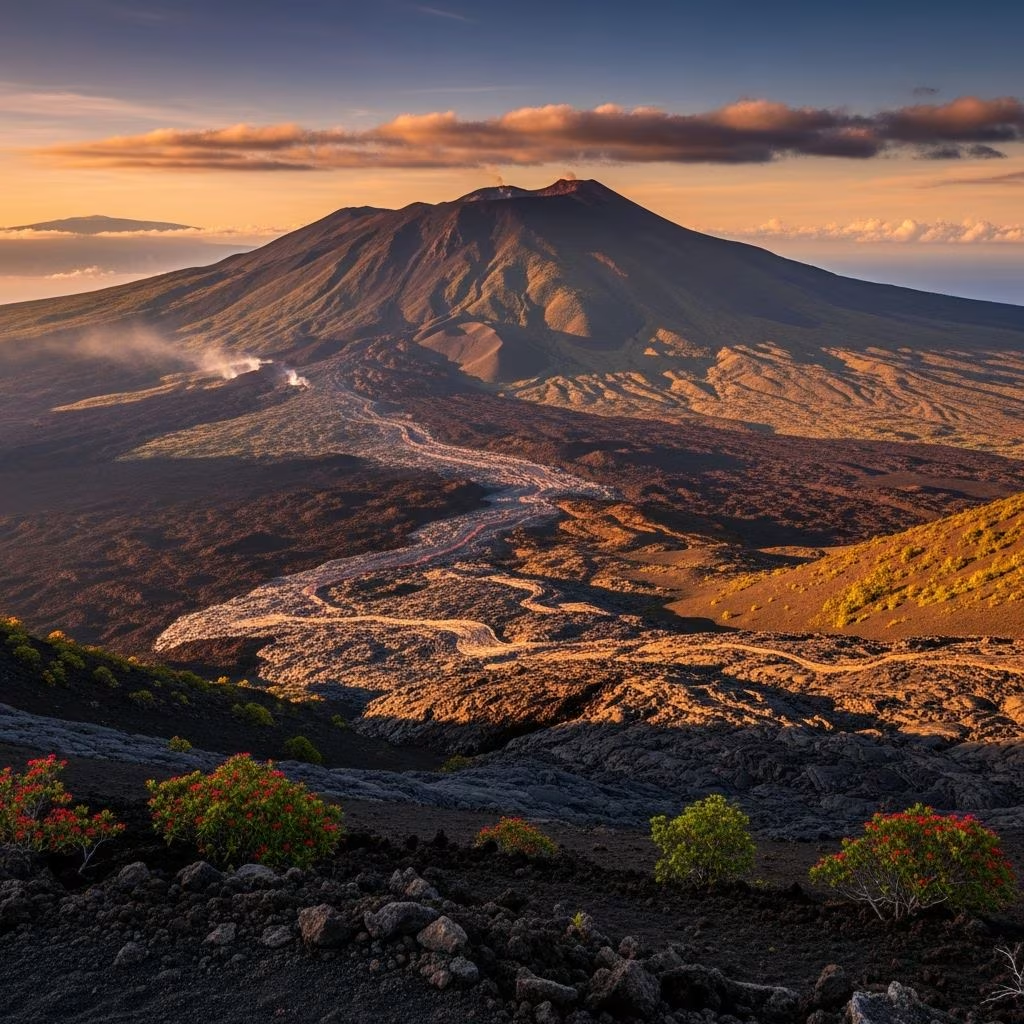
Rising majestically from the landscape of Hawaii’s Big Island, Mauna Loa stands as one of the most impressive natural wonders on Earth. As the world’s largest active volcano, this geological giant encompasses nearly half of the Island of Hawaiʻi and presents visitors with an extraordinary opportunity to witness Earth’s raw power and beauty. Measuring 13,681 feet (4,170 meters) above sea level, Mauna Loa commands attention not just for its size but for the remarkable experiences it offers to those willing to explore its unique terrain.
Located approximately 37 miles southwest of Hilo, Mauna Loa occupies a commanding position within Hawaiʻi Volcanoes National Park. The volcano’s immense scale becomes apparent when considering its full dimensions—while its summit reaches 13,681 feet above sea level, the mountain extends far beneath the ocean, making it significantly larger than Mount Everest when measured from its true base on the ocean floor. This geological marvel demonstrates the dynamic nature of Hawaii’s volcanic origins and serves as a living laboratory for understanding volcanic processes.
The volcano’s landscape changes dramatically as elevation increases. Lower elevations feature native forests and kipuka—islands of vegetation surrounded by lava flows—while higher regions transition into stark, otherworldly terrain characterized by volcanic rock and sparse vegetation. This ecological diversity makes Mauna Loa a destination for both adventure seekers and nature enthusiasts interested in Hawaii’s unique biodiversity.
Before embarking on any hiking or camping adventure at Mauna Loa, visitors must obtain a permit from Hawaiʻi Volcanoes National Park. The permit process is straightforward and remarkably affordable, costing just $10. This single permit accommodates groups of up to 12 people and allows for stays of up to seven nights, making it an economical option for both individuals and organized groups. Park rangers provide valuable guidance during the permit process, helping visitors understand current trail conditions, weather patterns, and any temporary closures or hazards.
It is essential to check the official National Park Service website for current conditions, weather forecasts, and any park closures before planning your visit. Weather at high elevations can change rapidly and unpredictably, and the park occasionally closes access roads due to fire hazards or volcanic activity. Calling Park Headquarters at (808) 967-7311 provides real-time information about trail status and safety recommendations.
The primary access route to Mauna Loa’s upper elevations follows Mauna Loa Road, a one-lane paved road in remarkably good condition. The drive from the Kilauea Visitor Center to the trailhead typically takes about one hour. The road leads to a small parking area at approximately 6,662 feet elevation—a significant altitude gain that affects most visitors. It is crucial to lock your vehicle at the parking area, as the remote location and light traffic create security risks.
The Mauna Loa Road trailhead offers no public amenities—there is no drinking water, public telephones, or public transportation available. Visitors must bring sufficient supplies and plan accordingly. The one-lane road occasionally closes due to fire hazards or volcanic concerns, so confirming road access before making the drive is essential.
For visitors with limited time or lower physical fitness levels, the Observatory Trail provides an accessible option. Starting at the Mauna Loa Weather Observatory at approximately 11,000 feet elevation, this route represents the only viable day-hike option to the summit. The elevation head start significantly reduces the difficulty compared to starting from lower elevations. Parking exists near the observatory specifically designated for hikers, making this trailhead convenient for those without overnight camping equipment.
The Observatory Trail showcases the volcanic landscape’s dramatic features without requiring overnight camping or permits for most of the route. Views from this elevation include perspectives of Mauna Kea and even Haleakala on the island of Maui when weather conditions cooperate. The generally clear skies at these elevations provide excellent conditions for photography and panoramic viewing.
The Mauna Loa Trail represents the most frequently used route for backcountry hiking and camping. Originally constructed by the Army beginning in 1915, this historic trail has evolved over more than a century. The original 30-mile route began at the site of what is now Volcano House near the Hawaiian Volcano Observatory. While the trail has been rerouted in various locations over the decades, the general direction remains consistent with the original path.
Modern access to the Mauna Loa Trail benefits from the constructed road, which eliminates the need to hike the lower portions. Visitors drive to the Mauna Loa Road trailhead and begin their journey from approximately 6,662 feet elevation. The trail stretches 7.5 miles (12.1 kilometers) from the trailhead to Red Hill Cabin, with 3,373 feet (1,028 meters) of elevation gain. The total distance to the summit requires additional hiking beyond the cabin, making multi-day trips necessary for most visitors.
The ʻĀinapō Trail offers an alternative route to Mauna Loa’s summit, accessible via Kapāpala Ranch. This route provides a different perspective on the volcano and appeals to visitors seeking less-crowded hiking experiences. However, this trail presents additional logistical challenges, including private land access considerations and remote trailhead locations. The ʻĀinapō Trail remains suitable only for experienced hikers with appropriate planning and coordination with ranch authorities.
The terrain along Mauna Loa’s hiking routes presents unique challenges distinct from typical mountain trails. The pathway consists primarily of rough, jagged, and often loose lava rock that demands careful footing and sturdy footwear. The volcanic terrain provides no cushioning—every step must account for unstable surfaces and sharp edges that threaten both ankles and boots. Gaiters prove invaluable for protecting legs from the sharp lava.
The trail is marked with cairns—stacked rocks—that guide hikers through the landscape. However, during periods of low visibility, such as clouds, fog, or darkness, the cairns become extremely difficult to locate. Many hikers have experienced disorientation when visibility drops, emphasizing the importance of carrying navigation devices and practicing navigation skills before the trip. A GPS device becomes essential equipment, particularly for night hiking or during adverse weather conditions.
The elevation gain combined with the terrain difficulty creates a genuinely challenging hiking experience. Most visitors experience the effects of altitude, including headaches, shortness of breath, and reduced physical performance. Acclimatization becomes crucial—rushing the ascent significantly increases the risk of altitude-related illnesses.
Red Hill Cabin serves as the primary overnight accommodation on the Mauna Loa Trail, situated at an intermediate elevation that provides a manageable day’s hike from the trailhead. The cabin provides basic amenities essential for backcountry survival, including sheltered sleeping space, cooking areas, and pit toilets. These facilities allow visitors to rest comfortably between hiking days and prepare meals without establishing exposed camps in the harsh environment.
Water availability at the cabin is both a blessing and a requirement—water exists at the site but requires treatment before consumption. Visitors must bring water treatment supplies, such as tablets or a portable filter, to render the water safe for drinking. This system prevents the accumulation of waste while ensuring hikers have access to essential water resources.
Mauna Loa Summit Cabin, situated at the volcano’s peak, represents the ultimate destination for backcountry enthusiasts. However, access has become complicated due to trail damage from the 2022 eruption. The summit cabin is no longer directly accessible from the primary Mauna Loa Trail. Instead, visitors accessing the summit cabin must approach via the ʻĀinapō Trail and Kapāpala Ranch route, significantly altering trip planning for those seeking to reach the summit area.
This change underscores the dynamic nature of volcanic landscapes and the importance of confirming current access before finalizing trip plans. The National Park Service website maintains updated information about trail conditions and cabin accessibility, preventing wasted time and dangerous situations.
Mauna Loa hiking demands significant physical conditioning and cardiovascular fitness. The combination of elevation gain, rough terrain, thin air, and altitude effects creates a genuinely challenging experience. Successful hikers typically engage in months of preparation, including regular cardio exercise, strength training, and specific altitude acclimatization if possible.
The altitude itself presents the most significant challenge for lowland visitors. At 13,681 feet, the oxygen levels approach 60% of sea level concentrations. Many people experience altitude sickness symptoms including headaches, nausea, and fatigue. Allowing time for gradual acclimatization—spending days at moderate elevations before climbing higher—significantly improves success rates and safety.
Successful Mauna Loa hikers bring substantial gear adapted to extreme environmental conditions. The volcanic terrain demands sturdy hiking boots with excellent ankle support and durable soles capable of withstanding sharp lava edges. Gaiters protect legs from cuts and scrapes. Layers of clothing accommodate rapid temperature changes and weather shifts common at high elevations.
Navigation equipment becomes mandatory—topographic maps, a compass, and a GPS device provide multiple navigation options, particularly crucial during poor visibility. A headlamp with extra batteries enables safe hiking during darkness and is essential for early morning starts or extended hiking days.
Water containers should carry at least three liters capacity, though many experienced hikers prefer larger capacity due to water scarcity at certain elevations. Food supplies must account for the entire trip duration plus emergency reserves. The thin air increases energy expenditure, making ample, calorie-dense food essential.
Visitors without the fitness level, time, or inclination for backcountry hiking can still experience Mauna Loa through vehicle-based adventures. The Kaʻū Scenic Byway extends from Kona to Hawaii’s southernmost point, meandering through sections of Hawaiʻi Volcanoes National Park and passing around Mauna Loa’s base. This spectacular drive showcases the volcano’s scale and surrounding landscapes without requiring hiking boots or overnight camping. The drive can be completed as a day trip, allowing visitors to enjoy volcanic scenery at their own pace with regular stops for photos and exploration.
Helicopter and airplane tours provide bird’s-eye perspectives of Mauna Loa and the surrounding volcanic landscape. These tours offer unique viewpoints impossible to achieve from ground level, revealing the volcano’s full summit crater and the patterns of past eruptions. Tours operating from both Kona and Hilo provide flexible scheduling and weather-dependent options. These experiences are particularly valuable for visitors with mobility limitations or those seeking dramatic photographic perspectives.
Backcountry hiking at Mauna Loa requires strict adherence to Leave No Trace principles. Hikers must pack out everything they pack in—no exceptions. Trash should never be buried or deposited in pit toilets; these facilities exist only for human waste. This principle protects the fragile volcanic ecosystem and preserves the wilderness experience for future visitors.
Camping practices should minimize environmental impact—use established campsites when available, avoid creating new fire rings, and never cut vegetation. These practices seem simple but become critical when multiplied across thousands of annual visitors.
Weather at Mauna Loa’s upper elevations changes rapidly and unpredictably. Visitors must monitor forecasts both before and during their trip. Cell phone reception remains good throughout most of the hiking area until reaching the crater itself, enabling real-time weather updates and emergency communication.
Sudden fog or clouds can transform clear conditions into dangerous situations where visibility drops to a few meters. Snow and ice can appear seasonally, even though Hawaii rarely experiences freezing precipitation. Appropriate clothing layers and the ability to retreat safely during adverse weather become essential safety measures.
Hikers ascending Mauna Loa traverse a landscape shaped by millions of years of volcanic activity. The visible lava flows display dramatic patterns and colors—some flows appear relatively recent with sharp, dark surfaces, while others show weathering and lichen colonization indicating greater age. Cinder cones dot the landscape, representing localized volcanic vents from past eruptions. Collapsed lava tubes create depressions and caves, testament to the incredible forces that shaped the terrain.
The volcanic soil’s rich mineral composition supports native Hawaiian plants specially adapted to harsh conditions. Understanding this ecology enhances the hiking experience and highlights the remarkable resilience of island biodiversity. Interpretive resources available through the National Park Service provide deeper context about the geological features encountered during the hike.
Most backpacking trips require three to four days. Day-hikers using the Observatory Trail can reach the summit and return in a single day, though this demands significant physical conditioning and early starts.
June through September typically offers the most stable weather, though conditions can change rapidly at any season. Winter months are possible but carry increased risks of cold temperatures, snow, and storms.
Guides are not required but offer valuable advantages for inexperienced backcountry hikers. Guides provide navigation assistance, safety expertise, and interpretive information about volcanic geology and ecology.
Severe headaches, persistent nausea, confusion, or difficulty breathing warrant immediate descent. Mild symptoms often resolve with rest and gradual acclimatization, but worsening symptoms indicate potentially serious altitude sickness requiring descent.
The terrain and altitude make this challenging for most children, though fit teenagers have successfully completed the hike. Individual assessment of fitness and experience is essential before planning family trips.
