

 Travel Essentials
 Travel Essentials

Discover efficient ways to get around Medellín using its integrated metro, cable cars, trams, buses, and taxis. Essential tips, fares, and routes for tourists and locals alike.
 Travel Essentials
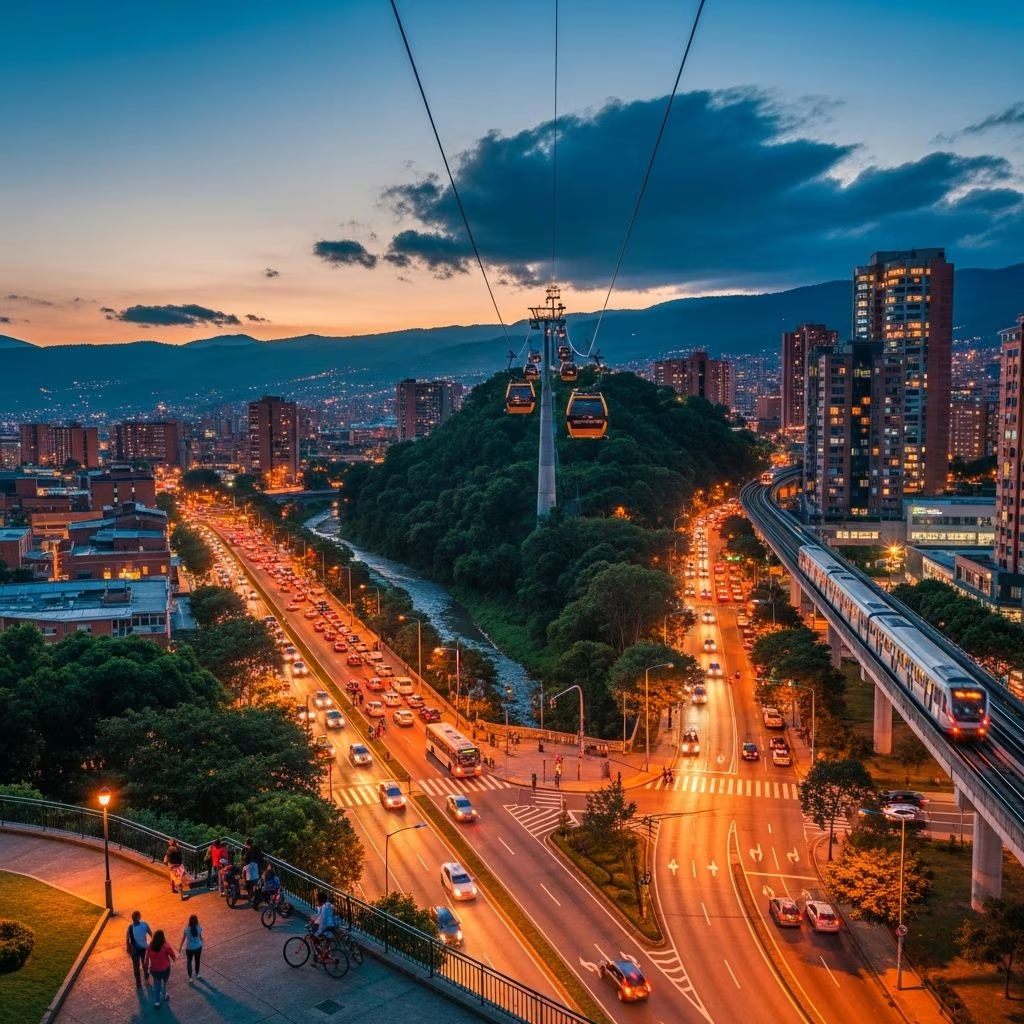
Medellín, nestled in a valley surrounded by Andean mountains, has revolutionized urban mobility with one of Latin America’s most innovative public transport networks. This system seamlessly blends metro trains, aerial cable cars, modern trams, bus rapid transit, and feeder buses to connect hilly neighborhoods and bustling downtown areas. Whether you’re a first-time visitor heading to cultural hotspots or a resident commuting daily, understanding these options ensures efficient, affordable travel across this dynamic city of over 2.7 million people.
The city’s Sistema Integrado de Transporte del Valle de Aburrá (SITVA) unifies multiple modes under one fare structure, primarily accessed via the reusable Cívica card. This integration allows seamless transfers within a 90-minute window for a flat fee, making it cost-effective for multi-leg journeys. Key components include two metro lines, six Metrocable lines, one tram line, Metroplús buses, and hundreds of feeder routes. Unlike many Colombian cities, Medellín’s rail-based metro is unique, serving as the backbone for reaching tourist sites like Plaza Botero, Botanical Gardens, and Comuna 13.
Daily ridership exceeds hundreds of thousands, with modern infrastructure designed for accessibility, including wheelchair spaces and bike accommodations. Fares remain budget-friendly: around 3,650 COP (about $0.93 USD) with a Cívica card, unchanged for tourists or locals. Recent 2025 updates slightly adjusted rates, but the system’s value persists.
Medellín’s metro comprises two primary lines that form the city’s north-south and center-west arteries. Line A stretches 27 stations from Niquía in the north to La Estrella in the south, passing through key downtown stations like Parque Berrío and Poblado—ideal for shopping and nightlife. Line B branches west from San Antonio to San Javier, providing access to western barrios. Trains run frequently from 4:30 AM to 11 PM, every 5-7 minutes during peak hours.
Stations feature clear signage in Spanish and English, with audio announcements. Download the official Metro de Medellín app for real-time schedules and maps.
The Metrocable system stands out as an engineering feat, ferrying passengers over steep hillsides to comunas once isolated by topography. Six lines—J, K, H, M, P, and L—offer breathtaking panoramic views of the Aburrá Valley, forests, and urban sprawl. Cabins hold 8-10 people, operating from early morning until around 10 PM, weather permitting (high winds may halt service).
Most lines are included in the standard fare, except Line L to Arví Park, which costs an extra 11,000 COP for a 20-minute scenic ride through a nature reserve. Transfer points include Acevedo (Lines K and metro), San Javier (Line J), and Oriente (Lines H, M, and tram).
| Metrocable Line | Route Summary | Key Access Points | Notable Destinations |
|---|---|---|---|
| J | San Javier to Juárez | San Javier Metro | Western comunas |
| K | Acevedo to Santo Domingo | Acevedo Metro | Comuna 13 gateway |
| H | Oriente to Villa Sierra | Oriente/Tram | Eastern hills |
| M | Oriente to Pan de Azúcar | Oriente/Tram | Panoramic views |
| P | 27 de Febrero to El Progreso | Metro connection | Newest line |
| L (CableArví) | Santo Domingo to Arví Park | Santo Domingo | Nature park (extra fare) |
The Ayacucho Tram (Line T), operational since 2016, spans 4.3 km from San Antonio Metro to Oriente, linking central areas like Buenos Aires and Alejandro Echavarría. Air-conditioned cars arrive every 5-10 minutes, accommodating bikes and wheelchairs. It’s perfect for downtown loops and transfers to eastern Metrocables. Cívica card required; included in standard fare.
Buses dominate shorter trips, divided into integrated SITVA routes (painted orange), private buses, and intercity options. Metroplús, a BRT system launched in 2011, uses dedicated lanes with elongated buses serving over 200,000 daily passengers. Lines connect to metro stations for easy transfers.
For Comuna 13, ride Line B to San Javier, then bus or taxi to escalators. Use Google Maps or Moovit apps for routes, as signage can overwhelm newcomers.
Taxis are yellow and metered; insist on the taxímetro to avoid overcharges. Ride-hailing apps like Uber, Didi, and InDriver offer safer, trackable rides, often cheaper off-peak. Mototaxis (moto-taxis) zip through traffic but pose higher risks—wear helmets.
For airport transfers from José María Córdova (Rionegro), options include official taxis (35-60 minutes via Oriente Tunnel), buses, or apps. Expect 100,000-150,000 COP depending on traffic.
| Mode | Fare (COP) | Notes |
|---|---|---|
| Metro/Tram/Metrocable (Standard) | 3,650 | With Cívica; 90-min transfers |
| CableArví (Line L) | 11,000 extra | One-way to park |
| Bus (Integrated) | Included | Post-metro validation |
| Taxi (Short Ride) | 10,000-20,000 | Metered |
| Uber (City Center) | 8,000-15,000 | Dynamic pricing |
Purchase at any metro station machine or counter for 5,000 COP; recharge with cash or bank cards.
Yes, it’s one of the safest systems in Colombia; stick to well-lit stations and avoid late nights alone.
No—metro, tram, Metroplús, and integrated buses require Cívica. Taxis and private buses accept cash.
Line B to San Javier, then bus #345 or taxi; tours often include transport.
No, typically 4:30 AM to 11 PM; check apps for exact times.
Beyond the city, buses from terminals like Caribe or Norte connect to Guatapé (2 hours) or Santa Fe de Antioquia. For airport runs, pre-book via apps for reliability. Embrace walking in Poblado or Laureles for short distances—sidewalks are improving.
Medellín’s transit evolution from crisis-era isolation to inclusive connectivity showcases urban innovation. By prioritizing public options, visitors reduce costs and carbon footprints while immersing in local life.
