

 Travel Essentials
 Travel Essentials

Journey through Tunis Medina's labyrinthine alleys, explore historic mosques and souks, and experience Ottoman palaces in this 7th-century UNESCO World Heritage site.
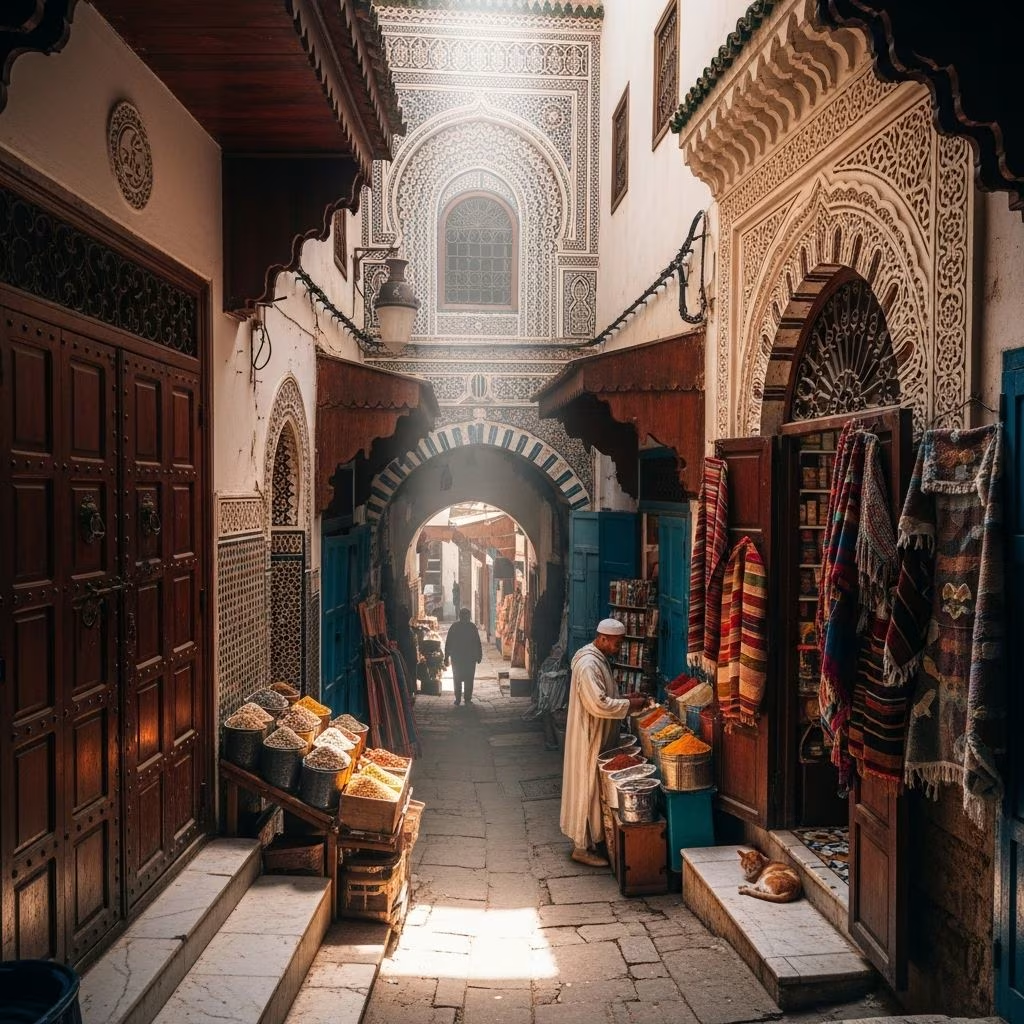 Travel Essentials
The Medina of Tunis stands as a captivating testament to over a millennium of history, culture, and architectural ingenuity in the heart of Tunisia’s capital. Established around 698 AD as one of the earliest Arabo-Muslim settlements in the Maghreb, this sprawling 300-hectare district was once fully enclosed by formidable walls pierced by grand gates, now reduced to a few enduring remnants. Recognized by UNESCO as a World Heritage Site in 1979, it preserves more than 700 monuments—including mosques, madrasas, palaces, mausoleums, and fountains—that chronicle the rise of dynasties like the Almohads, Hafsids, and Ottomans.
Unlike more tourist-saturated medinas in neighboring Morocco, Tunis’s version retains an authentic, lived-in charm. Narrow alleys designed for climate control—cool in summer, warm in winter—wind through vibrant neighborhoods alive with the aroma of mint tea, the chatter of merchants, and the call to prayer from ancient minarets. Vertical vaults spanning streets accommodated camel caravans in space-scarce times, showcasing clever urban planning. Today, restoration efforts by local organizations breathe new life into its dar (courtyard mansions) and zaouias (saint shrines), making it an essential stop for any Tunisia explorer.
Tunis Medina’s origins trace back to the late 7th century, when Arab forces established a market settlement amid a fertile plain near the Mediterranean. By 700 AD, the Zitouna Mosque rose over a former Christian basilica, symbolizing the fusion of cultures. From the 12th to 16th centuries, under Almohad and Hafsid rule, Tunis flourished as a major Islamic hub, its wealth funding opulent structures that blended local, Andalusian, and North African styles.
Ottoman influence from the 16th century onward added lavish palaces and mosques, while 19th-century additions like the Zitouna minaret reflected evolving tastes. The medina’s walls, built from Carthage ruins, guarded against invasions via 12 gates (babs), with survivors like Bab Bhar (Sea Gate) and Bab Jedid (New Gate) still marking entries. This layered history earned UNESCO accolades for exemplifying Ifriqiya civilizations and intact urban fabric, though modernization poses ongoing preservation challenges.
At the medina’s core pulses the **Zitouna Mosque** (Al Zaytouna), its square Almohad-style minaret a landmark visible from afar. Columns salvaged from Carthage support arcaded courtyards, while legends whisper of a saint’s tomb beneath, warding off relocation curses. Non-Muslims can tour outer areas, marveling at the prayer hall’s horseshoe arch and dome.
Surrounding streets fan out to souks specializing in textiles, spices, jewelry, and leather. Madrassas like those near the mosque educated Quran scholars, their intricate tilework and riads (interior gardens) evoking scholarly splendor. Ottoman-era Torbet El Bey neighborhood boasts hammams (public baths) and grand dars, such as restored Dar Lasram and Dar El Monastiri, now cultural hubs for calligraphy.
| Neighborhood | Highlights | Best For |
|---|---|---|
| El Hafsia | Dars, zaouias, Association HQ | Architecture lovers |
| Heart (Souks Area) | Markets, mosques, madrasas | Shopping & culture |
| Torbet El Bey | Ottoman mosques, hammams | Local life immersion |
Other gems include mosaic museums blending Moorish and European elements, displaying Punic to Islamic artifacts from sites like Dougga and El Jem.
Entry points like Bab El Bahr from modern Centre Ville lead to Rue de la Kasbah and Rue Jamaa Ezzitouna, arteries to key sights. The layout defies maps—embrace getting lost amid vaulted passages and bustling stalls. Neighborhoods divide the 300 hectares: souk cores for commerce, residential fringes for daily life.
Pro tips: Start early to beat crowds, wear comfortable shoes for uneven cobblestones, and hire local guides for hidden spots. Apps or printed maps help, but serendipity rules here.
Souks overflow with spices, olives, and harissa, while cafes serve sweet mint tea amid shisha clouds. Street food like brik (crispy pastries) and makroud (date cookies) tempt palates. Hammams offer steamy relaxation, a nod to communal traditions.
Locals blend old and new: artisans craft copperware, calligraphers preserve scripts, and families navigate alleys daily. This vibrancy sets Tunis apart from static museums.
Combine with Bardo Museum for mosaics or nearby Carthage ruins for a full day.
Organizations like the Association for Safeguarding the Tunis Medina restore sites, countering urban pressures. Entrepreneurs open cafes in dars, sustaining heritage through tourism. UNESCO stresses protection amid socio-economic shifts.
Yes, it’s generally safe; stick to main paths and daytime visits.
Outer courtyards yes; prayer hall no.
4-6 hours for highlights; full day ideal.
Spices, ceramics, carpets—bargain politely.
Yes, via apps or locals; recommended for depth.
This medina isn’t just ruins—it’s a breathing archive where history meets hospitality, inviting you to wander, taste, and connect with Tunisia’s soul.
