

 Travel Essentials
 Travel Essentials

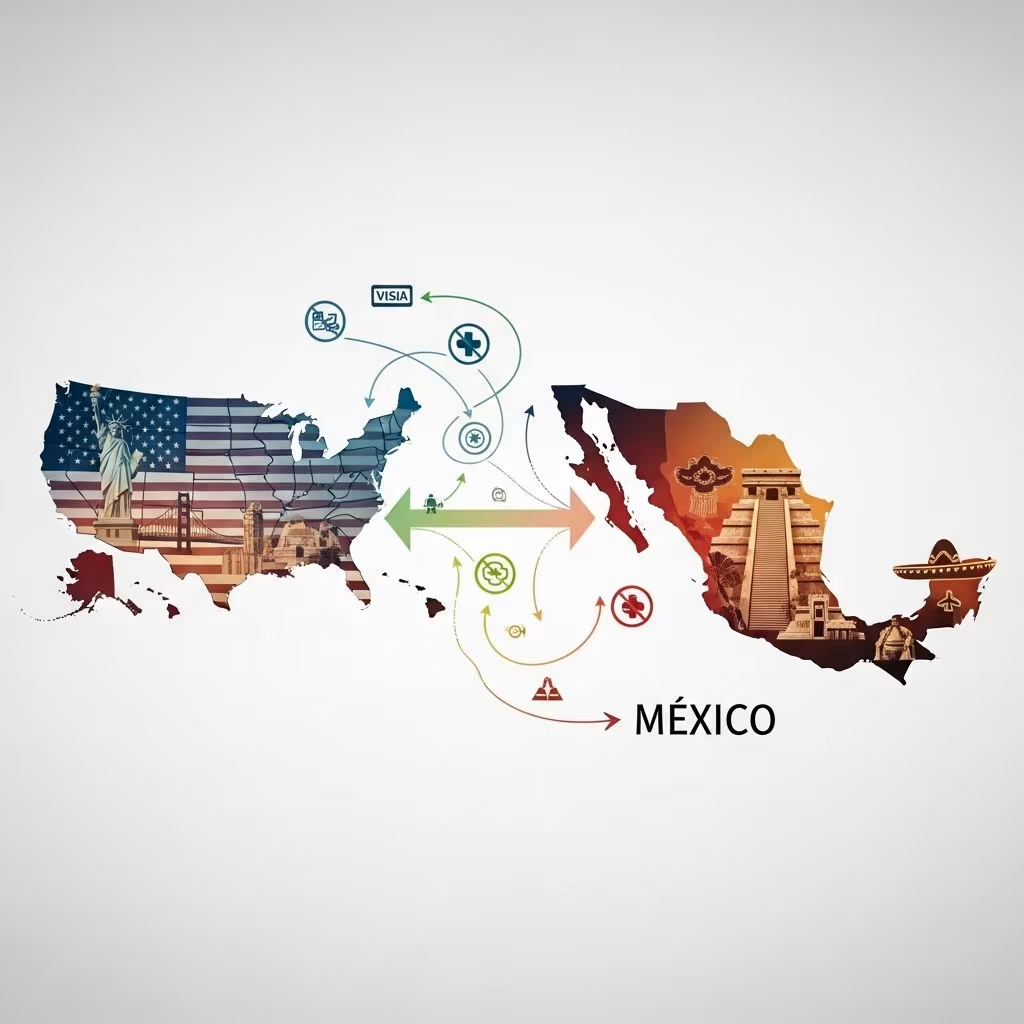
Recent changes to U.S. travel policies for Mexico reflect evolving security conditions. Learn current restrictions, safety protocols, and what travelers need to know.
 Travel Essentials
Travel to Mexico remains a popular choice for American tourists seeking beaches, cultural experiences, and vibrant destinations. However, security concerns have prompted the U.S. State Department to implement travel advisories and restrictions that travelers must understand before planning trips to this neighboring country. Understanding these guidelines is essential for ensuring safe and compliant travel.
The U.S. State Department maintains a dynamic travel advisory system that reflects real-time security assessments across different regions and countries. For Mexico, these advisories have undergone significant changes in recent months due to various security incidents affecting popular tourist destinations. The advisory system categorizes countries into four levels: Level 1 (Exercise Normal Precautions), Level 2 (Exercise Increased Caution), Level 3 (Reconsider Travel), and Level 4 (Do Not Travel). Mexico currently operates under a Level 2 advisory, which means U.S. citizens are advised to exercise increased caution when traveling throughout the country.
The shift to a Level 2 advisory represented a relaxation of previous restrictions that had been implemented following specific security incidents. Prior to this adjustment, more stringent measures had been in place, including shelter-in-place directives for American citizens in certain areas. The lifting of some restrictions, while maintaining others, reflects a balanced approach to tourism and security.
Mexico’s travel advisory landscape is not uniform across the entire country. Different states and regions face varying levels of risk, and the State Department provides detailed guidance for each area. Some states have been designated as areas where travel should be reconsidered due to terrorism, crime, and kidnapping risks. Understanding these regional differences is crucial for travelers planning their itineraries.
For U.S. government employees operating in Mexico, specific protocols have been established to minimize risk. These guidelines, while technically applicable to government staff, provide valuable insight into high-risk areas that civilian travelers should also carefully consider:
Certain popular tourist destinations have been designated with specific travel parameters. For instance, access to some coastal areas is limited to air or sea travel only, with strict boundaries on ground movement within the city limits. Northern border regions face particularly heightened restrictions, with daylight-only travel mandates and prescribed routing requirements.
Violence in popular resort destinations prompted emergency responses that temporarily disrupted tourism and left American travelers stranded. Events affecting areas such as Puerto Vallarta and Guadalajara created unprecedented situations where tourists were unable to depart. The U.S. State Department’s swift response included lifting certain shelter-in-place orders and facilitating the evacuation of stranded citizens.
These incidents underscored the importance of staying informed about real-time security developments. Major airlines including American Airlines and Southwest airlines responded by waiving change fees and rebooking charges for travelers affected by the disruptions, demonstrating the industry’s commitment to assisting those caught in challenging situations.
The Mexican government has emphasized its commitment to controlling the security situation, with officials urging both domestic and international audiences to maintain confidence in the country’s stability. These statements reflect efforts to preserve the tourism industry while addressing underlying security challenges.
Regardless of advisory levels, travelers must comply with Mexico’s formal entry requirements. These prerequisites apply to all visitors and are enforced at ports of entry:
| Entry Method | Required Documentation | Additional Information |
|---|---|---|
| Land Border | Passport book or card | FMM entry permit required for all travelers, including those staying within 12 miles of border |
| Sea Travel | Valid passport, passport card, trusted traveler card, or state REAL ID | Private boat/ship operators must obtain Mexican government permit |
| Air Travel | Valid passport | Standard international flight documentation applies |
The FMM (Forma Migratoria Múltiple) entry permit can be obtained online or at Mexican immigration offices. This document is mandatory for all travelers and establishes legal entry into the country. Travelers should ensure their passports are valid for at least six months beyond their intended departure date from Mexico.
Americans planning to drive in Mexico face additional regulatory requirements. Temporary vehicle import permits are mandatory for U.S.-registered vehicles traveling beyond the border zone. These permits must be obtained through Banjercito (the Mexican office of temporary vehicle import) and require a refundable deposit.
Certain regions in Baja California, Baja California Sur, and Sonora have been designated as “hassle-free zones” where vehicles can travel throughout the state without an entry permit. These zones offer streamlined vehicle registration processes for those who prefer to arrange documentation upon arrival.
For all drivers, understanding local traffic laws, maintaining proof of Mexican liability insurance, and registering vehicles appropriately are essential steps. The security environment also means that nighttime driving should be minimized, and travel on well-established routes is strongly recommended.
Certain categories of travelers require additional attention when planning Mexico trips. Minors traveling without both parents should carry notarized parental consent letters. Dual nationals should verify requirements with Mexican authorities regarding entry and exit procedures. Travelers with specific health conditions should verify entry eligibility and bring necessary documentation.
LGBTQ+ travelers and those from marginalized communities should research specific regional attitudes and legal protections, as these vary across Mexico. Solo travelers, particularly women, should exercise heightened awareness and follow the protocols recommended for government employees regarding transportation and travel timing.
Travel insurance has emerged as an essential safeguard for those visiting Mexico, particularly given recent disruptions to travel plans. Comprehensive policies should cover emergency medical evacuation, trip cancellation, lost baggage, and potential disruptions due to security incidents. Given the experience of stranded travelers during recent incidents, insurance that includes provisions for unexpected changes or emergency departures is particularly valuable.
Travel agents increasingly recommend securing insurance before booking flights or accommodations. Policies should be carefully reviewed to understand coverage limits, exclusions, and claims procedures. Some policies may have specific provisions related to travel advisories and government warnings, making it essential to read the fine print.
Major carriers serving Mexico have implemented flexible rebooking policies in response to recent disruptions. American Airlines and Southwest Airlines have demonstrated commitment to assisting affected passengers by waiving change fees and offering alternative routing options. Travelers should contact their airlines directly to understand current policies and any specific protections offered.
Airlines continue to monitor security situations and adjust flight schedules as necessary. Checking flight status before departing for the airport and maintaining contact with your carrier during any travel disruptions is advisable. Most carriers have dedicated support teams for passengers affected by security-related incidents.
Successful Mexico travel requires thorough preparation. Prior to departure, travelers should register with the Smart Traveler Enrollment Program (STEP), which provides updates on local conditions and assists in emergency situations. Downloading offline maps, establishing emergency contact procedures, and informing family members of travel itineraries are fundamental precautions.
Review current State Department advisories specific to your intended destinations. Check embassy websites for real-time security alerts and travel announcements. Verify that accommodations are in safe, well-traveled areas and that ground transportation is pre-arranged through reliable providers.
Traveling to Mexico remains feasible for American tourists who stay informed, prepare thoroughly, and exercise appropriate caution. The current Level 2 advisory reflects a balanced assessment that acknowledges both the safety of well-traveled areas and the need for vigilance. By understanding entry requirements, following regional restrictions, securing adequate insurance, and maintaining awareness of security developments, travelers can have meaningful and relatively safe experiences in Mexico’s diverse destinations. The key is making informed decisions based on current official guidance rather than outdated assumptions about travel conditions.
