

 Travel Essentials
 Travel Essentials

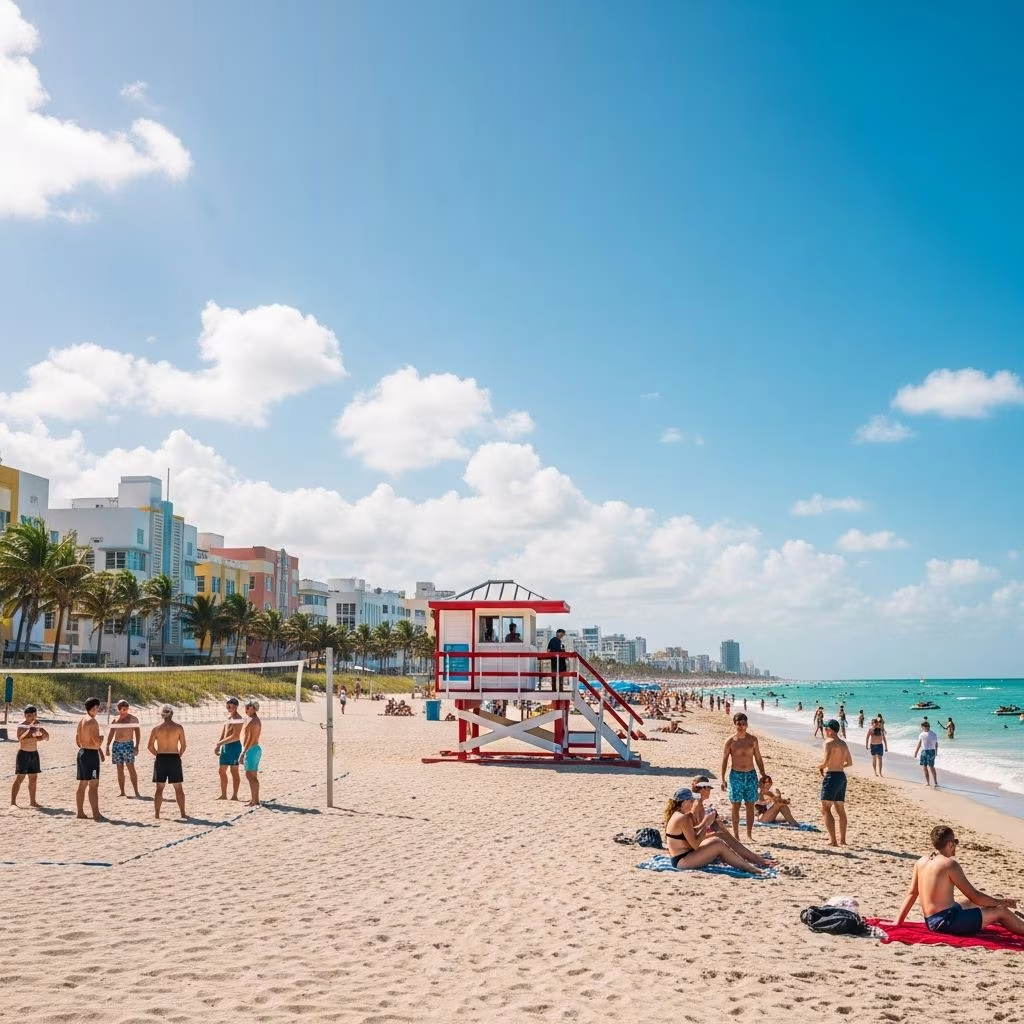
Miami Beach enforces strict Spring Break rules including curfews, parking fees, beach bans, and heightened security to ensure safety and order.
 Travel Essentials
Miami Beach continues its firm stance on managing Spring Break crowds with updated regulations designed to prioritize public safety and local quality of life. These measures, evolved from previous years’ experiences, include enhanced security, financial deterrents, and behavioral restrictions to curb past disruptions.
The city has long grappled with the challenges posed by large influxes of visitors during Spring Break. Past seasons saw incidents of violence, property damage, and public disorder, prompting a multi-year campaign to reshape the event. Dubbed a ‘break-up’ with unchecked revelry, officials aim to welcome tourists who respect rules while deterring those seeking chaos. This approach balances tourism revenue with resident well-being through targeted enforcement.
Key drivers include fatal shootings in prior years and overwhelming crowds straining resources. By implementing proactive controls, Miami Beach seeks to maintain its appeal as a premier destination without the associated risks.
Heightened security forms the backbone of 2026 preparations. Expect increased police patrols across Miami-Dade County, particularly in high-traffic zones. Collaboration with regional agencies amplifies presence, focusing on prevention and rapid response.
A mandatory curfew remains a cornerstone policy. From late evening until early morning on specified dates—typically mid-March weekends—individuals under curfew age must remain off public streets. This ’emergency’ measure activates 11:59 p.m. to 6 a.m., enforced rigorously to disperse crowds and prevent overnight disturbances.
Beach closures occur earlier than usual, often by late afternoon, to avoid after-dark gatherings. Violators face immediate citations or arrest.
Financial disincentives target vehicles, making access costlier for non-residents. Garages in South Beach charge flat fees starting at $40 daily, potentially rising to $100 at the city manager’s discretion during high-demand periods.
| Parking Type | Fee for Non-Residents | Notes |
|---|---|---|
| South Beach Garages | $40 base, up to $100 | Applies Thu-Mon; limited spots |
| Street Parking | Banned in most lots | Only designated garages open |
| Towing Fee | $548 | Doubled fines in some areas |
Towing doubles during the season, with added administrative fees in violation hotspots. Illegally parked cars face swift removal, turning a minor oversight into a substantial expense.
Beaches enforce zero-tolerance for disruptive activities. These rules promote a family-friendly environment while protecting natural spaces.
Security personnel patrol these areas, confiscating items and issuing tickets on sight.
Police prioritize offenses that escalate quickly in crowds. Awareness prevents life-altering consequences like arrests impacting records, jobs, or education.
Misdemeanors carry up to $1,000 fines; beach smoking adds $100-$500. Short-term rentals like Airbnb face $5,000 daily fines if unlicensed.
A fun trip can sour fast with accumulating costs. Beyond fines, factor in towing recovery, legal fees, and bail. One disorderly conduct ticket equals a misdemeanor with criminal record implications.
City data shows enforcement reduces incidents but increases individual liabilities for non-compliant visitors. Responsible behavior avoids transforming vacation funds into penalty payments.
Plan ahead for enjoyment without issues:
Recent city votes ease year-round live music restrictions, boosting nightlife occupancy to 750 indoors on key streets—good news for evening plans outside beach hours.
Curfew runs 11:59 p.m. to 6 a.m. on select mid-March nights, barring public presence except for residents or workers.
Yes, limited garages charge $40-$100 flat fees; street parking banned in most areas.
No, public consumption banned; stick to permitted establishments.
Expect $548 fees, doubled in some zones, plus admin costs.
Many are illegal; fines up to $5,000/day for violations.
To prevent violence, damage, and disorder from past overcrowding.
Beyond seasonal rules, Miami Beach invests in sustainable tourism. Enhanced surveillance tech, community programs, and venue reforms signal a shift toward controlled vibrancy. Visitors embracing responsibility contribute to a positive evolution, ensuring Spring Break remains viable.
(Word count: 1678)
