

 Travel Essentials
 Travel Essentials

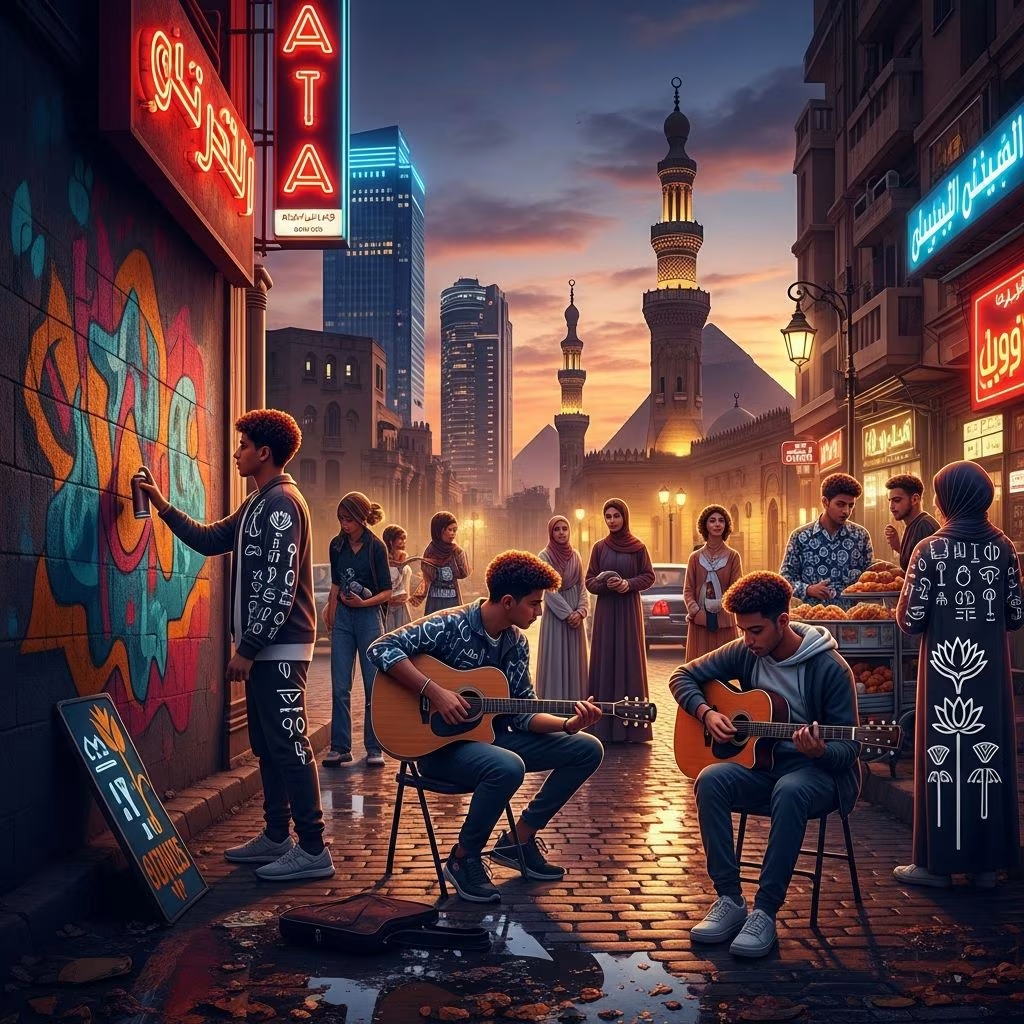
Explore Egypt's contemporary culture: from street art and festivals in Cairo to music scenes and fashion, revealing a youthful revolution in creativity and expression.
 Travel Essentials
Egypt’s contemporary culture pulses with energy from its predominantly young population, who are fusing ancient traditions with cutting-edge expressions in art, music, film, and urban life. This dynamic scene, centered in cities like Cairo and Alexandria, showcases a creative revolution that challenges norms and engages global audiences.
Contemporary visual arts in Egypt have flourished since the late 20th century, evolving from Western influences to a strong emphasis on national identity and Arab cultural themes. Artists in Cairo and Alexandria produce installations, paintings, sculptures, and videos that reflect socio-political realities, with the 2011 revolution acting as a catalyst for bold public expressions.
Street art, in particular, has transformed city walls into canvases for commentary on issues like corruption, poverty, and gender equality. Graffiti not only raises awareness but also revitalizes neglected neighborhoods, instilling pride among residents. This movement represents an urban society’s self-reflection at a pivotal moment.
Egyptian music has undergone a renaissance, blending traditional sha’bi rhythms with electronic elements to create genres like electro sha’bi and techno sha’bi. These sounds emerged prominently during protests, capturing the spirit of resistance and joy. Today, independent musicians perform in underground venues, festivals, and online platforms, reaching audiences worldwide.
Cairo’s nightlife throbs with fusion sounds where mahraganat—a raw, street-born style—mixes with techno and hip-hop. Artists use lyrics to address daily struggles, making music a voice for the masses. This evolution mirrors Egypt’s shift toward a more open, youth-driven cultural identity.
| Genre | Origins | Key Characteristics |
|---|---|---|
| Electro Sha’bi | 2011 Revolution protests | Traditional sha’bi beats + electronic production; themes of social justice |
| Mahraganat | Cairo slums | Fast-paced, auto-tuned vocals; raw storytelling about urban life |
| Techno Sha’bi | Underground clubs | High-energy mixes for festivals; global dance influences |
Annual festivals have become cornerstones of Egypt’s cultural calendar, decentralizing art from elite spaces to public realms. These events feature multidisciplinary programs including theater, dance, film, and workshops, drawing local and international participants.
The Downtown Contemporary Arts Festival (D-CAF), launched in 2012, animates Cairo’s historic downtown with exhibitions and performances across diverse venues. It underscores art’s role in societal evolution. Similarly, Mahatat Collective, started in 2011, promotes mobile art projects nationwide, emphasizing accessibility and community involvement. Cairotronica, a biannual event since 2016, spotlights new media arts, offering immersive experiences for emerging talents.
Egypt’s film industry, once dominated by commercial cinema, now thrives with independent productions tackling taboo subjects like politics, sexuality, and identity. Festivals such as the Cairo International Film Festival showcase bold works that push boundaries. Young filmmakers use digital tools to bypass censorship, distributing via online platforms and international circuits.
This shift has elevated Egyptian cinema globally, with directors gaining acclaim at events like Cannes and Berlin. Stories often weave personal tales with national history, reflecting the tension between tradition and modernity.
Modern Egyptian fashion designers draw from pharaonic motifs, Islamic patterns, and streetwear to create collections that resonate locally and abroad. Cairo Fashion Week highlights sustainable practices and modest wear innovations. Tailors in bustling markets blend handmade crafts with contemporary silhouettes, while pop culture influences like tattoos and graphics incorporate ancient symbols into everyday style.
Video games and cartoons also reference Egypt’s antiquity, introducing younger generations to heritage through interactive media. This pop culture infusion keeps traditions alive in unexpected ways.
In Cairo and Alexandria, daily rhythms mix ancient landmarks with skyscrapers and cafes. Neighborhoods buzz with street vendors, family gatherings at ahwas (traditional coffee houses), and impromptu music sessions. This coexistence fosters resilience, as Egyptians navigate rapid urbanization while preserving communal bonds.
Women play pivotal roles in cultural shifts, from leading art collectives to starring in music videos that challenge stereotypes. Social media amplifies these voices, creating virtual communities that extend Egypt’s influence.
Egyptian creators increasingly engage international networks, with artists exhibiting in Europe and the Middle East. Modernism on the Nile, as explored in scholarly works, positions Egypt as a hub in global art history, challenging Eurocentric narratives. Support from abroad and public enthusiasm fuel growth, promising a vibrant future.
Electro sha’bi fuses traditional Egyptian sha’bi rhythms with electronic beats, popularized during the 2011 revolution for its protest anthems and dance appeal.
Key spots include downtown Cairo walls near Tahrir Square and Manshiyat Naser, where murals address social issues and beautify slums.
The Downtown Contemporary Arts Festival occurs annually in spring, featuring arts across Cairo venues.
It boosted youth-led arts, graffiti, and independent music, reclaiming public spaces for expression.
Yes, alongside Cairo, it hosts galleries and festivals blending Mediterranean and Egyptian influences.
