

 Travel Essentials
 Travel Essentials

Explore Molise, Italy's overlooked region offering medieval architecture, mountain hiking, coastal charm, and centuries-old traditions away from tourist crowds.
 Travel Essentials
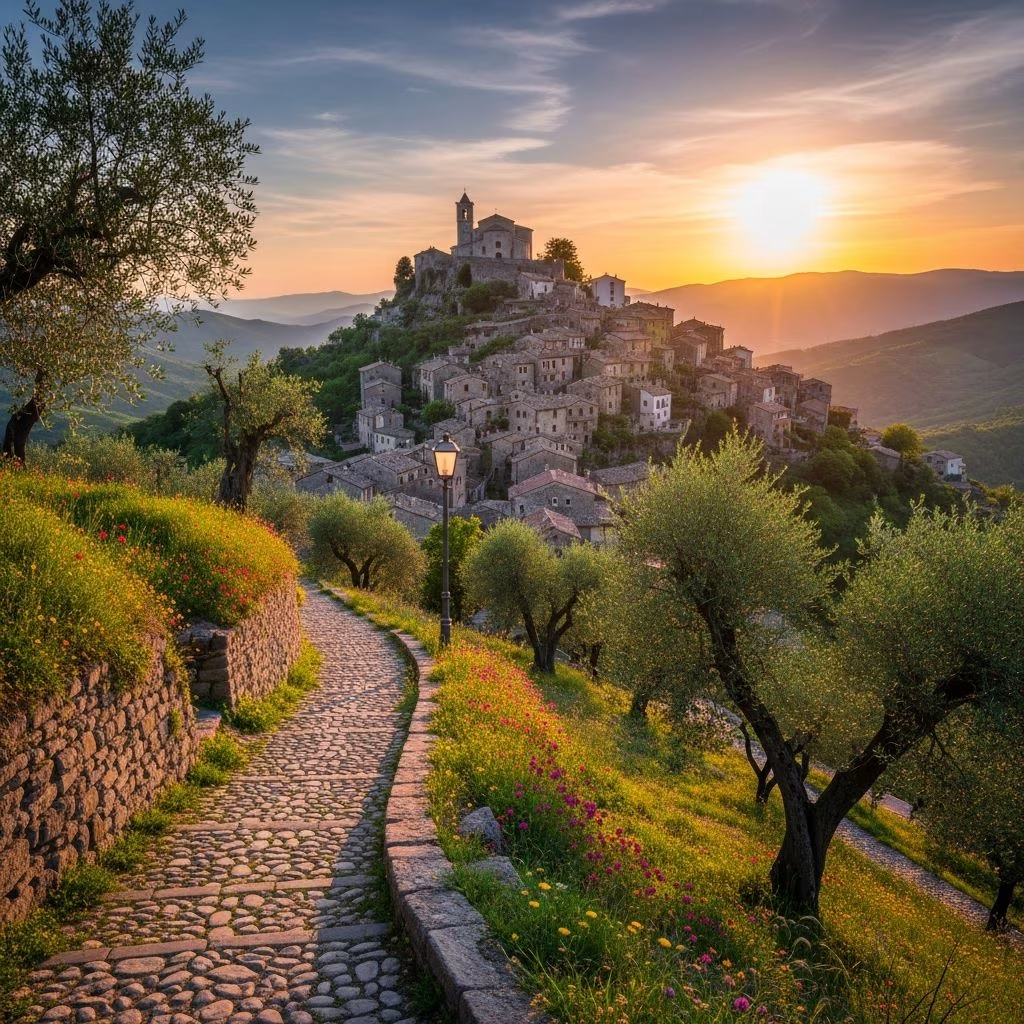
Nestled between the Apennine Mountains and the Adriatic Sea, Molise represents one of Europe’s final frontiers for authentic travel experiences. This compact region in southern Italy has largely escaped the mass tourism that characterizes other Italian destinations, preserving its medieval character, mountain wilderness, and centuries-old cultural traditions. For travelers seeking genuine encounters with Italian heritage rather than crowded piazzas and commercialized attractions, Molise offers an unparalleled opportunity to experience the country as it existed generations ago.
The region’s isolation has proven to be its greatest asset. Rather than developing extensive tourist infrastructure, Molise has maintained its identity through family-owned accommodations, traditional restaurants serving ancestral recipes, and cultural practices that continue largely unchanged. This preservation creates an immersive travel experience where visitors become temporary participants in authentic community life rather than observers of staged attractions.
Molise occupies a strategic location in Italy’s interior, positioned between more famous regions that typically dominate travel itineraries. Its geography combines three distinct landscapes: the mountainous interior featuring peaks of the Apennine chain, the undulating agricultural heartland with ancient trade routes, and the modest but beautiful Adriatic coastline. This topographic diversity allows travelers to transition between radically different environments within hours, offering the flexibility to craft multi-faceted itineraries.
The region encompasses approximately 4,400 square kilometers and contains two provinces: Campobasso in the north and Isernia in the south. This compact size makes Molise ideal for exploration over a four to five-day period, allowing visitors to experience multiple environments and communities without exhausting travel days on transportation.
Molise’s historical narrative extends back millennia, predating Roman civilization. The Samnites, an ancient Italic people, established sophisticated settlements throughout the region before Roman conquest. Archaeological sites scattered across Molise reveal remnants of this pre-Roman era, including temple ruins, defensive structures, and evidence of complex social organization. The Sannitico Museum in the regional capital preserves artifacts and interpretive materials documenting this fascinating civilization.
Roman occupation left equally substantial marks on the landscape. Fortified settlements, amphitheaters, and forum ruins testify to Rome’s administrative presence. The archaeological site at Larino features a remarkably preserved Roman amphitheater, offering insight into public life during the imperial period. These tangible connections to antiquity provide historical context that enriches contemporary exploration.
Medieval development established the fortified hilltop villages that characterize Molise’s visual identity. Strategic positioning on elevated terrain provided defensive advantages against coastal raids and regional conflicts. Stone construction techniques and narrow, winding streets designed for defense created the atmospheric urban environments that distinguish Molise’s towns from later Italian settlements.
Campobasso serves as the logical entry point for many Molise explorations. Perched on a hillside at approximately 700 meters elevation, this town of roughly 40,000 residents combines regional administrative functions with genuine community atmosphere. The medieval quarter occupies the upper portions of the town, featuring the Cathedral of the Holy Trinity and a network of narrow streets that reward wandering exploration.
The most prominent landmark, Monforte Castle, crowns the town’s highest point. Though substantially reconstructed during the 19th century, the castle provides panoramic perspectives across the surrounding countryside. From this vantage point, visitors appreciate the topographic complexity that shaped regional development and understand why elevated positions held such strategic importance historically.
Campobasso hosts several important cultural institutions, including the Sannitico Museum dedicated to pre-Roman civilization. Rather than presenting artifacts in isolation, the museum contextualizes discoveries within the broader narrative of ancient Samnite society, economy, and belief systems. Wine enthusiasts will find several local producers offering tastings of regional varietals in intimate settings that reflect the town’s character.
Positioned on the Adriatic coast, Termoli represents Molise’s maritime face. The Borgo Antico (old town) occupies a small peninsula jutting into the sea, its fortified medieval core creating a distinctive silhouette visible from approaching routes. This ancient settlement reportedly dates to the 6th century BCE, though the structures visible today reflect medieval reconstruction and maintenance.
The fortified citadel encloses a compressed maze of narrow streets, pocket-sized piazzas, and residences constructed literally on top of one another. One street purports to hold the distinction of Europe’s narrowest passage, a designation that underscores the space-efficient design principles employed in medieval fortified towns. Walking through these passages creates an intimate sense of how previous generations utilized limited urban space.
The coastal position provides welcome relief from inland mountain travel. Beaches and rocky outcrops offer swimming opportunities, while waterfront restaurants serve fresh seafood preparations. The combination of historical exploration and coastal recreation makes Termoli suitable for travelers seeking balance between cultural engagement and leisure activities.
The southern provincial capital, Isernia has functioned as an important settlement from pre-Roman times through the contemporary period. The Museo Nazionale del Paleolitico houses extraordinary paleolithic artifacts and skeletal remains, documenting human presence in the region extending back approximately 700,000 years. This temporal depth provides humbling perspective on human habitation longevity.
Roman-era ruins, including forum structures and domestic buildings, occupy positions beneath and within the modern town. Local piazzas and quiet streets create ideal conditions for contemplative exploration. Unlike heavily restored archaeological sites, Isernia preserves its ancient layers relatively intact, allowing visitors to imagine how successive civilizations inhabited identical spaces across centuries and millennia.
Molise’s festivals represent genuine expressions of cultural continuity rather than performances designed for tourist consumption. These celebrations connect contemporary residents to ancestral traditions and seasonal rhythms that have structured community life across generations.
La ‘Ndocciata (Agnone) occurs annually around Christmas, featuring processions of inhabitants carrying massive flaming torches through medieval streets. This dramatic ritual creates an atmosphere combining spiritual devotion, community participation, and pre-Christian fire symbolism. The visual spectacle, enhanced by mountain acoustics and historic architecture, creates visceral connection to ancestral practices.
Carrese di San Pardo (Larino) presents oxen-drawn cart races held each May, celebrating the region’s pastoral heritage and religious devotion. These events maintain skills and animals that have gradually disappeared from modern Italian agriculture, preserving living knowledge that might otherwise vanish.
Corpus Domini (Campobasso) features centuries-old parade traditions incorporating elaborate biblical costumes and “living statue” performers. Unlike theatrical productions staged for audiences, this religious observance genuinely engages community members in spiritual and cultural expression.
Shepherd’s Transhumance represents seasonal livestock movement patterns that UNESCO has recognized as a Masterpiece of the Oral and Intangible Heritage of Humanity. This recognition acknowledges how pastoral movement practices embody complex knowledge about landscape, animal husbandry, and seasonal adaptation accumulated across centuries.
The Apennine Mountains dominate Molise’s interior, creating hiking and climbing destinations that attract adventurers seeking wilderness experiences. The Monti del Matese massif, shared with adjacent regions, provides extensive trail networks across high plateaus, through forested valleys, and along ridge lines offering expansive views. These mountains support ecological diversity and outdoor recreation within relatively compact areas.
The Parco Nazionale d’Abruzzo, Lazio e Molise protects 50,000 hectares across three regions, including significant Molise territory. This protected area maintains populations of wolves, bears, and numerous bird species within their natural habitats. Designated trails range from manageable day excursions to multi-day backcountry expeditions, accommodating varying fitness levels and time availability.
L’Oasi WWF Guardiaregia encompasses 3,135 hectares protecting diverse ecosystems and geological formations. The Quirino torrent canyon, featuring the 100-meter San Nicola waterfall, showcases water erosion’s sculptural power across millennia. Subterranean caves, including the Pozzo della Neve and Cul di Bove, number among Europe’s deepest chasms, supporting specialized fauna adapted to underground conditions.
The endemic Spectacled Salamander inhabits these protected wetland and cave environments, representing evolutionary adaptation to specific ecological niches. The reserve protects approximately 340 butterfly species, ranging from common species to rare endemics. Golden eagles, lanner falcons, and occasionally wolves reward patient observers with wildlife viewing opportunities rarely available in more developed regions.
Lake Guardialfiera provides freshwater recreation opportunities including kayaking, fishing, and birdwatching. The lake’s elevation and surrounding landscape create scenic backdrops for leisurely paddling or shoreside observation. Seasonal migrations bring diverse bird species, offering ornithologists and casual bird enthusiasts observational opportunities.
The Biferno and Volturno rivers offer gentle rafting experiences suitable for families and casual paddlers, alternating with more challenging sections for experienced river travelers. Quiet riverside walks along these waterways provide hiking alternatives to mountain trails, with riparian ecosystems supporting wildlife observation.
The limestone cliffs at Colle dell’Orso and Inclinonda have established reputations as premier climbing destinations accommodating both beginners and experienced climbers. The Colle dell’Orso site near Frosolone and the Inclinonda location close to Castel San Vincenzo offer multiple route variations across varying difficulty grades. Summit positions reward climbers with panoramic countryside views extending across multiple provinces.
Climbing instruction and equipment rental services operate seasonally from established base areas, though independent climbers with proper equipment should verify current route conditions and seasonal accessibility before planning visits.
Several Molise communities maintain centuries-old craft traditions representing significant cultural continuity. Agnone has hosted bell foundries and copper craft production for generations, with workshops continuing these specialized skills. Visitors can observe artisans executing techniques refined across multiple centuries, creating functional bells and decorative objects employing traditional metallurgical methods.
Frosolone preserves blade-making traditions producing functional and decorative cutlery. Local knife makers maintain workshops where traditional metalworking techniques remain visible. These artisan communities welcome visitors interested in observing work processes and purchasing directly from creators.
Molise’s culinary traditions reflect mountainous terrain, pastoral economies, and Mediterranean coastal influences. Traditional preparations emphasize preserved foods, seasonal ingredients, and techniques optimizing nutritional density and flavor development. Contemporary restaurants balance ancestral recipes with modern presentation and technique, though family-operated establishments typically prioritize authenticity over culinary innovation.
Local wine production, though limited compared to famous Italian wine regions, produces distinctive varietals reflecting terroir and traditional cultivation methods. Small-scale producers offer tastings providing context for regional viticulture and opportunities to purchase directly.
Four to five days allows adequate time for experiencing multiple towns, attempting outdoor activities, and developing appreciation for the region’s character. Shorter visits risk superficial engagement, while longer stays enable deeper immersion and relaxation appropriate to the region’s pace.
Train connections link major towns to Rome and Naples, though limited frequency requires schedule coordination. Rental cars provide maximum flexibility for independent exploration and accessing remote communities, archaeological sites, and trailheads. Regional bus services connect town centers but operate on limited schedules in peripheral areas.
Late spring through early fall provides reliable weather for outdoor activities, though coastal areas remain pleasant year-round. Cultural festivals occur at specific times (Christmas, May, various religious observances), allowing timing preferences to align with festival participation. Winter mountain weather can be challenging, though lower-elevation coastal and administrative centers remain accessible.
The region has maintained remarkably low crime rates and welcomes visitors with genuine hospitality. Small-town atmospheres create natural safety through community presence and social oversight. Standard urban precautions appropriate to any Italian destination suffice for secure travel.
Family-operated guesthouses, modest hotels, and agriturismos (farm stays) constitute primary lodging options. Accommodations typically emphasize warmth and personal service over standardized hotel amenities. Booking in advance ensures availability, particularly during festival periods and summer months.
Successful Molise travel requires adapting expectations toward slower paces and less structured tourist infrastructure. Rather than following predetermined itineraries, allow spontaneous discoveries and local recommendations to guide exploration. Conversations with residents frequently yield personalized suggestions reflecting genuine knowledge of locations, seasonal conditions, and hidden community gathering places.
Consider basing explorations in Campobasso or Termoli while undertaking day excursions to surrounding destinations. This approach balances accommodation stability with geographic diversity and allows leisurely exploration without daily relocation logistics. Alternatively, slow travel enthusiasts may prefer circulating through smaller communities, spending multiple nights in individual towns developing genuine familiarity.
Transportation planning requires advance attention given limited public transit frequency. Vehicle rental enables independent scheduling and access to remote locations, though experienced train travel provides alternative mobility. Regional tourism offices, increasingly accessible online, provide current information regarding festivals, site accessibility, and seasonal conditions.
Molise represents a final opportunity to experience Italian travel somewhat resembling conditions preceding mass tourism development. The region’s preservation reflects partly accidental factors—geographic isolation and economic circumstances limiting development—rather than intentional conservation policy. This circumstance creates authentic environments where contemporary life continues intertwined with historical layers and traditional practices.
Travelers visiting Molise participate in something increasingly rare: genuine cultural exchange in communities where outsider presence hasn’t fundamentally transformed local character. This privilege carries reciprocal responsibility to travel respectfully, support local economy directly, and appreciate authentic experiences offered rather than expecting predetermined entertainment.
For those embracing slower travel rhythms and valuing historical depth alongside natural beauty, Molise offers rewards disproportionate to its modest international profile. The region invites discovery on its own terms, rewarding patience and openness with experiences resonating far beyond typical vacation frameworks.
