

 Travel Essentials
 Travel Essentials

Monarch butterflies face severe population declines due to habitat destruction, pesticides, and climate change. This article examines causes, impacts on eastern and western populations, and actionable conservation efforts.
 Travel Essentials
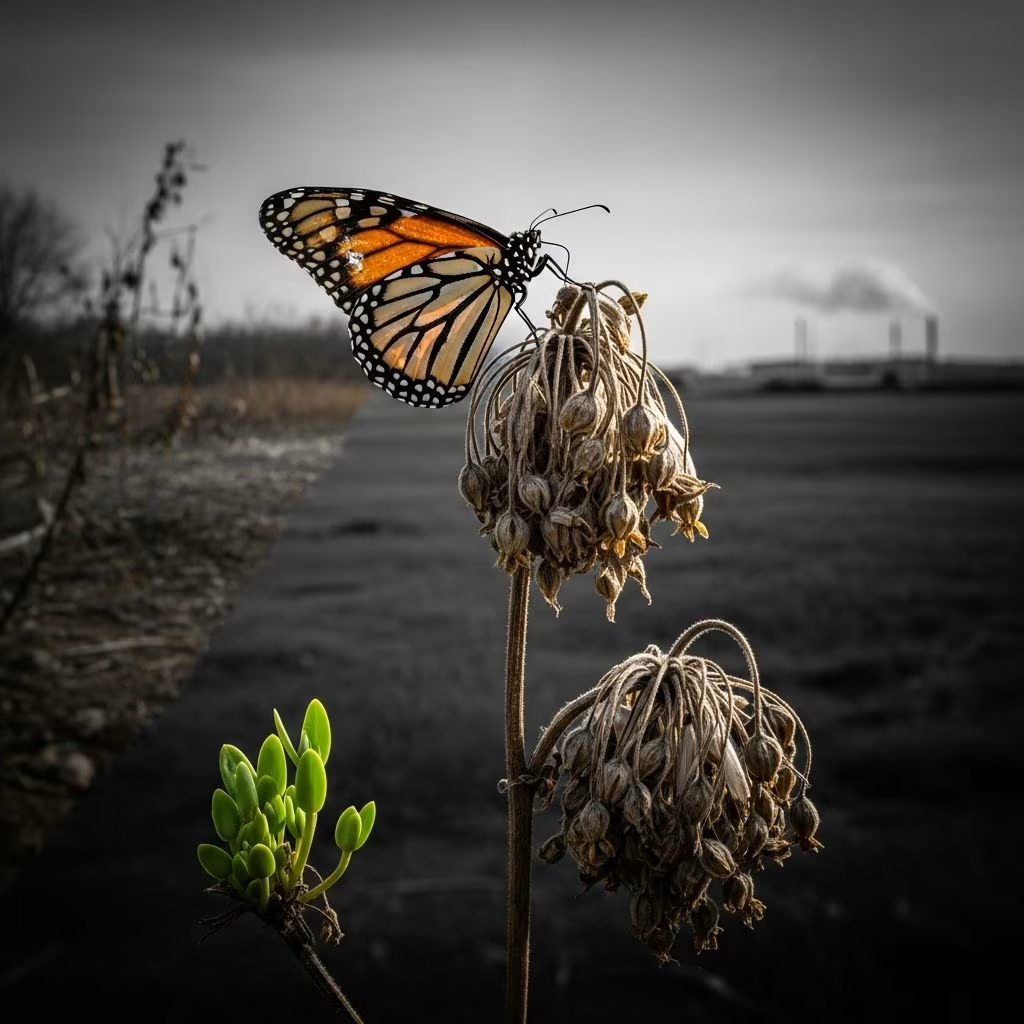
The monarch butterfly, renowned for its breathtaking annual migration spanning thousands of miles, is experiencing a drastic population crash that alarms scientists and conservationists worldwide. Once numbering in the hundreds of millions, these orange-and-black icons of nature now teeter on the edge of collapse, with eastern populations down 84% and western ones plummeting by up to 97% since the 1980s.
Monarchs (*Danaus plexippus*) undertake one of the most extraordinary journeys in the animal kingdom. Eastern populations breed in southern Canada and the U.S., migrating up to 3,000 miles to overwinter in Mexico’s oyamel fir forests. Western monarchs, separated by the Rocky Mountains, travel shorter distances to coastal California groves. This divide means distinct challenges for each group, yet both face existential threats.
During migration, monarchs rely on specific nectar sources and milkweed plants, the sole food for their caterpillars. Any disruption in this chain—breeding grounds, stopover sites, or winter refuges—can cascade into population crashes. Recent data shows overwintering clusters in Mexico shrank dramatically, signaling broader ecosystem distress.
Multiple interconnected factors drive the monarch’s decline. Habitat loss tops the list, exacerbated by agricultural expansion and urbanization. Milkweed, critical for larval survival, has vanished from vast farmlands due to herbicide-tolerant crops.
Climate change compounds these woes. Erratic weather delays milkweed emergence, harsher winters cause die-offs, and shifting patterns may force migration route changes.
| Aspect | Eastern Monarchs | Western Monarchs |
|---|---|---|
| Population Trend | 84% decline (1996-2015) | 97% decline since 1980s; near collapse in 2020 |
| Overwintering Sites | Mexico oyamel forests | California coast |
| Main Threats | Glyphosate, milkweed loss, neonicotinoids | Habitat loss, pesticides, development |
| Research Focus | Decades of studies | Recent (last 4 years) |
Eastern monarchs have been studied extensively, revealing strong ties between herbicide use and milkweed scarcity, slashing reproduction by 81% in the Midwest. Western populations, less researched until recently, suffer from unclear but similar pressures, with breeding and overwintering sites hit hard.
While breeding and winter habitats bear the brunt, a 2024 USGS study rules out migration corridor losses in Texas and northern Mexico as primary drivers. Ample waystations persist, shifting focus to other bottlenecks. This underscores the need for targeted interventions rather than blanket assumptions.
Hope persists through collaborative efforts. Organizations like the Xerces Society and Monarch Joint Venture champion milkweed restoration, pesticide reduction, and habitat protection.
U.S. Fish and Wildlife Service proposals for threatened status could unlock protections, though not yet finalized. State wildlife plans show varied commitment, with some prioritizing monarchs more than others.
Individuals play a pivotal role. Transform yards into monarch havens by:
Community initiatives, such as highway plantings and school programs, amplify impact. Businesses can pledge pollinator-friendly practices, reducing chemical use.
Models predict quasi-extinction risks of 11-57% in 20 years without action, but habitat mitigation could stabilize numbers around current lows, buoyed by climate adaptation. Recent upticks in western counts from 2,000 in 2020 to 200,000 signal restoration works.
Government funding calls reach $100 million annually to scale efforts. International cooperation is key, addressing cross-border threats like Mexican avocado farming encroaching on forests.
Main drivers include milkweed habitat loss from herbicides, pesticide exposure, overwintering site destruction, and climate change impacts.
Eastern: 84% since 1996; Western: 95-97% over decades, with a 2020 low.
No, adults require diverse nectar sources, but caterpillars exclusively eat milkweed.
Proposed as threatened by USFWS, but not listed yet. Urgent conservation needed.
Plant milkweed, skip pesticides, support conservation groups, and report sightings.
Monarchs are canaries in the coal mine for pollinator health. Their decline signals risks to food systems reliant on insects for 75% of crops. Restoring their habitats benefits bees, birds, and biodiversity at large.
In conclusion—wait, no formal wrap-up, but the path forward demands unified action from farms to backyards.
