

 Travel Essentials
 Travel Essentials

Mongolia's tourism is exploding, bringing economic hope to nomads but raising sustainability concerns. Discover how herders adapt amid rising visitors and climate pressures.
 Travel Essentials
Mongolia’s vast steppes and rich nomadic heritage are drawing record numbers of travelers, fueling economic growth while testing the resilience of traditional herding communities. In recent years, visitor arrivals have skyrocketed, with over 600,000 tourists in 2023 alone contributing more than $1.2 billion to the economy. This influx promises income diversification for rural families but sparks debates on cultural integrity and ecological balance.
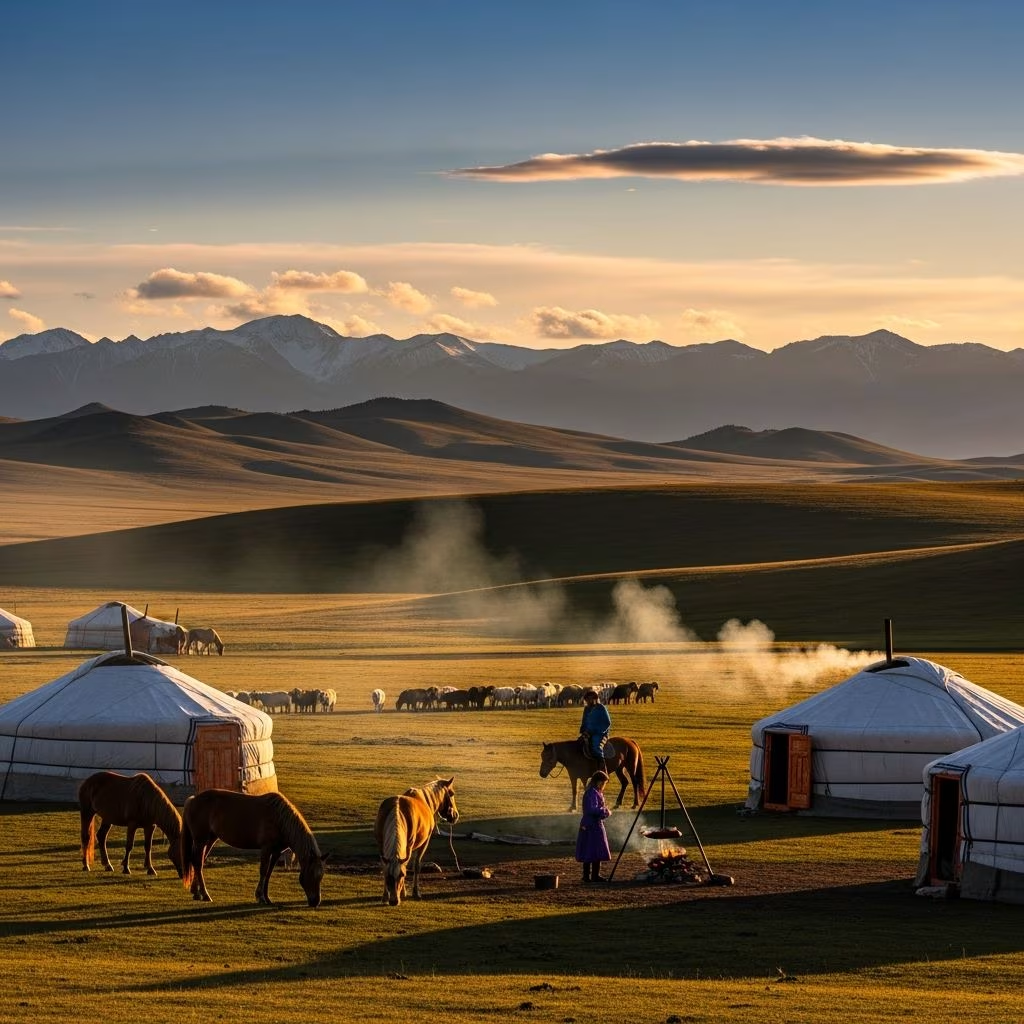
Mongolia captivates adventurers with its endless grasslands, where horses roam freely and gers—portable felt tents—dot the horizon. Travelers seek immersion in a lifestyle unchanged for centuries, participating in activities like horseback riding and milking yaks. Government initiatives, such as visa-free entry for citizens from 34 countries and new direct flights, have accelerated this trend. By early 2026, arrivals surged 33%, exceeding 60,000 in just two months, positioning Mongolia as Asia’s emerging eco-tourism hotspot.
This demand stems from global shifts toward experiential travel. Visitors crave connections beyond hotels, opting for stays in herder camps that offer glimpses into daily routines. Programs like the Herder Camp, launched by provincial authorities, connect tourists directly with families, providing eco-friendly gers equipped with modern sanitation. For about $47 per night, guests enjoy breakfast and optional adventures, equivalent to a herder selling one sheep.
Traditional nomadism faces existential threats from climate change, overgrazing, and urbanization. Harsh winters, known as dzuds, decimate livestock, pushing families toward cities where poverty rates exceed rural areas. Tourism emerges as a vital alternative, enabling herders to supplement incomes without abandoning their lands.
Organizations such as GER to GER emphasize community-led models, ensuring payments support households directly while respecting seasonal migrations. This approach avoids dependency, building sustained partnerships over fleeting transactions.
While benefits abound, unchecked expansion risks herder well-being. Waste management poses a major issue; increased human activity strains fragile pastures already battered by degradation. Researchers highlight the need for robust systems to handle solid and liquid waste, preventing contamination of vital water sources.
| Challenge | Impact on Nomads | Mitigation Strategies |
|---|---|---|
| Environmental Strain | Overgrazing and pollution | Eco-gers with sanitation loans |
| Cultural Shifts | Daily routines disrupted | Training in guest etiquette |
| Urban Migration | Loss of herding skills | Income diversification programs |
| Land Fragmentation | Migration routes blocked | Protected corridors |
Urbanization exacerbates these pressures, with unskilled herders struggling in Ulaanbaatar’s slums. Tourism can stem this tide by making rural life viable, but it demands careful scaling.
Responsible tourism prioritizes herder agency. Initiatives like seasonal contracts prepare families for guests, covering hygiene and communication without commodifying culture. GER to GER’s framework integrates visits into genuine rhythms, rejecting staged performances for authentic participation.
Government and NGOs collaborate on safeguards: low-interest loans for infrastructure, language training, and caps on group sizes. Eco-tourism in parks like Gorkhi-Terelj preserves biodiversity while funding conservation. Volunteers through working holidays contribute labor, from herding to camp maintenance, deepening exchanges.
Nomadic identity hinges on mobility and communal bonds. Tourism risks eroding this if poorly managed, turning gers into spectacles. Yet, when done right, it revitalizes traditions—youth witness global appreciation for their heritage, countering urban allure.
Events like Naadam Festival amplify this, blending sport with storytelling for immersive experiences. Travelers leave with respect, herders with pride and resources to endure environmental hardships.
Mongolia’s tourism trajectory points upward, with projections for sustained growth. By 2030, the sector could rival mining in GDP contribution if sustainability guides development. Herders stand at the crossroads: embrace visitors as allies or watch lifestyles fade.
Success stories from Arkhangai province illustrate potential. Families report halved livestock losses thanks to tourism buffers, allowing herd recovery. Globally conscious travelers fuel this, demanding low-impact options that empower locals.
A ger is a portable, circular tent used by nomads for millennia, offering cozy, authentic lodging that supports herders financially.
Yes, with guided tours recommended for remote areas; communities are hospitable.
Extra income reduces overgrazing pressure, aiding pasture regeneration amid dzuds.
Summer (June-August) for festivals and mild weather; shoulder seasons for fewer crowds.
Programs like Projects Abroad offer labor exchanges, enhancing cultural ties.
