

 Travel Essentials
 Travel Essentials

Mont Blanc is tightening access to protect fragile alpine habitats, curb overcrowding, and promote safer, more responsible tourism.
 Travel Essentials
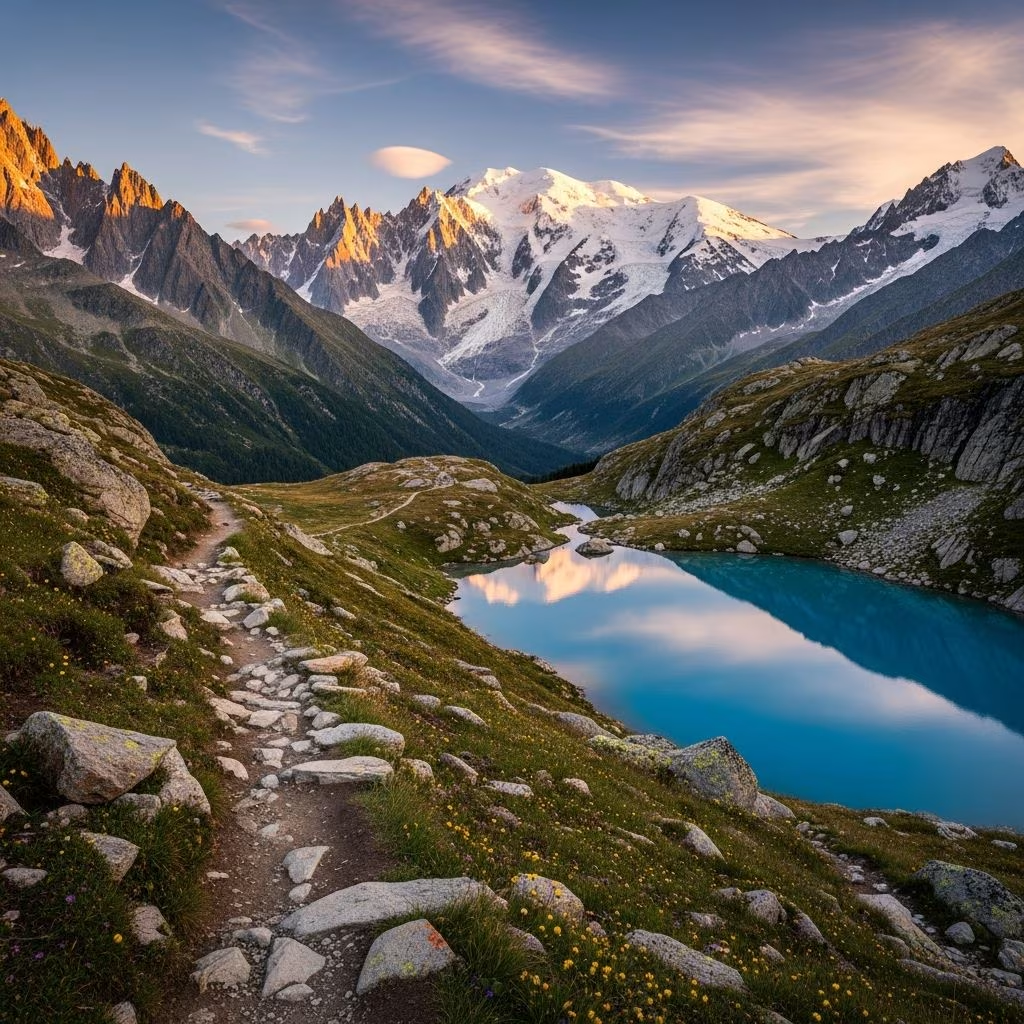
Western Europe’s highest peak at 4,810 meters, Mont Blanc draws climbers, hikers, and nature enthusiasts from around the world. Yet, surging visitor numbers threaten its delicate alpine ecosystems. Recent French government initiatives aim to curb overcrowding while preserving the mountain’s biodiversity and scenic integrity.
Faced with reckless ascents and environmental strain, authorities are implementing stricter controls. President Emmanuel Macron’s administration has outlined plans to cap the number of climbers reaching the summit daily. This addresses unsafe practices, such as unprepared attempts that lead to rescues and waste accumulation.
Key requirements now include proof of reservations at mountain refuges, mandatory for legal ascents. Wild camping, already illegal with penalties up to two years in prison and €300,000 fines, will see heightened enforcement. Resisters face additional charges, escalating to three years and €45,000 for groups.
Safety enhancements feature colored beacons: distinct signals for uphill and downhill traffic to prevent collisions and streamline routes. These measures build on existing bans, promoting organized, low-impact climbing.
Mont Blanc lacks full national park status but hosts multiple protected areas. The Espace naturel sensible du Mont-Lachat, spanning 107.2 hectares at altitudes from 1,683 to 2,115 meters, is managed by Asters, the Conservatoire d’espaces naturels de Haute-Savoie. This site safeguards Haute-Savoie’s characteristic flora and fauna through management plans, stakeholder consultations, and hands-on preservation.
In 2020, the APHN du Mont-Blanc was established, creating a controlled framework for climbs. This zoning regulates foot traffic, allowing natural balances to recover from prior overuse.
Mont Blanc’s ecosystems—from tundra slopes to subalpine forests—host endemic species vulnerable to human activity. Overcrowding causes erosion, litter, vegetation trampling, and fauna disruption. Air quality suffers from valley traffic, including Mont Blanc Tunnel freight, trapping pollutants in steep V-shaped topography.
| Threat | Impact | Mitigation Efforts |
|---|---|---|
| Overcrowding | Erosion, path widening | Summit quotas, trail limits |
| Littering | Wildlife harm, visual pollution | Leave No Trace campaigns |
| Air Pollution | Trapped smog in valleys | Green buses, rail upgrades |
| Fauna Disturbance | Nesting disruption | Protected reserves |
Conservation groups like Espace Mont Blanc, formed in 1991 by experts from France, Italy, and Switzerland, advocate for UNESCO World Heritage status and a transboundary management plan under European law. Until achieved, local actions fill the gap.
Tourism-driven traffic and tunnel logistics exacerbate pollution. Winter green waste burning compounds the issue, with pollutants lingering in the confined valley. Countermeasures include:
Despite progress, freight volumes demand national intervention for lasting change.
The CREA Mont-Blanc Research Center, founded in 1996 in Chamonix, studies alpine ecosystems. Its work informs policies on climate impacts, species distribution, and human effects. Similarly, the ORION project uses satellite imagery to deliver biodiversity indicators for Chamonix managers, enabling data-driven decisions.
These efforts highlight shifts: warming temperatures alter vegetation zones, stressing species like the alpine ibex and edelweiss.
Areas like Passy Mont-Blanc prioritize sustainable practices. At the edge of Passy and Sixt-Passy Nature Reserves, initiatives encourage walking, cycling, and buses (e.g., Y85 line). Parking favors carpooling, reducing high-altitude vehicle use. Waste management emphasizes reduction and recycling, preserving vistas of Mont Blanc and the Fiz chain.
Tourist offices commit to soft mobility, embedding eco-principles into visits.
Mountain Wilderness emphasizes untouched spaces for solitude and natural immersion. Core principles:
Trek operators like those on Tour du Mont Blanc adhere to reserve rules, minimizing footprints.
Espace Mont Blanc pursues unified protection across borders. A management plan could enforce consistent standards, from litter bans to development halts (via 1951 site classé designation).
These steps ensure Mont Blanc remains a beacon of wild beauty, accessible yet safeguarded.
Climbers need refuge bookings, summit quotas apply, and colored beacons distinguish ascents/descents. Wild camping is banned with severe fines.
No, but it features protected zones like Mont-Lachat and reserves without full park status.
Use public transport, carry out waste, stay on paths, and book guided eco-treks.
Alpine ibex, chamois, golden eagles, and endemic plants in high meadows.
Yes, valley traffic traps smog; green initiatives like rail and buses help.
