

 Travel Essentials
 Travel Essentials

Explore Montana's top national parks including Glacier, Yellowstone, and unique historic sites. Uncover hiking trails, wildlife, and cultural landmarks in this comprehensive guide.
 Travel Essentials
Montana, known as Big Sky Country, boasts a remarkable collection of national park areas managed by the National Park Service. While Glacier and Yellowstone draw massive crowds for their natural spectacles, the state hosts nine distinct sites that span pristine wilderness, geothermal phenomena, and pivotal historical landmarks. These destinations offer diverse experiences, from strenuous hikes amid glaciers to serene boat tours on canyon lakes and reflections on America’s past at battlefield memorials.
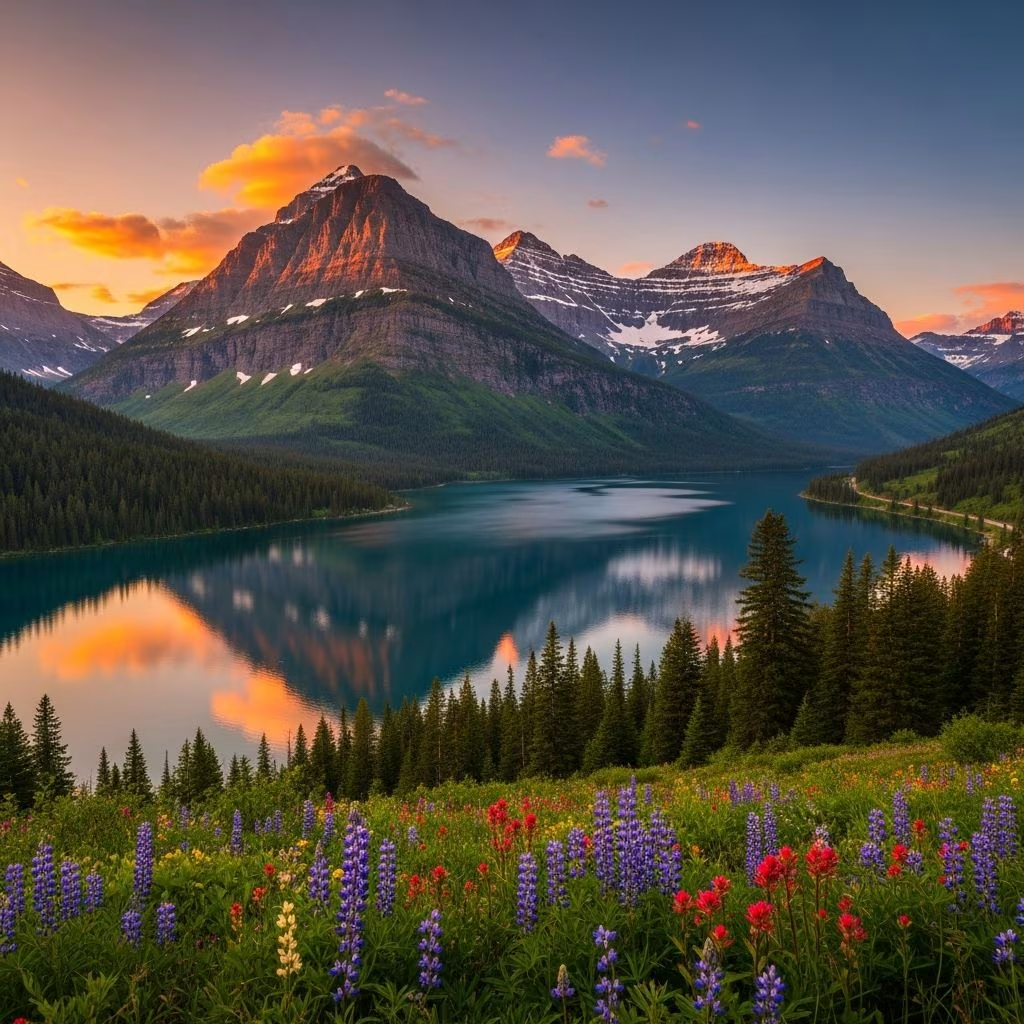
The Rocky Mountains dominate Montana’s landscape, creating backdrops for some of the most iconic parks. Glacier National Park stands as the state’s flagship destination, encompassing over one million acres of rugged terrain. Its jagged peaks, turquoise lakes, and retreating glaciers provide a playground for adventurers. Over 700 miles of trails wind through this area, catering to everyone from casual strollers to hardcore backpackers. Wildlife abounds, with grizzly bears, mountain goats, and wolves frequently spotted by vigilant visitors.
Yellowstone National Park, though primarily in Wyoming, extends significantly into Montana’s southern border. Established in 1872 as the world’s first national park, it covers 2.2 million acres featuring half of the planet’s active geysers. The Montana portion highlights dramatic canyons, thundering waterfalls, and vast meadows teeming with bison herds and elk. Old Faithful, erupting predictably every 90 minutes or so, remains a highlight, shooting boiling water over 150 feet skyward.
Bighorn Canyon National Recreation Area straddles the Montana-Wyoming line, offering a stark contrast to the mountainous parks. This 120,000-acre expanse features a deep, sheer-walled canyon carved by the Bighorn River, now dammed to form a 71-mile reservoir. Boating and kayaking dominate here, with opportunities to paddle through dramatic red rock formations and spot wild horses, bighorn sheep, and golden eagles. Over 10,000 years of human history layer the site, from Native American petroglyphs to ranching remnants.
Beyond geology and wildlife, Montana preserves key chapters of U.S. history through several national historic sites and battlefields. Little Bighorn Battlefield National Monument commemorates the 1876 clash between Lakota, Northern Cheyenne, and Arapaho warriors and U.S. Army forces led by General Custer. The site includes the Reno-Benteen Battlefield and a visitor center with exhibits on Native perspectives.
Big Hole National Battlefield marks a tragic 1877 Nez Perce confrontation during their flight from U.S. troops. Interpretive trails lead through the valley where over 60 Nez Perce lost their lives, emphasizing themes of conflict and resilience.
Grant-Kohrs Ranch National Historic Site near Deer Lodge showcases 19th-century ranching life. Once the largest cattle ranch in Montana, it features preserved barns, a Victorian home, and living history demonstrations with heritage livestock.
Fort Union Trading Post National Historic Site, on the Montana-North Dakota border, reconstructs a fur trade hub from the 1820s-1860s. Costumed interpreters bring to life the bustling exchange between trappers, tribes, and traders.
The Lewis and Clark National Historic Trail weaves through Montana, marking the Corps of Discovery’s 1805-1806 expedition. Travelers can follow authenticated routes past Three Forks, where the trio of rivers joins to form the Missouri, and Lemhi Pass, the Continental Divide crossing. Modern visitors enjoy self-guided drives, canoe floats, and exhibits at sites like the Travelers’ Rest State Park integration point.
Nez Perce National Historical Park includes Montana segments tied to the tribe’s heritage and the 1877 war, complementing Big Hole with museums and cultural centers.
Timing your visit maximizes enjoyment. Summer (June-August) brings peak crowds and weather ideal for high-country hikes, but book lodges and campsites months ahead. Shoulder seasons (May, September-October) offer solitude and lower fees, though snow can close passes in Glacier.
| Park | Entrance Fee (Vehicle) | Peak Season | Signature Activity |
|---|---|---|---|
| Glacier NP | $35 | Jun-Sep | Going-to-the-Sun Road drive |
| Yellowstone NP | $35 | May-Oct | Geyser basin tours |
| Bighorn Canyon | $30 | May-Sep | Boating |
| Little Bighorn | $30 | Year-round | Guided battlefield walks |
Accessibility varies: Glacier’s roads like Going-to-the-Sun challenge RVs over 21 feet, while Yellowstone’s boardwalks accommodate wheelchairs at geyser sites. Always pack bear spray, stay on trails, and check nps.gov for alerts on fires or closures.
A classic loop pairs Glacier and Yellowstone: Fly into Kalispell, traverse Glacier’s Highline Trail, drive south through Missoula’s craft brew scene, then enter Yellowstone via the West Entrance for Lamar Valley wildlife watching. Total: 500+ miles, 7-10 days.
For history buffs, string battlefields: Start at Little Bighorn, head to Big Hole, detour to Grant-Kohrs Ranch, and end at Fort Union. This northern plains route highlights Indigenous and settler narratives over 400 miles.
Montana’s parks protect keystone species. Glacier safeguards grizzlies and wolverines; Yellowstone, the last major free-roaming bison population. Visitors contribute by following food storage rules and joining citizen science via apps like iNaturalist. Recent reintroductions bolster wolf packs, enhancing ecosystem balance.
Yellowstone offers accessible boardwalks and predictable geyser shows like Old Faithful, ideal for kids.
Most charge $25-35 per vehicle for 7 days; America the Beautiful Pass ($80 annual) covers all.
Yes, from primitive backcountry in Glacier to developed sites in Bighorn; reservations essential in summer.
Core areas yes, but high passes close November-May due to snow.
Nine, including two flagship parks and seven historic or recreational units.
Leave no trace: Pack out trash, avoid feeding wildlife, and support local economies via park concessions. Climate change accelerates Glacier’s ice loss—over 80% gone since 1910—so advocate for preservation. Hybrid road trips cut emissions; consider e-bikes for trails.
