

 Travel Essentials
 Travel Essentials

Explore Montana's vibrant summer wildflowers, from Glacier Lilies to Beargrass, with prime viewing spots, bloom times, and hiking tips for nature lovers.
 Travel Essentials
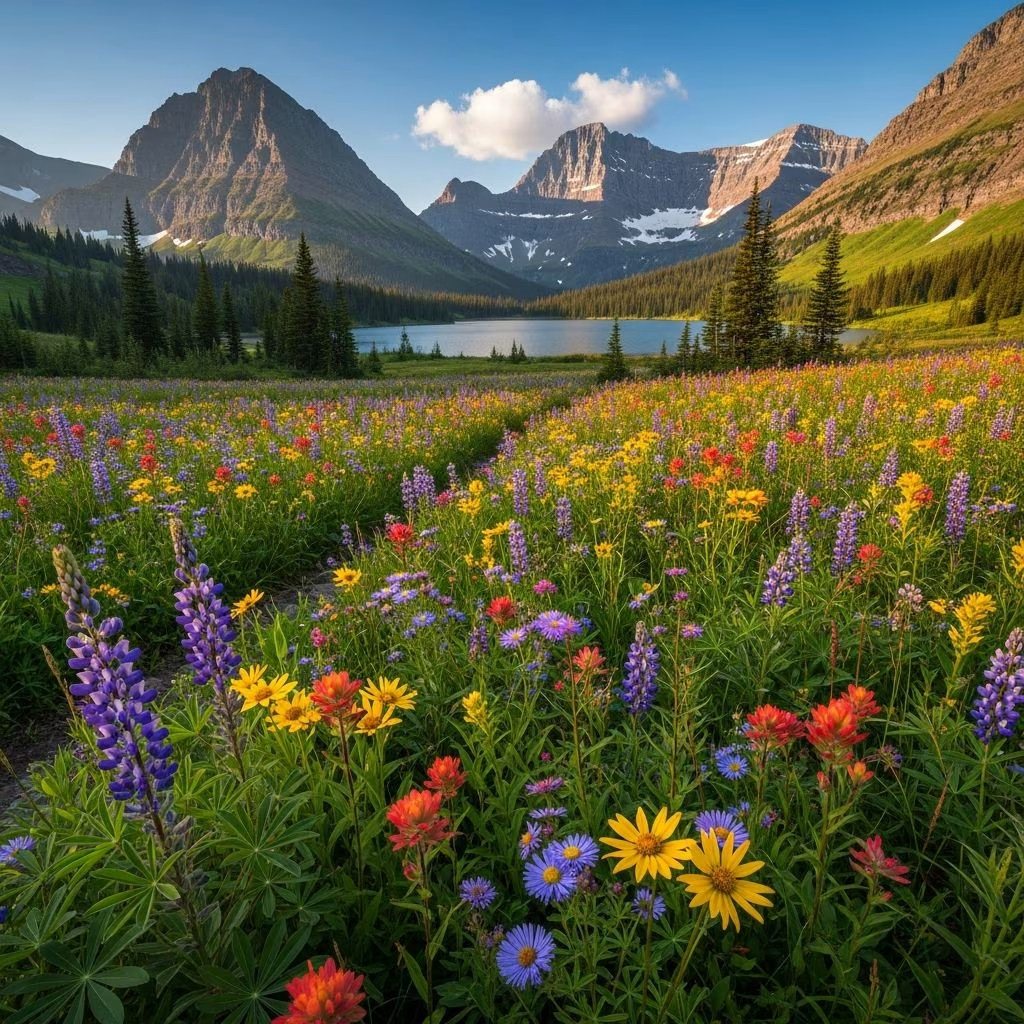
Montana transforms into a living tapestry of color each summer as wildflowers blanket its mountains, valleys, and meadows. These natural spectacles draw hikers, photographers, and nature enthusiasts to witness blooms ranging from delicate pinks to bold reds against the backdrop of rugged peaks.
Montana’s wildflower displays unfold progressively from late spring into late summer, following the snowmelt from lower elevations to high alpine zones. Early bloomers signal spring’s arrival, while peak summer offerings create vast fields of vibrancy. This extended season, often lasting from May through September, allows visitors to chase blooms across diverse habitats like open grasslands, forested slopes, and subalpine meadows.
Factors such as elevation, moisture, and sunlight dictate the timing. Lower valleys ignite first in May with yellow hues, while higher altitudes peak in July and August. Climate variations can trigger mass blooms, known as superblooms, every few years for species like beargrass.
Montana hosts nearly 1,000 wildflower species, each adapted to specific niches. Here’s a guide to standout summer varieties:
Montana’s vast public lands offer accessible spots for immersion. Focus on western regions like Glacier Country for the most prolific displays.
| Location | Key Blooms | Best Time | Access Tips |
|---|---|---|---|
| Glacier National Park | Beargrass, Indian Paintbrush, Glacier Lily | July-August | Hike Highline Trail or drive Going-to-the-Sun Road; permits required for some areas. |
| Bitterroot Valley | Bitterroot, Lupine, Paintbrush | May-June | Explore West Fork trails or drive scenic byways. |
| CSKT Bison Range | Arrowleaf Balsamroot | Mid-May | Drive-through loops showcase yellow hillsides. |
| Missoula Foothills (North Hills) | Bitterroot, Yarrow | Spring-Summer | Short hikes like the North Hills Trail. |
| Gates of the Mountain Wilderness | Assorted alpine species | July-September | Boat tours or hikes between Glacier and Yellowstone. |
| Big Sky Area | Lupine, Sticky Geranium, Larkspur | June-July | Hiking Beehive Basin or Lava Lake trails. |
To maximize sightings, monitor snowmelt via park updates and apps like iNaturalist. Pack layers for variable weather, sturdy boots for uneven terrain, and binoculars for distant meadows. Early mornings offer soft light for photography and fewer crowds.
Leave No Trace principles are essential: stay on trails to protect fragile blooms, avoid picking flowers, and use established campsites. Wildflowers support pollinators and wildlife, so preservation ensures future displays.
| Item | Purpose |
|---|---|
| Map/GPS | Navigate remote trails |
| Bug Spray | Repel mosquitoes in meadows |
| Water Filter | Refill from streams safely |
| Wide-Angle Lens | Capture expansive blooms |
| Bear Spray | Safety in grizzly country |
Beyond beauty, wildflowers stabilize soils, provide nectar for bees and butterflies, and feed herbivores like deer and elk. Native species like blanketflower and yarrow thrive in poor soils, enhancing biodiversity. In Glacier National Park, they indicate ecosystem health amid climate shifts affecting bloom times.
Indigenous knowledge highlights uses: balsamroot seeds for food, bitterroot roots for nutrition. Modern conservation efforts by groups like the Montana Native Plant Society promote native plantings.
Capture Montana’s blooms with these strategies:
As summer wanes, high-elevation asters, fireweed, and alpine forget-me-nots extend the show into September. Cooler temps at 8,000+ feet yield hardy bloomers worth the climb.
June through August, varying by elevation: lowlands in June, alpines in August.
No—picking is prohibited in parks to protect populations. Photograph instead.
Hiking boots, rain gear, bear spray, and a field guide app.
Yes, scenic drives like Going-to-the-Sun Road or Bison Range offer views without hiking.
Shifting snowmelt alters timings, potentially shortening seasons in some areas.
