


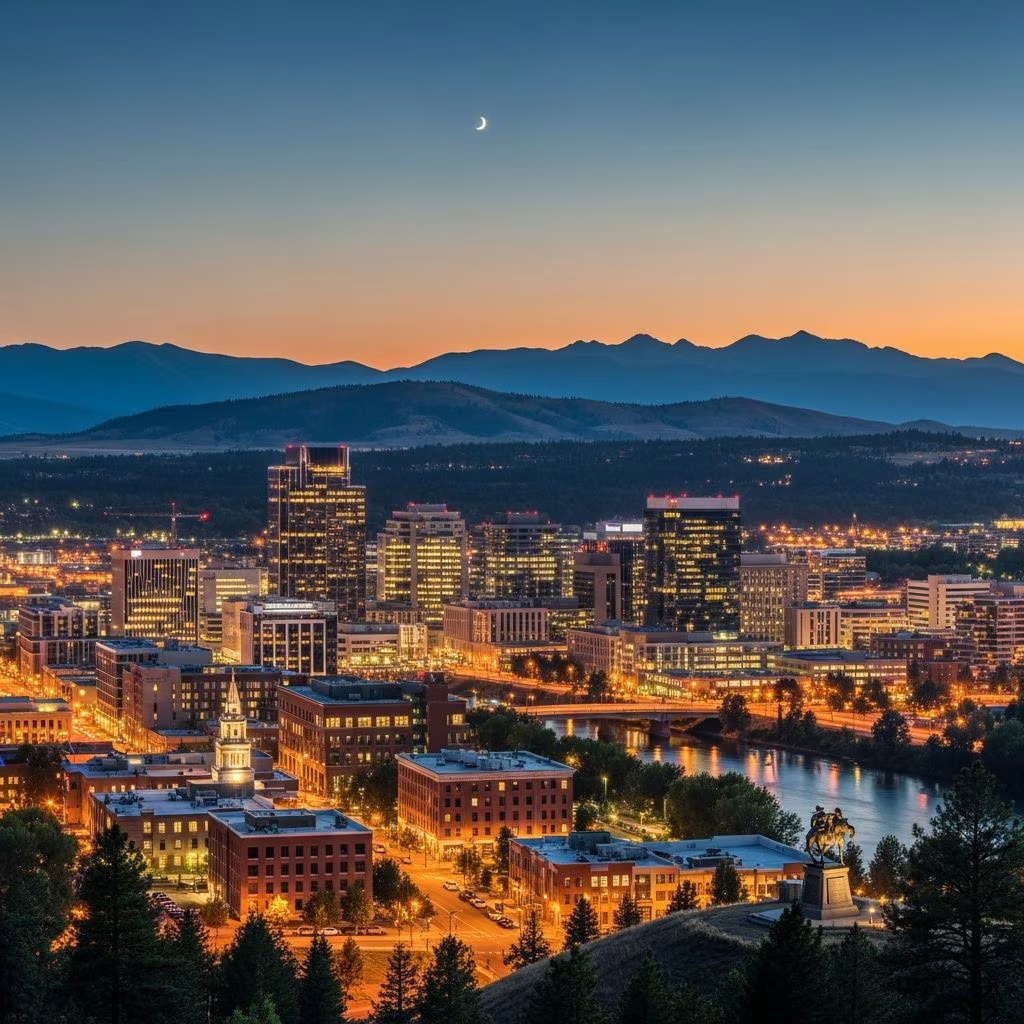
Montana has long captured the American imagination as a land of vast wilderness, dramatic mountain vistas, and untamed frontier spirit. Yet beyond the sweeping ranches and national parks lies another story—one of dynamic cities that are experiencing remarkable transformation. These urban centers represent a fascinating convergence of historical significance and contemporary vitality, where entrepreneurs, artists, and visionary community members are reshaping the cultural landscape while honoring the region’s storied past.
The evolution of Montana’s cities reflects a broader movement often called the ‘New West,’ characterized by progressive thinking, creative entrepreneurship, and a commitment to sustainable development. Rather than abandoning their heritage, these communities are reimagining it, creating destinations that appeal to both longtime residents and newcomers seeking authentic experiences in beautiful settings.
The Gateway to Progressive Mountain Culture
In the northwestern reaches of Montana lies a city that has emerged as the epicenter of the state’s cultural revolution. This community has become synonymous with progressive values, artistic expression, and an unwavering commitment to outdoor recreation. The city attracts a diverse population—musicians, writers, environmentalists, and entrepreneurs—who collectively champion innovation while maintaining deep respect for the natural environment that surrounds them.
The downtown district pulses with activity, featuring independent bookstores, galleries showcasing regional and international artists, and restaurants emphasizing locally sourced ingredients. The cultural calendar overflows with festivals, concerts, and theatrical productions that draw visitors from throughout the region. This vibrant ecosystem has positioned the city as a creative hub that rivals communities twice its size, proving that authentic culture thrives not through scale but through passion and community commitment.
The surrounding landscape provides endless opportunities for outdoor enthusiasts, with hiking, fly-fishing, and kayaking readily accessible. This integration of urban amenities with wilderness access defines the character of the region and attracts professionals seeking quality-of-life experiences unavailable in traditional metropolitan areas.
Rapid Growth and Historic Preservation in the Valley
South of the progressive stronghold lies another transformative city that ranks among America’s fastest-growing urban centers. This valley community presents a compelling paradox: rapid expansion paired with meticulous preservation of architectural heritage. The original downtown corridor maintains its historic character through carefully restored Victorian and early-20th-century commercial structures that now house contemporary businesses.
Walking along the main thoroughfare reveals red brick facades that have weathered decades of Montana winters, now fronting establishments that didn’t exist fifteen years ago. Independent coffee roasters occupy spaces once used by mining supply companies. Farm-to-table restaurants operate within structures that originally served as general stores. Art galleries featuring contemporary works by regional artists fill buildings with ornate cornices and period details.
This city has successfully navigated the delicate balance between accommodating growth and maintaining identity. New residential development respects architectural traditions through design guidelines that encourage compatibility with historic neighborhoods. The result is a community where newcomers and longtime residents coexist, each contributing to the ongoing evolution of the place.
The surrounding valley offers exceptional outdoor recreation, with ski resorts, national forests, and pristine rivers providing year-round adventures. The combination of amenities, employment opportunities, and lifestyle advantages has fueled the city’s growth trajectory, yet community leaders remain committed to ensuring that expansion doesn’t diminish what makes the place distinctive.
Frontier Towns Experiencing Cultural Revitalization
Beyond the major urban centers, Montana’s smaller communities are undergoing their own transformations. These towns, many founded during mining booms or as agricultural hubs, now serve as laboratories for creative reimagining of rural identity and commerce.
Historic Mining Communities Transform
Several former mining towns have successfully transitioned their economic bases by capitalizing on heritage tourism, outdoor recreation, and remote work opportunities. Historic downtown districts feature false-front buildings—structures that once housed saloons and general stores—now converted into eclectic restaurants, boutique shops, and artist studios. The architectural vocabulary of these places tells stories of boom-and-bust cycles, yet community members see opportunity in carefully curated renovation projects.
These towns attract entrepreneurs seeking lower overhead costs and closer community connections than available in major metropolitan areas. Small-batch breweries, specialized food producers, and creative services businesses establish operations in previously underutilized commercial spaces. The result is renewed economic vitality grounded in authentic local culture rather than corporate franchises.
Agricultural Heritage Meets Contemporary Innovation
Eastern Montana communities embody the region’s ranching and agricultural traditions while gradually incorporating new economic dimensions. These towns serve as gateways to notable attractions—historic sites, museums, and natural features—that draw regional tourism. Community leaders have invested in visitor infrastructure, cultural programming, and heritage interpretation that honors the past while supporting contemporary enterprise.
The geographic isolation that once limited economic opportunity now provides appeal to remote workers and entrepreneurs valuing privacy, space, and authentic community engagement. Digital connectivity has transformed the calculus for location decisions, allowing skilled professionals to maintain careers while residing in places offering dramatically different lifestyles than traditional job centers.
Culinary Excellence and Farm-to-Table Innovation
Montana’s cities have emerged as unexpected culinary destinations, with chefs and restaurant owners creating dining experiences grounded in regional ingredients and cultural traditions. The farm-to-table movement has particular resonance in Montana, where agricultural production remains central to community identity and landscape management.
Contemporary restaurants operate alongside establishments maintaining traditional steakhouse traditions dating to the frontier era. This culinary diversity reflects the evolving demographics and tastes of Montana’s urban populations. Menus feature bison, locally raised beef, wild game, fresh trout, and produce from nearby farms, creating authentic connections between cuisine and landscape. Beverage programs showcase craft breweries and distilleries established throughout the state, further emphasizing local production and terroir.
The emphasis on culinary quality extends beyond individual restaurants to farmers markets, food festivals, and cooking schools that celebrate regional foodways. This infrastructure supports both tourism and year-round community engagement with local food systems.
Arts and Creative Community Infrastructure
Montana’s cities maintain robust arts ecosystems featuring galleries, performance venues, artist studios, and creative organizations. Visual arts communities thrive, with galleries exhibiting work by established and emerging artists who have relocated to Montana or maintained long-standing connections to regional art traditions. Photography, painting, sculpture, and mixed media practices flourish within communities offering affordable studio space and supportive creative networks.
Performance arts programming includes theater productions, music venues spanning multiple genres, and dance performances. These cultural institutions serve residents and attract regional audiences, generating economic activity through ticket sales, hospitality spending, and related services. Many communities have invested in historic theater renovation projects, restoring architectural gems while enhancing contemporary performance capabilities.
Public art initiatives have transformed downtown areas through murals, sculpture installations, and temporary exhibitions that enliven streetscapes and foster community pride. These investments demonstrate municipal commitment to creative placemaking as a development strategy.
Outdoor Recreation Integration
Montana’s urban centers maintain distinctive character through seamless integration with surrounding natural environments. City planning prioritizes trail systems, parks, and green spaces that provide residents and visitors access to outdoor recreation without requiring travel to remote locations. River corridors, foothills, and mountain valleys adjacent to urban areas offer skiing, hiking, fishing, and climbing opportunities accessible within minutes of downtown districts.
This outdoor orientation shapes community culture, with recreation serving as common denominator across demographic and economic divides. Civic identity frequently centers on relationships with particular landscapes—specific mountains, rivers, or valleys that define sense of place and community cohesion.
Entrepreneurial Ecosystems and Economic Diversification
Montana’s cities attract entrepreneurs across multiple sectors, from technology companies establishing satellite offices to artisanal producers and service businesses. Lower costs compared to coastal metropolitan areas, quality-of-life factors, and access to natural amenities make these communities appealing relocation destinations for business founders and remote workers.
Local government entities and nonprofit organizations have invested in entrepreneurship support infrastructure, including business incubators, mentorship programs, and capital access initiatives. These interventions aim to foster sustainable economic development grounded in local initiative and community values rather than external corporate investment.
Demographic Evolution and Community Identity
Montana’s cities are experiencing demographic transformation as newcomers arrive seeking lifestyle changes, career opportunities, or proximity to family networks. This population movement generates cultural dynamism while occasionally creating tensions around growth management, housing affordability, and community character preservation.
Long-term residents and recent arrivals collectively shape contemporary community identity. Successful communities foster integration through cultural programming, volunteer opportunities, and civic engagement structures that welcome participation across residential tenure and background. The challenge remains balancing openness to newcomers with preservation of distinctive character that initially attracted in-migration.
Seasonal Rhythms and Year-Round Vitality
Montana’s cities operate within seasonal patterns shaped by climate and outdoor recreation cycles. Winter transforms landscape and activities, with ski resorts, ice fishing, and snowshoeing drawing enthusiasts. Summer brings intense outdoor recreation activity, music festivals, and tourism peaks. Spring and fall offer milder conditions and quieter experiences appealing to different visitor preferences.
Year-round cultural programming and business operations ensure vitality across seasons, though employment and tourism patterns reflect seasonal variations. Communities have invested in indoor entertainment, dining, and cultural venues supporting winter engagement and reducing economic seasonality.
Infrastructure Investment and Civic Vision
Investment in downtown revitalization, public transportation, and amenity development reflects municipal commitment to creating competitive communities. Historic preservation tax incentives, downtown improvement district assessments, and public-private partnerships fund infrastructure improvements that enhance livability and economic vitality.
Community visioning processes engage residents in defining desired futures, balancing growth accommodation with character preservation. These deliberative processes generate policies, design standards, and development incentives aligned with community values rather than external market pressures.
Visitor Experience and Tourism Development
Montana’s cities attract visitors seeking authentic mountain experiences, cultural programming, and outdoor recreation access. Tourism boards and hospitality businesses have developed infrastructure supporting various visitor preferences, from luxury resort accommodations to modest lodging options. Visitor centers provide orientation and recommendation services, while tourism marketing emphasizes distinctive character and authentic experiences rather than generic amenity listings.
The challenge remains maintaining community livability while accommodating increased visitor traffic. Successful communities manage this balance through visitor education about responsible recreation, dispersed marketing reducing concentration in particular seasons, and infrastructure investment supporting both resident and visitor needs.
Connectivity and Remote Work Revolution
Improved digital infrastructure has transformed Montana’s cities’ economic possibilities, enabling remote workers and distributed teams to maintain professional engagement while residing in communities offering distinctive lifestyles. This connectivity—high-speed internet and reliable telecommunications—has become essential infrastructure alongside traditional utilities.
The remote work phenomenon has contributed significantly to Montana’s urban growth, attracting professionals from higher-cost regions who maintain employment or client relationships while establishing residence in communities offering better work-life balance. This economic diversification reduces dependence on tourism and resource extraction industries, creating more resilient local economies.
Looking Forward: Sustainable Growth and Community Stewardship
Montana’s cities face ongoing challenges managing growth pressures, affordability constraints, and environmental stewardship within rapidly changing regional circumstances. Community leaders emphasize sustainable development prioritizing quality over quantity, ensuring that expansion enhances rather than diminishes community character and environmental values.
The coming years will test whether these communities can maintain the balance between economic vitality, environmental responsibility, and social equity that currently defines their appeal. Success will require continued civic engagement, thoughtful planning, and commitment to preserving what makes these places distinctive while accommodating inevitable change.
Montana’s urban renaissance represents more than economic development—it reflects a broader reimagining of what contemporary American communities can become. By honoring heritage while embracing innovation, these cities offer models of sustainable growth grounded in authentic place-based identity and community values. For visitors and residents alike, they represent opportunities to experience frontier spirit, natural beauty, and cultural vitality within vibrant urban settings.
References
- Exploring city charms in wide-open Montana — Lonely Planet. 2024. https://www.lonelyplanet.com/articles/exploring-city-charms-in-wide-open-montana
- Discover Montana’s breathtaking landscapes, vibrant small towns, and endless adventures — Visit Montana. 2026. https://visitmt.com

