

 Travel Essentials
 Travel Essentials

A comprehensive guide to Montmartre covering its rich history, must-see landmarks, culinary scene, shopping districts, and hidden gems for travelers.
 Travel Essentials
Nestled in the 18th arrondissement of Paris, Montmartre stands as one of France’s most enchanting and historically significant neighborhoods. Perched at the highest point in the city at 130 meters above sea level, this distinctive district has captivated visitors and residents alike for centuries with its winding cobblestone streets, artistic legacy, and unmistakable bohemian spirit. Unlike many other Paris neighborhoods that have undergone significant modernization, Montmartre maintains a unique character that feels both authentically Parisian and timelessly romantic, making it an essential destination for anyone seeking to understand the true essence of Paris.
The story of Montmartre extends back centuries, when the area functioned as a working-class village situated outside Paris’s city limits. During the 19th and early 20th centuries, the neighborhood became a haven for artists, musicians, and writers who were drawn to its affordable rents and liberating atmosphere. The combination of cheap accommodation, tax-free wine production from local vineyards, and a community of creative minds transformed Montmartre into an epicenter of artistic innovation. Throughout this golden era, the neighborhood became synonymous with avant-garde movements, cabaret culture, and the bohemian lifestyle that defined Belle Époque Paris.
Today, Montmartre represents a fascinating study in urban transformation. While the neighborhood has undergone significant gentrification, with former artist studios and modest apartments converted into upscale lofts and residences equipped with modern amenities, it has managed to preserve much of its romantic atmosphere. The winding streets still evoke the charm of a historic village, and pockets of authentic Parisian culture remain accessible to those willing to venture beyond the main tourist thoroughfares. This blend of preserved heritage and contemporary development makes Montmartre a uniquely compelling destination.
Several landmark structures define the Montmartre experience and serve as primary focal points for visitors:
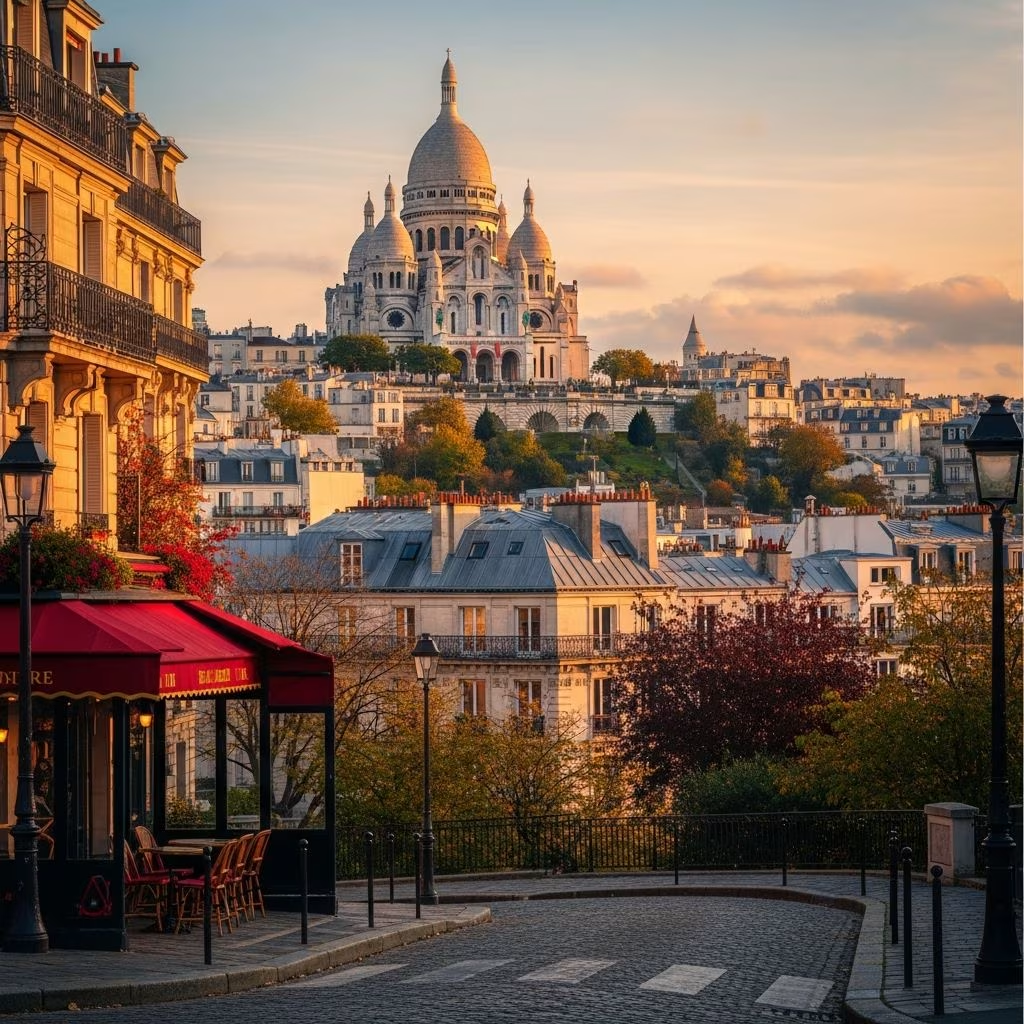
Sacré-Cœur Basilica: Dominating the skyline with its distinctive white Romano-Byzantine dome, the Sacré-Cœur (Basilica of the Sacred Heart) stands as Montmartre’s most recognizable symbol. This architectural masterpiece was constructed between 1875 and 1914 as an act of atonement following the Franco-Prussian War and the Paris Commune. The basilica’s elevated position provides breathtaking panoramic views across Paris, making it an essential stop for both spiritual reflection and sightseeing. Visitors can ascend the basilica’s interior staircase to access the dome area, where the vista encompasses the entire city sprawling beneath the Parisian sky.
Historic Mills and Cultural Icons: The neighborhood’s architectural heritage includes references to its industrial past, most notably through its historic mills. Le Moulin de la Galette, immortalized in an 1894 painting by Auguste Renoir, once served as a beloved gathering place where attendees danced and consumed hot pancakes. Today, this legendary establishment functions as a restaurant and cultural venue, maintaining its connection to Montmartre’s vibrant social history.
Theater District: The Élysées Montmartre Theatre, claiming distinction as Paris’s oldest can-can dance theatre opened in 1807, operated continuously until a fire destroyed it in 2011. Following reconstruction, it reopened in 2016 and now functions as a concert venue and restaurant, demonstrating how Montmartre adapts while honoring its theatrical heritage.
Understanding Montmartre’s geography and principal thoroughfares enhances the exploration experience:
Rue Lepic and the Ascent to Tertre: Accessing Montmartre via the Blanche Metro station along Line 2, visitors emerge onto Rue Lepic, which winds upward through the neighborhood’s heart. The cobblestone pathways guide explorers toward Place du Tertre, the picturesque central square where artists display their work and cafés buzz with activity. While the square itself has become somewhat commercialized with elevated prices and concentrated tourist presence, its photogenic qualities and artistic atmosphere justify at least a brief visit.
Rue des Martyrs and Culinary Exploration: This celebrated thoroughfare has earned recognition as one of Paris’s finest food-focused streets, lined with boulangeries, artisan coffee shops, cheese mongers, fruit and vegetable merchants, and wine bars. The street embodies the authentic Parisian shopping experience, though recent commercial development has introduced more mainstream establishments alongside traditional vendors. Morning or afternoon strolls along this street offer opportunities for gastronomic discovery and people-watching.
Rue des Abbesses and Neighborhood Charm: Located adjacent to the Abbesses Metro station, this historic street serves as a gateway into authentic Montmartre. The surrounding area features neighborhood fromageries, wine bars, and charming cafés like Le Vrai Paris and Le Village, where traditional Parisian hospitality remains genuine. The district has gained additional cultural relevance through its appearances in popular media, including Netflix’s Lupin series, creating a contemporary connection to the neighborhood’s enduring appeal.
Barbes-Rochechouart District Considerations: The neighboring Barbes-Rochechouart area to the east presents a notably different character, featuring massive budget retailers and street stalls selling household goods, electronics, linens, and textiles at competitive prices. While presenting interesting shopping opportunities during daytime hours, this district requires cautious navigation during evening hours.
Certain locations have achieved particular prominence among photographers and social media enthusiasts:
Rue de l’Abreuvoir and La Maison Rose: This picturesque cobblestone lane, lined with ivy-covered buildings and framed by mature trees, offers arguably the most photographed vantage point in Montmartre. At the street’s terminus stands La Maison Rose, a charming establishment featuring distinctive pastel pink walls and green shutters. This iconic café functions as both a popular restaurant serving traditional French cuisine and an essential photo opportunity, though advance reservations are essential due to high demand.
Early Morning Viewpoints: Photography enthusiasts and sunrise seekers should arrive at Sacré-Cœur during early morning hours to capture the basilica and surrounding cityscape bathed in golden light, while avoiding daytime crowds and achieving superior photographic conditions.
Montmartre’s enduring significance as an artistic center maintains presence through several cultural institutions:
Place du Tertre Artist Community: This central square continues to host working artists who display and sell their creations, providing direct engagement with contemporary artistic practice. While the venue has become increasingly touristic, genuine artistic activity persists alongside commercial establishment.
Museum and Gallery Options: The Dali Museum at 11 Rue Poulbot showcases an extensive exhibition devoted to the Surrealist master, attracting enthusiasts of modern and contemporary art. The neighborhood also houses the Musée de Montmartre, dedicated to the district’s particular history and cultural evolution.
Montmartre’s food culture reflects both its bohemian heritage and contemporary gastronomic evolution:
Beyond Rue des Martyrs’s artisan establishments, the neighborhood offers diverse dining experiences ranging from casual cafés to established restaurants. Café des Deux Moulins gained cultural prominence through its appearance in the film Amélie, attracting visitors seeking to connect with this beloved French cinema reference. La Maison Rose provides traditional French cuisine in an intimate setting, while Le Moulin de la Galette offers the opportunity to dine in a historically significant venue.
The neighborhood accommodates various shopping preferences:
Optimal Montmartre exploration requires strategic planning:
Avoiding Peak Tourist Congestion: Primary attractions including Place du Tertre and Sacré-Cœur experience maximum congestion during midday and afternoon hours. Arriving during early morning or late afternoon provides improved access and superior photographic conditions. Additionally, venturing into side streets and residential areas reveals authentic neighborhood character largely unchanged by tourism.
Transportation Considerations: The Metro Line 2 station at Blanche and the Abbesses station provide principal access points. While the neighborhood’s hilly terrain presents physical challenges, the cobblestone streets and pedestrian-focused environment reward slow-paced exploration.
Seasonal Variations: Montmartre experiences distinct seasonal character changes. Spring and early autumn offer ideal weather conditions for extended outdoor exploration, while winter creates atmospheric photographic opportunities with reduced visitor crowds.
Montmartre’s continued prominence in the Paris tourism landscape and residential preferences reflects its singular combination of historical significance, architectural beauty, and authentic cultural character. While gentrification has transformed the neighborhood’s demographic composition and eliminated some aspects of its original bohemian culture, the district maintains qualities that distinguish it from other Paris neighborhoods. The preservation of medieval street patterns, the continued artistic community presence, the architectural heritage, and the neighborhood’s elevated topographical position all contribute to its persistent magnetism for travelers and residents alike. Whether experiencing Montmartre through high-profile tourist attractions or through discovery of neighborhood cafés, vintage shops, and residential streets, visitors encounter a compelling testament to Paris’s artistic heritage and enduring romantic appeal.
