

 Travel Essentials
 Travel Essentials

Explore Morocco's premier national parks: hike Toubkal's summits, spot rare birds in Souss-Massa, and wander Ifrane's cedar forests. Essential guide for adventurers.
 Travel Essentials
Morocco boasts 11 national parks that showcase the country’s dramatic landscapes, from snow-capped mountains to arid deserts and lush coastal wetlands. These protected areas, established to preserve unique ecosystems, attract over 40,000 visitors annually to spots like Toubkal alone. Whether you’re a seasoned trekker or a casual explorer, these parks offer unparalleled opportunities to connect with North Africa’s wild side.
These parks form vital wildlife corridors, supporting migration patterns for birds and mammals across the region. Unlike many global reserves, Moroccan parks integrate human history, with ancient Berber villages and traditional farming coexisting alongside conservation efforts. They protect endangered species like the Northern Bald Ibis and Barbary macaques while providing recreational havens for hiking, birdwatching, and cultural immersion.
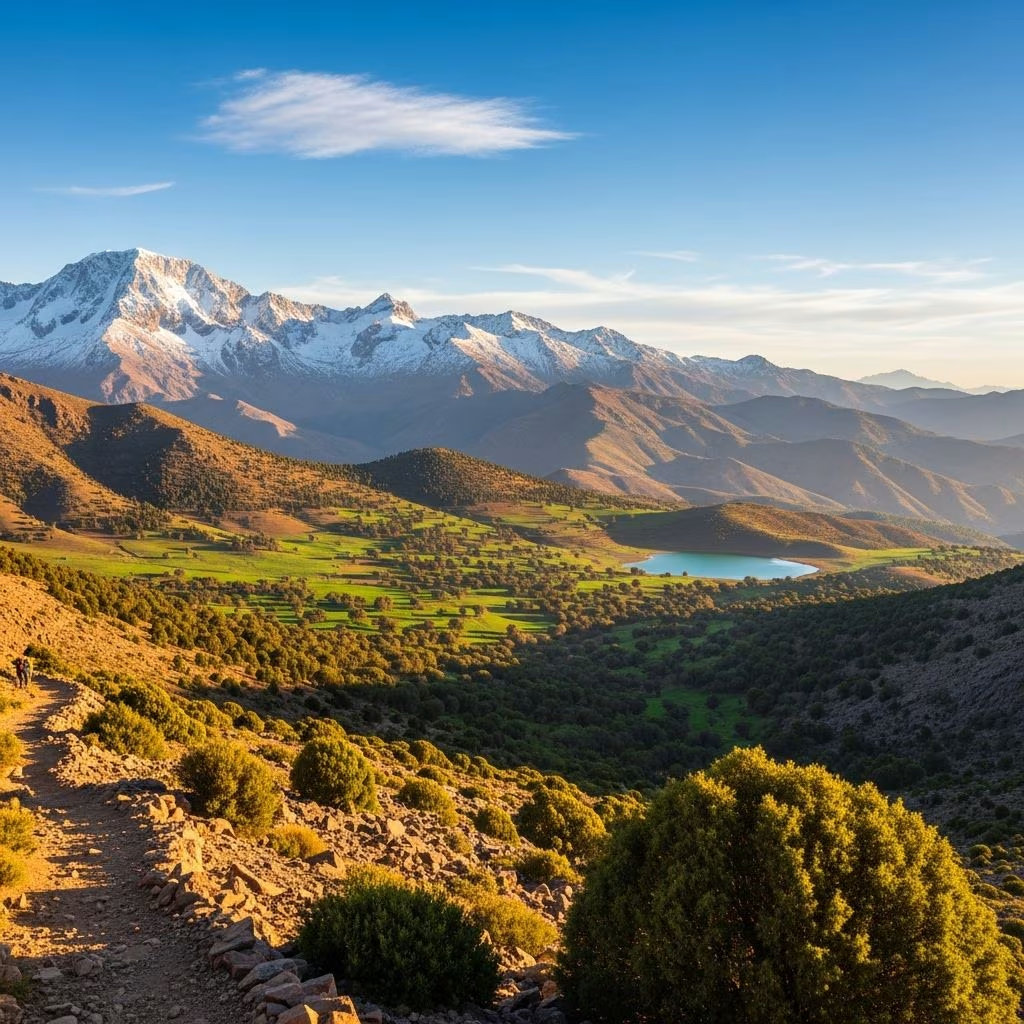
Nestled in the High Atlas Mountains, Toubkal National Park spans 93,900 acres and holds the title of Morocco’s oldest park, founded in 1942. Dominated by Jbel Toubkal at 4,167 meters (13,671 feet), it’s the top destination for mountaineers aiming to conquer North Africa’s rooftop. Trails wind through alpine meadows, past Barbary sheep and elusive leopards, culminating at a pristine glacial lake.
Snowmelt from the peaks nourishes streams vital for local agriculture, blending conservation with Berber village life. Visitors often base in Imlil, a gateway village offering mule treks and guesthouses. Summit hikes take 2-3 days, but shorter routes reveal cedar groves and waterfalls. Spring wildflowers and autumn colors enhance the scenery.
| Key Features | Best Time to Visit | Difficulty Level |
|---|---|---|
| Jbel Toubkal summit | June-September | Advanced |
| Alpine lake & wildlife | April-May | Moderate |
| Berber villages | Year-round | Easy |
In the Middle Atlas, Ifrane National Park protects vast cedar woodlands, earning nicknames like “Morocco’s Switzerland” for its alpine charm. Covering rolling hills and plateaus, it’s a sanctuary for 25% of the world’s Barbary macaques, playful monkeys that roam the canopy. Trails lead to waterfalls, caves, and Lake Dayet Aoua, a Ramsar wetland teeming with birds.
The park’s cool climate supports oak and fir forests, contrasting Morocco’s southern heat. Day trips from nearby Ifrane town include picnics amid boulders and viewpoints over oak savannas. Winter brings snow for skiing at Michlifen, while summer offers butterfly spotting and trout fishing.
South of Agadir, this park safeguards dunes, lagoons, and acacia thickets along the Atlantic coast. It’s the last stronghold for nearly the entire global population of the critically endangered Northern Bald Ibis, with over 600 individuals nesting on cliffs. River estuaries host flamingos, herons, and migratory shorebirds.
Boardwalks and observation hides make birdwatching accessible, while kitesurfing and camel rides add adventure. The park connects to the Anti-Atlas, protecting wetlands amid encroaching development. Visit at dawn for ibis flights or explore verbena fields in bloom.
Along the Rif Mountains’ coast, Al Hoceima is Morocco’s largest Mediterranean marine reserve, featuring turquoise bays, sea caves, and pine-clad cliffs. Snorkelers spot octopus and groupers, while hikers tackle the Chefchaouene Trail to Spanish enclaves. Endemic plants like the Hoceima cedar thrive here.
Boat tours reveal hidden beaches inaccessible by land, ideal for picnics. The park supports Barbary deer and golden eagles, with efforts to link it to European corridors.
In the Rif, Talassemtane preserves Spain fir forests and dramatic gorges around Chefchaouene’s blue city. Multi-day treks like the Gods Valley route pass waterfalls and Berber hamlets. Rare flora, including ferns and mosses, flourishes in misty ravines.
It’s a biodiversity hotspot for butterflies and amphibians, with talassemtane cedar groves drawing botanists. Easy access from Tetouan makes it family-friendly.
Haut Atlas Oriental National Park: Eastern High Atlas canyons with palm oases and fossil sites. Hike gorges near Errachidia for Barbary sheep sightings.
Khenifra National Park: Cedar forests and lakes in the Middle Atlas, prime for trout fishing and mouflon spotting.
Khenifiss National Park: Southern coastal lagoons protecting flamingos and sea turtles.
Iriqui National Park: Vast Sahara dunes and acacia steppe, ideal for 4×4 safaris and nomadic heritage.
Dakhla National Park: Remote Atlantic peninsula with flamingo colonies and windsurfing lagoons.
Entry is free or nominal; guides are recommended for remote areas. Pack layers for altitude changes, sturdy boots, and water purifiers. Base in Marrakech for Toubkal/Ourika, Fez for Ifrane, or Agadir for Souss-Massa. Sustainable tourism supports locals—choose eco-lodges and avoid single-use plastics.
Q: How many national parks does Morocco have?
A: Eleven official parks, plus reserves, covering diverse biomes.
Q: What’s the most visited park?
A: Toubkal, with 40,000 annual visitors for its iconic peak.
Q: Are the parks safe for solo travelers?
A: Yes, with guides; stick to trails and inform locals of plans.
Q: Can I camp in the parks?
A: Designated sites only; Toubkal has refuges for overnights.
Q: What wildlife should I expect?
A: Barbary macaques, ibises, eagles, sheep—pack binoculars!
Morocco’s parks face drought, poaching, and tourism pressure, but initiatives like ibis reintroduction thrive. International partnerships, including U.S. sister-park status for Toubkal, bolster protection. Visitor fees fund trails and anti-poaching.
