

 Travel Essentials
 Travel Essentials

Explore Europe's most accessible cities like Vienna, Barcelona, and Zaragoza, with details on transport, attractions, and tips for seamless travel.
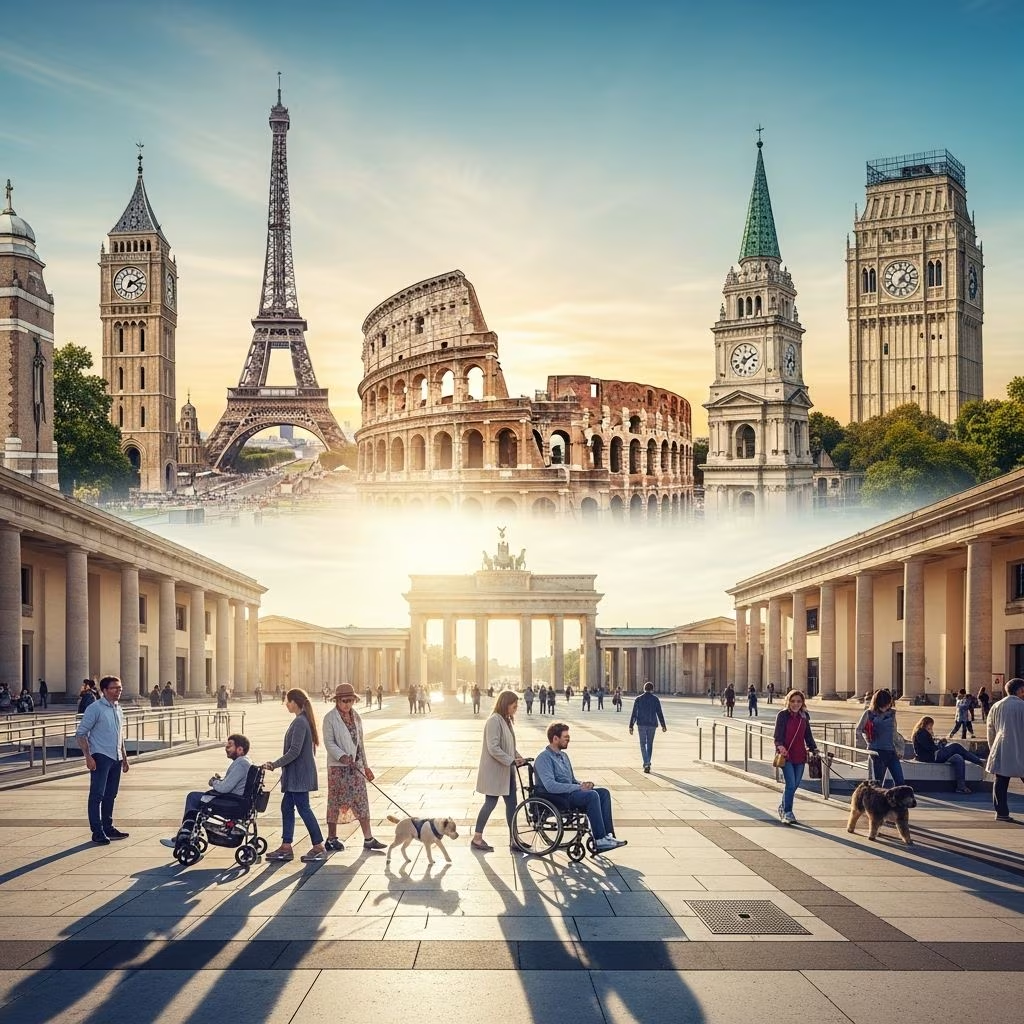 Travel Essentials
Europe leads the world in making urban destinations welcoming for travelers with disabilities. Through initiatives like the European Commission’s Access City Award, cities have invested heavily in ramps, low-floor vehicles, tactile paving, and inclusive attractions. These efforts ensure that people using wheelchairs, mobility scooters, or with visual or hearing impairments can explore historic sites, beaches, and cultural hubs independently. Recent winners and consistent performers showcase flat terrains, reliable public transit, and accommodations like free companion entry or adapted tours.
Accessibility transforms travel from a challenge into an enriching experience. The EU’s Access City Award, running since 2010, recognizes municipalities excelling in removing barriers for residents and visitors alike. For 2026, Zaragoza in Spain takes the top spot, followed by Valencia and Rennes in France. Vienna, the 2025 winner, exemplifies sustained commitment with fully accessible buses and palaces offering disability concessions. These cities prioritize universal design, benefiting everyone from families with strollers to elderly visitors.
Key factors include:
The latest awards spotlight Spain’s dominance. Zaragoza, the 2026 champion in northeastern Spain, features revamped sidewalks, braille signage, and inclusive public spaces. Valencia, runner-up, boasts beach adaptations and efficient metro systems. Rennes in France ranks third with its compact, navigable layout and low-emission accessible vehicles.
| City | Award Year | Key Features |
|---|---|---|
| Zaragoza, Spain | 2026 Winner | Wide sidewalks, tactile paths, accessible historic center |
| Valencia, Spain | 2026 Runner-up | Beach hoists, step-free trams, inclusive museums |
| Rennes, France | 2026 3rd Place | Compact size, electric accessible buses, audio loops |
| Vienna, Austria | 2025 Winner | Low-floor buses, palace ramps, airport assistance |
| Nuremberg, Germany | 2025 Runner-up | Historic site lifts, flat old town, reliable S-Bahn |
Austria’s capital blends baroque grandeur with modern accessibility. Named 2025 Access City Award winner, Vienna offers low-floor buses across the fleet and most U-Bahn stations equipped with elevators. Schönbrunn Palace and Belvedere Palace provide ramps, wheelchair loans, and reduced fees for companions. The airport features dedicated assistance services. For music lovers, opera houses have designated seating and audio descriptions.
Spain’s coastal gem excels with wide boulevards and a metro system where over 90% of stations are lift-equipped. Major sights like Sagrada Família offer panoramic elevators and adapted tours. All beaches provide amphibious chairs, boardwalks, and changing facilities with hoists. Public buses kneel for easy boarding, making city exploration effortless.
Switzerland’s financial hub combines lakeside charm with precision-engineered accessibility. Cable cars to Uetliberg mountain are wheelchair-friendly, and lake cruises feature low decks. Museums like the Swiss National Museum have full ramp access, while the airport’s train connections include priority spaces. Flat paths along Lake Zurich invite relaxed strolls.
Italy’s cradle of art has flattened its historic core remarkably. The Uffizi and Accademia Galleries install elevators and wide doorways for wheelchair access. Despite some cobblestones, key streets feature tactile guidance. River Arno bridges now include lifts, and many restaurants offer terrace ramps.
Denmark’s capital pioneers inclusive design with extensive cycle paths doubling as scooter routes. All buses and most S-train stations are step-free. Tivoli Gardens and the Little Mermaid statue have paved access. Harbor baths offer hydraulic lifts into the water.
The Netherlands’ flat terrain shines, with GVB trams, buses, and free ferries all accessible. An online planner highlights barrier-free routes. The Rijksmuseum and Van Gogh Museum provide wheelchairs and quiet hours for sensory needs. Canal boats have low-floor options.
Germany’s vibrant metropolis offers free assistance on BVG transport, including ramps on trains. Museum Island’s five institutions feature multimedia guides and elevators. The flat Brandenburg Gate area and Tiergarten park paths suit all mobility levels.
Belgium’s capital charms with accessible Grand Place viewpoints and museums like the Magritte. STIB buses and metros prioritize low floors, while Atomium offers panoramic lifts. Parks feature smooth trails for scooters.
The City of Light provides free Louvre entry for disabled visitors and Eiffel Tower discounts. RATP’s 80% accessible buses include audio announcements. Seine cruises have wheelchair decks, though planning avoids crowded Métro stairs.
Slovakia’s capital surprises with ramped Bratislava Castle and Primate’s Palace. Public transport includes low-entry trams, and the Danube promenade is fully paved.
Plan ahead using apps like AccessNow or city-specific tools. Book assistance 48 hours in advance for airports and trains. EU regulations mandate companion discounts and service animals. Pack a transfer board for uneven surfaces and verify beach chair availability seasonally.
An annual prize by the European Commission honoring cities improving accessibility since 2010. Winners like Zaragoza (2026) excel in urban planning for disabilities.
Many are, especially in Barcelona and Valencia, with floating chairs and mats. Confirm seasonal services.
Highly, with Vienna and Berlin at 95%+ accessibility. Apps show real-time step-free options.
Often yes, plus companion tickets, as in Paris’s Louvre and Vienna’s palaces.
Amsterdam or Copenhagen for flat ease and English signage.
