

 Travel Essentials
 Travel Essentials

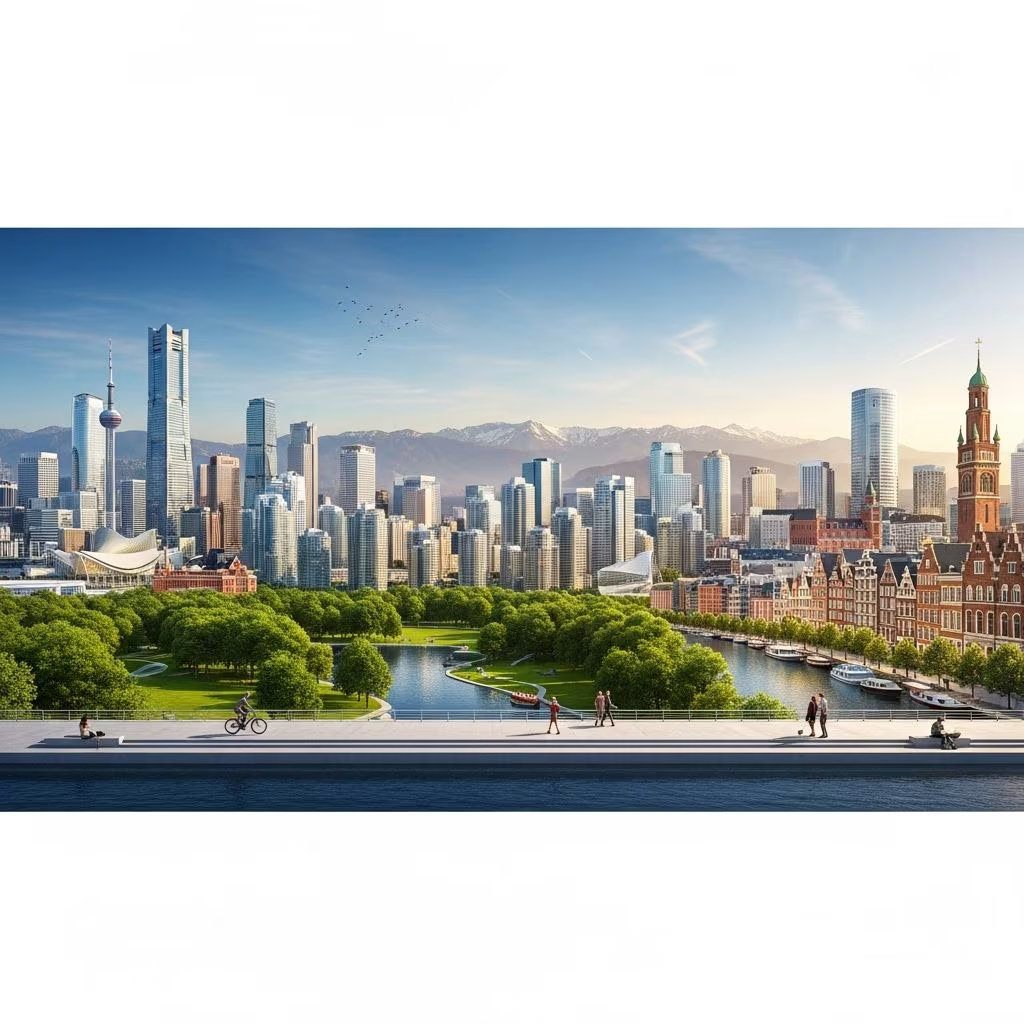
Discover the leading cities in the 2026 Global Liveability Index, evaluated on stability, infrastructure, education, and more. Vienna tops the list for exceptional living standards.
 Travel Essentials
The quest for the perfect place to call home has led to meticulous global assessments that measure urban excellence. In 2026, the Global Liveability Index evaluates over 250 cities across key pillars like safety, healthcare access, cultural offerings, education quality, and infrastructure robustness. These rankings reveal destinations where daily life thrives amid efficiency, security, and vibrant communities. Vienna, Austria, claims the top spot for its unmatched blend of affordability, stability, and cultural richness, setting a benchmark for urban living worldwide.
Livability rankings stem from rigorous methodologies that quantify what makes a city habitable. Organizations score cities on stability (political and social safety), healthcare (availability and quality of medical services), culture and environment (recreational facilities, arts, and green spaces), education (schooling standards and university access), and infrastructure (public transport, housing, and utilities). High performers consistently excel in multiple categories, ensuring residents enjoy balanced, high-quality lives.
For instance, a city’s score might reach 100 in healthcare if it boasts world-class hospitals and universal coverage. Infrastructure ratings consider commute times, road quality, and digital connectivity. These factors, aggregated into an overall index, guide expatriates, families, and professionals seeking optimal locales.
European and Oceanic cities dominate 2026 rankings, reflecting strong public services and natural appeal. Here’s a breakdown of standout performers:
These cities share traits like low crime, green initiatives, and inclusive policies, fostering resident satisfaction.
Europe hosts over half of the top 20 livable cities in 2026, thanks to robust social systems and historic charm. Vienna’s public housing keeps costs reasonable, while its coffeehouse culture thrives alongside modern amenities. Copenhagen integrates sustainability with urban planning, boasting extensive cycling paths that reduce traffic congestion.
Switzerland shines with Zürich and Geneva, where clean air, multilingual environments, and financial hubs attract talent. Netherlands cities like Amsterdam and The Hague score high for progressive policies and canal-lined livability. Austria’s Graz also emerges with a quality of life index near 190, blending affordability and safety.
Asia-Pacific cities impress with efficiency and innovation. Tokyo, Japan, stands out for orderliness despite its scale, offering safe streets, advanced transit, and culinary excellence. Yokohama and Osaka follow, with perfect infrastructure scores.
Auckland, New Zealand, captivates with natural harbors and outdoor lifestyles, scoring well in environment and education. Australian gems like Melbourne, Sydney, and Brisbane provide sunny climates, beaches, and multicultural vibes.
| City | Country | Strengths | Overall Index (Approx.) |
|---|---|---|---|
| Tokyo | Japan | Safety, Efficiency, Healthcare | 96.0 |
| Auckland | New Zealand | Nature, Lifestyle, Education | High |
| Melbourne | Australia | Culture, Healthcare, Infrastructure | 97.0 |
| Osaka | Japan | Infrastructure, Stability | 96.0 |
| Sydney | Australia | Environment, Education | 96.6 |
This table highlights how these cities prioritize resident well-being through targeted strengths.
North America features Vancouver and Toronto for diverse communities and natural access. European influences blend with urban energy in these Canadian hubs. U.S. cities like Boise and Madison rank for affordability and low pollution, appealing to families.
Munich, Germany, combines Bavarian tradition with tech innovation, boasting high purchasing power and safety indices around 78-80. Valencia, Spain, surprises with a 206 quality of life score, thanks to Mediterranean climate and low costs.
Safety remains paramount; top cities report low crime via community policing and surveillance. Healthcare excellence includes short wait times and preventive care. Cultural richness spans museums, festivals, and parks, enriching leisure.
Infrastructure investments yield seamless public transport—Vienna’s metro rivals Tokyo’s. Education systems produce skilled workforces, with universities drawing global students. Affordability varies, but subsidies in Vienna and Copenhagen keep housing viable.
| City | Stability | Healthcare | Infrastructure | Overall |
|---|---|---|---|---|
| Vienna | 95+ | 100 | 96+ | Top |
| Zürich | High | 100 | High | 1st Mercer |
| Geneva | 95 | 100 | 96.4 | 96.8 |
| Copenhagen | High | High | High | Top 10 |
| Munich | High | 79.5 | High | 206.4 QoL |
No city is flawless. Rising costs challenge affordability in Zürich, while climate change pressures coastal spots like Auckland. Rankings evolve with data; 2026 emphasizes sustainability amid urbanization.
Future livability may prioritize resilience to climate events, digital infrastructure, and mental health support. Cities investing in green energy and remote work compatibility will rise.
Livability assesses safety, healthcare, education, culture, environment, and infrastructure via standardized indices.
Vienna, Austria, leads for balanced excellence across all categories.
Cities like Boise (13th in some indices) and Madison perform well for safety and climate.
Mercer focuses on expats, Numbeo on cost-quality balance, EIU on broad liveability.
Visas vary; EU mobility aids Europe, while points systems apply elsewhere.
Match priorities: families favor education-strong Vienna, professionals eye Zürich’s economy, nature lovers pick Auckland. Visit or use indices to decide. These rankings evolve, but 2026 leaders offer proven blueprints for thriving urban life.
