

 Travel Essentials
 Travel Essentials

Journey to Earth's most isolated corners, from Arctic settlements to remote islands, with practical travel guidance and what to expect.
 Travel Essentials
The human desire to escape civilization and venture into unexplored territory has never been stronger. While many travelers seek crowded tourist hotspots, a growing segment of adventurous souls yearns to experience the planet’s most isolated and remote locations. These extreme destinations challenge conventional tourism and offer unparalleled experiences that transform how we perceive wilderness and solitude. Understanding what makes certain places so remote—and how to responsibly visit them—requires knowledge, preparation, and respect for these fragile environments.
Remoteness encompasses more than geographical distance from population centers. True isolation combines multiple factors: limited transportation infrastructure, challenging weather conditions, minimal human infrastructure, and often extreme environmental conditions that make daily life difficult for permanent inhabitants. Some remote locations are isolated due to geography—islands in the middle of oceans or regions locked behind mountain ranges. Others are remote because of climate—extreme cold in polar regions or altitude in high-elevation plateaus. When these factors combine, they create destinations that test even experienced travelers.
The most isolated places on Earth often share common characteristics: they require specialized knowledge to access, limit visitor numbers naturally through difficult conditions, and preserve unique ecosystems and cultures precisely because of their isolation. These locations represent some of the last truly wild spaces remaining on our planet.
The Arctic represents one of Earth’s final frontiers, hosting communities that endure extreme cold, prolonged darkness, and limited accessibility. These northern settlements showcase human resilience and adaptation to seemingly uninhabitable conditions.
Longyearbyen, Svalbard, Norway stands as one of the world’s northernmost permanent settlements, located approximately 650 miles south of the North Pole. As part of the Svalbard archipelago, this community of roughly 2,300 residents experiences unique challenges: six months of continuous darkness during winter and continuous daylight during summer. Despite its extreme location, modern amenities and organized tourism infrastructure exist here, making it more accessible than many assume. International flights connect directly to Oslo in three hours, demonstrating how isolation can be relative in the modern era. Winter visitors witness spectacular Northern Lights displays, while summer visitors experience the midnight sun phenomenon and opportunities for Arctic wildlife observation.
The extreme conditions in Svalbard shape everything about daily life. Temperatures plummet to minus 40 degrees Celsius in winter, snow accumulates rapidly, and the polar night creates psychological challenges for residents and visitors alike. Yet the region attracts thousands of adventurers annually who come for dog sledding, snowmobiling, ice hotel stays, and Arctic photography expeditions.
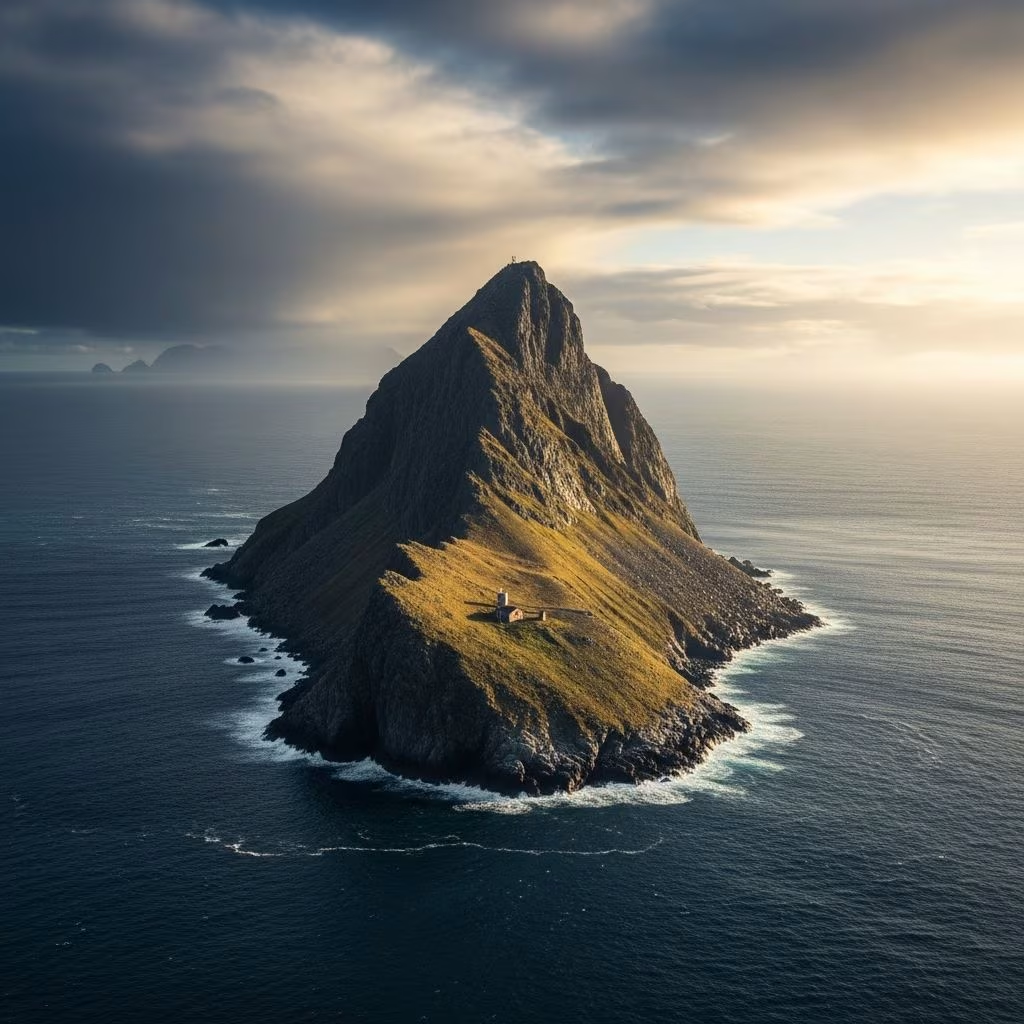
Some of Earth’s most remote locations are islands that, while isolated by water, maintain surprising levels of tourism infrastructure. These destinations offer the paradox of seclusion with creature comforts—allowing travelers to experience wilderness without extreme hardship.
Lord Howe Island exemplifies this balance, situated 320 miles east of New South Wales, Australia, in the Tasman Sea. This volcanic remnant hosts approximately 350 permanent residents who have developed a sustainable tourism model accommodating limited visitors. The island maintains only 400 bed accommodations total, requiring advance booking coordination with flights. A two-hour commercial flight from Sydney provides access, yet the island’s size and limited infrastructure preserve its remote character. Visitors experience pristine beaches, unique bird species found nowhere else, dramatic cliffsides, and genuine isolation despite relative accessibility. The small population ensures that tourism remains controlled and environmentally conscious.
Easter Island (Rapa Nui), Chile represents another island paradox—one of the most isolated inhabited locations globally at 2,300 miles from mainland Chile, yet welcoming thousands of visitors annually. The island’s iconic Moai statues, volcanic landscapes, and Polynesian heritage draw travelers willing to endure lengthy flights and significant expense. The journey to Easter Island—typically requiring connection through Santiago—becomes part of the adventure experience, creating psychological distance that amplifies the destination’s remoteness.
Elevation creates natural barriers to human habitation as effectively as geographic distance or climate severity. High-altitude destinations challenge human physiology while providing transformative travel experiences.
La Rinconada, Peru holds the distinction of Earth’s highest altitude settlement at 5,100 meters (16,730 feet) above sea level, nestled within the Peruvian Andes. At this elevation, atmospheric oxygen comprises only half of sea-level concentrations, creating significant physiological demands. Residents and visitors experience altitude sickness symptoms, breathing difficulties, and extreme cold. The settlement exists primarily due to nearby gold mining, attracting fortune seekers despite brutal conditions. Visitors attempting to reach La Rinconada must acclimatize carefully, ascend gradually, and remain aware of serious health risks. The town’s harsh environment and lack of modern amenities create an experience of genuine hardship—few tourists venture here, and those who do return with profound respect for high-altitude inhabitants.
The Tibetan Plateau, often called the “Roof of the World,” averages 4,000 meters elevation while covering an area roughly equivalent to Western Europe. This vast high-altitude wilderness experiences extreme cold, intense solar radiation, and sparse vegetation despite covering roughly one-quarter of the Himalayan mountain range’s territory. Few permanent residents inhabit this region, and those who do depend on nomadic pastoralism and livestock herding. The plateau’s natural beauty—sacred lakes, snow-capped peaks, and wildlife including snow leopards and yaks—contrasts starkly with its forbidding conditions. Travelers access this region primarily through Tibet’s capital, Lhasa, requiring permits and careful health planning.
Vast desert regions represent another category of remoteness—places where distance between settlements stretches across hundreds of miles and resources become critically limited.
Innamincka, Australia provides access to the Simpson Desert, one of Earth’s most inhospitable regions. This remote outpost hosts only fifteen permanent residents in an expansive desert landscape where the nearest significant town lies hundreds of miles distant. The Simpson Desert presents extreme heat, minimal water availability, and virtually no infrastructure beyond basic services. Visitors typically come equipped with vehicles, supplies, and emergency communication devices. The isolation here is absolute—travelers drive through endless sand dunes with no human presence for days at a time. This destination appeals exclusively to experienced desert travelers and adventure enthusiasts prepared for genuine survival conditions.
Certain remote locations maintain their isolation through environmental protection rather than natural inaccessibility. These preserved wilderness areas restrict development and limit visitor numbers to maintain ecological integrity.
Hornstrandir Nature Reserve, Iceland encompasses 220 square miles of the Westfjords peninsula in northern Iceland, featuring towering cliffs, deep fjords, and dramatic coastal landscapes. Uninhabited since the 1950s, this reserve has experienced remarkable environmental recovery. With hunting now prohibited and human presence eliminated, Arctic fox populations have rebounded, seal colonies have expanded, and unique ecosystems have flourished. Access requires either boat travel from nearby settlements or hiking challenging trails. The reserve’s remoteness creates genuine wilderness experience—visitors encounter pristine landscapes unchanged by human development for over seventy years.
Mahale Mountains National Park, Tanzania exemplifies African remote wilderness. Occupying a 632-square-mile peninsula jutting into Lake Tanganyika—one of Earth’s largest lakes—the park features no internal roads and no vehicle access whatsoever. All movement occurs on foot, and reaching the park requires either a day-long boat journey or chartered aircraft. This inaccessibility has preserved exceptional wildlife populations, including chimpanzees, and maintains the region’s pristine character despite its ecological significance and research importance.
Some destinations combine remoteness with archaeological and cultural significance, attracting visitors willing to endure difficult travel conditions for historical and cultural experiences.
Archaeological sites hidden within remote jungles present particular challenges—accessing them requires specialized guides, physical endurance, and acceptance of challenging conditions. Sites requiring fifteen-kilometer hikes through dense jungle terrain on narrow, difficult trails are accessed primarily through local guides familiar with terrain and traditions. These destinations preserve not only physical artifacts but also intact ecosystems and cultural practices that surrounding isolation has protected from external influence.
| Destination Category | Primary Challenge | Typical Access Method | Best Season |
|---|---|---|---|
| Arctic Settlements | Extreme cold, darkness | Specialized flights | Winter (lights) or summer (daylight) |
| Remote Islands | Limited transportation | Boat or limited flights | Season-dependent per location |
| High-Altitude Regions | Altitude sickness, oxygen depletion | Gradual ascent via ground transport | Summer/fall for best conditions |
| Desert Regions | Heat, water scarcity, navigation | Four-wheel-drive vehicles | Winter (cooler temperatures) |
| Wilderness Reserves | Limited infrastructure, physical demands | Guided expeditions or hiking | Dry season typically preferred |
Remote travel demands serious health preparation. High-altitude destinations require acclimatization schedules and altitude sickness medication prescriptions. Arctic regions necessitate extreme cold-weather gear and awareness of hypothermia and frostbite risks. Desert travel requires copious water supplies, navigation equipment, and emergency communication devices. Island destinations may present limited medical facilities, requiring evacuation insurance. Travelers to remote locations should consult travel medicine specialists, obtain comprehensive travel insurance covering emergency evacuation, and prepare detailed itineraries shared with trusted contacts.
Remote locations’ fragility demands conscious visitor behavior. Ecosystems in isolated regions often lack resilience developed through interaction with large human populations. Limited infrastructure means waste cannot be easily managed or disposed of responsibly. Visitors to remote destinations should minimize environmental impact through carry-in/carry-out practices, respect for wildlife, and adherence to local regulations. Many remote locations limit visitor numbers specifically to prevent environmental degradation—respecting these limits protects destinations for future visitors and preserves ecosystems that depend on isolation.
Remote communities often depend on tourism for economic survival, yet excessive tourism threatens the isolation and character that makes these destinations valuable. Sustainable models—like Lord Howe Island’s bed-limited system or Ecuador’s Galápagos Islands’ quota system—demonstrate how communities can benefit economically from tourism while preserving environmental and cultural integrity. Travelers visiting remote locations support local economies, but should do so through operators and accommodations that prioritize community welfare and environmental protection.
Climate change threatens many remote destinations. Arctic settlements experience warming temperatures that alter ecosystems and infrastructure. High-altitude regions face glacial retreat and altered precipitation patterns. Desert regions experience unpredictable weather events. The window for experiencing many remote locations in their current state may be limited, creating urgency for responsible visitation before fundamental changes occur.
Remote travel represents both privilege and responsibility. These journeys provide transformative experiences unavailable in developed tourist destinations, but accessing them requires acknowledging their fragility, respecting local communities, and accepting the genuine challenges these environments present. Whether travelers seek Arctic wilderness, island solitude, high-altitude challenge, or desert vastness, remote destinations demand preparation, humility, and commitment to leaving these extraordinary places undiminished for future generations.
