

 Travel Essentials
 Travel Essentials

Comprehensive guide to climbing Mount Elbrus: preparation, routes, gear, itineraries, safety, and why it's ideal for novice high-altitude adventurers seeking Europe's highest peak.
 Travel Essentials
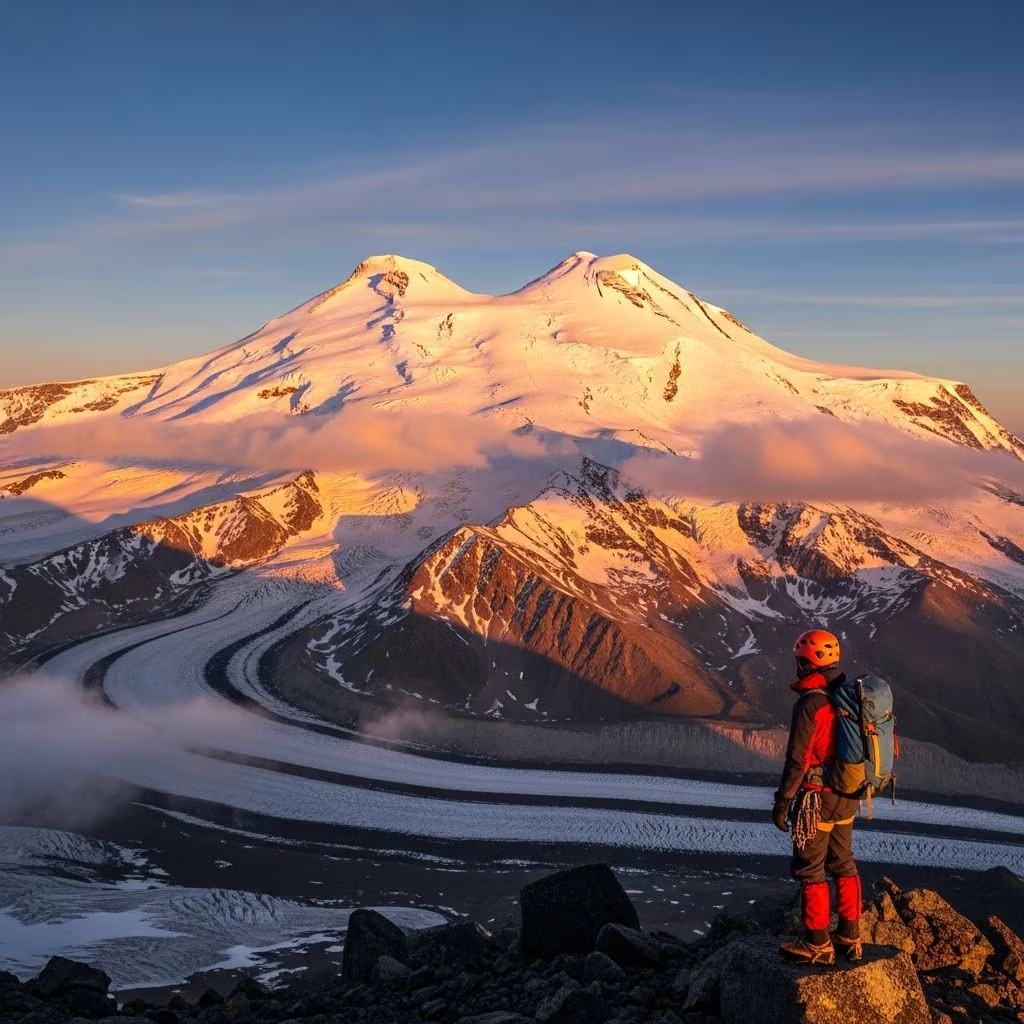
Mount Elbrus stands as the crowning jewel of European mountaineering at 5,642 meters, a dormant volcano in Russia’s Caucasus Mountains offering an attainable challenge for aspiring high-altitude climbers. Its dual summits and vast glaciers make it a gateway to extreme adventure without requiring elite technical skills.
Nestled in the North Caucasus, Elbrus dominates the landscape with its west peak at 5,642m and east at 5,621m, connected by a saddle known as the col. This stratovolcano, inactive for millennia, features year-round snowfields and icefalls that define its iconic profile. Historically, it drew explorers in the 19th century, with the first ascent in 1874 by a British team, cementing its status as a Seven Summits contender.
The surrounding region blends rugged terrain with cultural richness, including Kabardino-Balkar heritage and proximity to mineral springs. Climbers often start from the Elbrus valley, where cable cars and huts facilitate access, distinguishing it from more remote peaks like Mont Blanc.
Elbrus suits beginner-to-intermediate climbers due to its non-technical south route, which combines hiking with basic glacier travel. Success rates exceed 90% on guided trips, thanks to fixed ropes and mechanical lifts that reduce physical demands. Its affordability—expeditions cost $4,000-$5,000—beats pricier Alps climbs, while the cultural immersion in Russian hospitality adds unique flavor.
The prime climbing window spans June to September, when stable weather boosts summit chances. July and August offer longest days and mild temperatures, though afternoon storms are possible. Winter ascents (December-February) attract experts for ski-mountaineering but demand advanced skills amid avalanches and -30°C cold.
Shoulder seasons like May or October provide solitude but riskier conditions. Monitor forecasts via Russian meteorological services, as sudden whiteouts can halt progress.
Success hinges on pre-trip fitness and acclimatization. Train 3-6 months with cardio (running, cycling), strength (squats, lunges), and altitude simulation via hikes carrying 15-20kg packs.
| Training Phase | Focus Areas | Weekly Duration |
|---|---|---|
| Base (Months 1-2) | Aerobic endurance, hill walks | 4-5 hours |
| Build (Months 3-4) | Weighted hikes, stair climbs | 6-8 hours |
| Peak (Month 5-6) | Multi-day treks, crampon practice | 10+ hours |
Mental prep is crucial: visualize summit day’s 1,500m gain from hut to peak. Beginners should join guided groups with proven leaders boasting dozens of summits.
Most fly into Mineralnye Vody (MRV) or Nalchik, then transfer 3-5 hours to Elbrus village via twisting mountain roads. Safety concerns in the Caucasus have eased; recent reports confirm smooth drives for tourists, even US citizens in 2024.
Visa requirements vary: EU citizens enter visa-free for 90 days; others need e-visas. Book guides early through family-run outfits like Russian Mountain Holidays, with 65+ years of expertise. Expect group sizes of 6-12 for personalized attention.
A standard 10-14 day expedition balances acclimatization with summit bids. Here’s a typical flow:
This structure prevents altitude sickness, with 70% summit success on first try.
Layer for extremes: base layers, fleece, down jacket, waterproof shell. Essential glacier kit includes crampons, ice axe, harness, helmet, and gaiters. Guides supply some items; pack personal layers and double boots for summit cold.
The southside via Azau valley uses cable cars to 3,800m, then traverses to barrels (dorm-style huts at 4,200m). From there, ascend the saddle, skirt icefalls, and push to the west summit. Fixed ropes aid steep sections; skiers sometimes descend for thrill.
North routes offer wilder beauty but longer approaches and lower success rates, suited for experienced parties.
Altitude illness strikes 20-30% without proper pacing; symptoms include headaches, nausea—descend immediately if severe. Guides monitor via pulse oximeters. Weather flips fast: high winds, crevasses, and frostbite are top threats. Choose IFMGA-certified locals like those from RMH.
Hydrate relentlessly (4-5L/day), eat carbs, and use Diamox if prescribed. Recent climbs confirm safety for internationals amid geopolitical calm.
Beyond the climb, savor khachapuri, shashlik, and Elbrus beer in polyana villages. Guides share Balkar folklore, enhancing the journey. Post-summit, relax in hot springs or explore Cheget meadows.
| Component | Estimated Cost (USD) |
|---|---|
| Guided Package (12 days) | 4,500-5,500 |
| Flights (Intl + Domestic) | 1,200-2,000 |
| Gear Rental | 300-500 |
| Visa/Insurance | 200-400 |
| Total | 6,200-8,400 |
Value shines in high success and inclusions like meals, transport.
No, but fitness equivalent to hiking 10km with pack daily is essential. Guides handle technical aspects.
Climbing areas are stable; tourists including Americans summited safely in 2024.
Not recommended—glaciers demand ropes. Join guided groups.
Over 90% for acclimatized guided teams.
No, English-speaking guides abound.
Try northside for solitude or winter ski ascent. Combine with Kazbek for multi-peak trips. Track personal stats via apps like Strava for progress.
