

 Travel Essentials
 Travel Essentials

Comprehensive guide to hiking Mount Etna in Sicily, covering trail options, safety requirements, altitude limits, and what to expect when trekking this active volcano.
 Travel Essentials
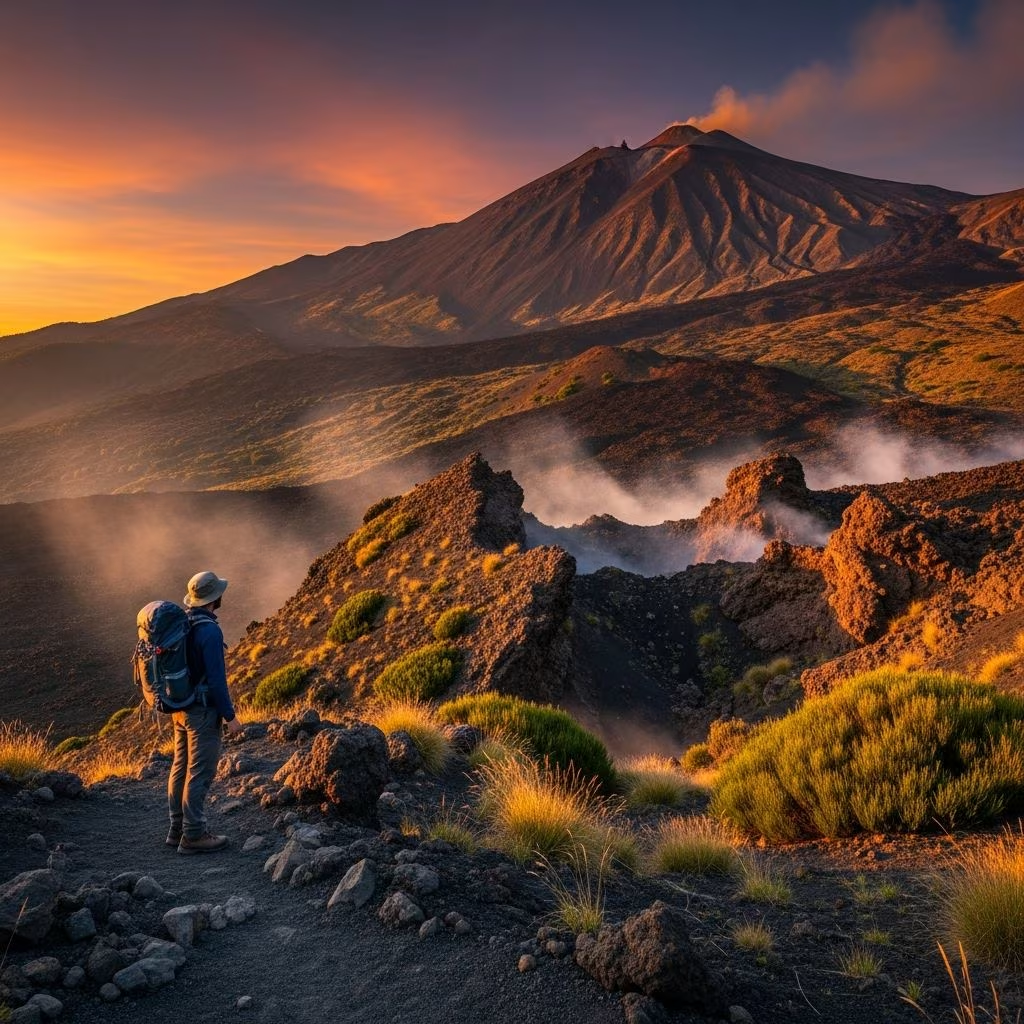
Mount Etna stands as Europe’s most active volcano and one of the world’s most accessible high-altitude volcanic peaks, making it an exceptional destination for trekkers seeking a unique combination of natural wonder and adventure. Located in Sicily, this magnificent mountain offers diverse hiking experiences ranging from leisurely walks through ancient lava flows to challenging summits reaching above 3,300 meters. The volcano’s dynamic nature ensures that each visit presents a slightly different landscape, as recent eruptions continually reshape the terrain and modify established routes.
For adventure enthusiasts and casual hikers alike, Mount Etna provides an unparalleled opportunity to witness the raw power of geological forces while enjoying some of the Mediterranean’s most spectacular panoramic views. The mountain’s accessibility, combined with its rich history of human settlement on its slopes, creates a destination that bridges natural science with cultural exploration.
The southern approach to Mount Etna, known as Etna Sud, represents the most developed and accessible trekking region on the volcano. The primary hub for this area is Rifugio Sapienza, a mountain shelter positioned at approximately 1,900 meters altitude that serves as the launching point for most southern expeditions. This facility offers essential amenities including restaurants, cafes, and information centers, making it the ideal location to prepare for your mountain adventure.
The infrastructure at Rifugio Sapienza includes a cable car system that transports visitors to Montagnola, a crater formation situated at 2,500 meters, which resulted from volcanic activity in 1763. Beyond the cable car terminus, a 4×4 shuttle bus continues the ascent to approximately 2,900 meters, navigating roads carved through dramatic lava fields and offering extraordinary views of the volcanic landscape. This combination of mechanical and human-powered transportation allows visitors to experience multiple elevation zones while minimizing exhaustion before the actual hiking begins.
The northern side of Mount Etna, known as Etna Nord, presents a contrasting experience. The village of Linguaglossa serves as the northern gateway, with Piano Provenzana functioning as the primary trekking base. Unlike the southern approach with its cable car infrastructure, the northern route typically involves jeep transportation to Piano delle Concazze at approximately 2,825 meters, followed by sustained hiking through pristine volcanic terrain.
Mount Etna accommodates hikers across the entire spectrum of experience and fitness levels. The critical factor determining which trails are accessible relates to altitude restrictions and guide requirements.
Independent trekkers can access trails reaching a maximum elevation of 2,800 meters without professional guidance. This elevation limit corresponds to the upper station of the 4×4 shuttle bus and represents the boundary established by local authorities for safety reasons. Self-guided hikes in this zone typically require 6 hours total time and do not present significant technical challenges for persons in reasonable physical condition.
One popular self-guided option involves beginning at Rifugio Sapienza and hiking to the Mountain Hut without utilizing the cable car. This budget-conscious alternative involves approximately 1.5 hours of steady climbing over volcanic gravel on a clearly marked path. However, the terrain consists primarily of exposed volcanic material under direct sunlight, and the continuous incline makes this route suitable only for those in good physical condition, particularly during warm weather months.
Another accessible self-guided experience involves exploration of the Silvestri craters, two inactive volcanic formations resulting from an 1892 eruption located near Rifugio Sapienza. These modest craters provide excellent introductions to volcanic geology without demanding significant exertion.
For those seeking moderate challenges, several trails navigate the terrain between 2,500 and 2,800 meters. The lava fields in this zone present dramatic black volcanic landscapes interspersed with areas of lighter-colored ash and pumice. The Bove Valley (Valle del Bove) represents one of the most visually striking features accessible at intermediate elevations, showcasing an enormous depression on the mountain’s eastern flank created by repeated volcanic collapse.
The Barbagallo crater complex becomes visible from intermediate elevations, though approaching these features closely requires professional guidance. The northeastern slope from Piano Provenzana offers excellent moderate-difficulty trekking through pine forests alongside ancient lava flows, providing a quieter experience than the heavily-visited southern routes.
Reaching Mount Etna’s summit craters, which rise above 3,300 meters, mandates engaging a certified guide; this is not merely a recommendation but a legal requirement. The summit region contains four distinct craters: the Northeast Crater, the Southeast Crater Complex, Voragine, and Bocca Nuova, with most guided tours terminating near Bocca Nuova.
Summit tours typically depart between 8:00 and 10:30 AM, depending on seasonal conditions. The complete experience usually encompasses three hours of actual walking time embedded within a five to six-hour total tour duration when accounting for transportation and acclimatization stops. These expeditions traverse volcanic ash, navigate narrow ridgelines around the summit crater rim (though never directly approaching the actual craters), and often encounter snow deposits even during summer months.
Successfully trekking Mount Etna requires more than average fitness due to the combination of high altitude, thin air, and volcanic terrain characteristics. The altitude creates oxygen scarcity that affects even experienced mountaineers. The loose volcanic surfaces demand constant foot placement attention and expend significant energy compared to hiking on compacted earth or rock.
Individuals with cardiovascular conditions, severe respiratory issues, or those unaccustomed to high-altitude environments should consult medical professionals before attempting summit expeditions. The transition from sea level to over 3,300 meters elevation occurs over a single day, providing minimal acclimatization time.
The primary trekking season extends from Easter through October 31st, with most commercial operations and guide services operating during this window. Winter ascents remain possible but demand winter mountaineering experience and specialized equipment including crampons and ice axes. Even summer expeditions regularly encounter significant snow fields near the summit, particularly on north-facing slopes.
Weather changes rapidly on Mount Etna, with summit conditions often dramatically different from base station forecasts. Afternoon thunderstorms develop frequently during summer months, making early morning departures essential. Winds intensify substantially above 3,000 meters, and visibility can deteriorate rapidly.
Mount Etna remains continuously active, with regular modifications to accessible routes resulting from eruptions and lava flows. The 4×4 shuttle bus access point fluctuates between 2,800 and 2,920 meters depending on recent volcanic activity and lava accumulation. Volcanic gas emissions, primarily sulfur dioxide, can create respiratory irritation and should be monitored carefully by individuals with asthma or other respiratory conditions.
| Route | Maximum Elevation | Duration | Guide Required | Key Features |
|---|---|---|---|---|
| Rifugio Sapienza to 2,800m | 2,800m (9,186 ft) | 4-6 hours round-trip | No | Cable car and shuttle included; volcanic lava fields |
| Northern Flank (Piano Provenzana) | 2,200m (7,218 ft) | 3-4 hours | No | Pine forests; quieter experience; ancient lava flows |
| Crateri Sommitali Summit Tour | 3,300m (10,826 ft) | 5-6 hours total | Yes | Summit craters; Ionian Sea views; steep final section |
| Monti Sartorius Craters | 1,775m (5,823 ft) | 2-3 hours | No | Easy difficulty; forest scenery; minimal elevation gain |
Reaching Mount Etna’s trekking bases requires advance planning regarding transportation. Public buses operate from Catania to Rifugio Sapienza on the southern side, though service may be limited on certain days. Private vehicle rental or organized tour transportation represents a more flexible alternative. The drive from Catania to Rifugio Sapienza typically requires 90 minutes to two hours depending on traffic and specific route selection.
Certified guide services operate throughout the primary trekking season, with numerous operators offering group and private experiences. Guide fees typically begin at €80-120 per person for group summits and extend upward for private expeditions or specialized services. Guides provide not only mountain safety expertise but also interpretive knowledge regarding volcanic geology, local ecology, and historical eruption records.
Private guides accommodate customized experiences, adjusting difficulty levels and pace according to group capabilities and weather conditions. This flexibility proves particularly valuable for families with children, elderly participants, or individuals with specific fitness limitations.
Yes, though beginners should restrict themselves to lower-elevation routes or join guided tours. The Monti Sartorius trail near Piano Provenzana represents an excellent beginner option with minimal elevation gain and easy terrain. For summit aspirations, beginners require guides and should be in good cardiovascular condition.
May through September offers optimal conditions with reliable weather and maximum service availability. June and September provide ideal balances between good weather and smaller crowds compared to July-August peak season.
Guided summit experiences generally cost between €150-250 per person for group tours, with private guide options commanding €400-600 depending on group size and specific inclusions.
No. Legal restrictions prohibit unguided trekkers from ascending above 2,800 meters. These restrictions exist for participant safety on this active volcano.
Essential items include sun protection (sunscreen, hat, sunglasses), warm layers for high-altitude temperature drops, sturdy hiking boots with ankle support, substantial water supply, and energy foods. Wind protection and rain gear prove valuable even during summer months.
Mount Etna presents a remarkable opportunity to experience geological processes and witness landscapes shaped by powerful natural forces. Whether selecting a modest walk through volcanic terrain or committing to a challenging summit expedition, visitors encounter an environment unlike any other Mediterranean destination. The combination of accessibility, dramatic scenery, and scientific significance makes Mount Etna an exceptional trekking destination suitable for diverse experience levels and interests.
Successful visits require realistic expectation-setting regarding physical demands, respect for the volcano’s active nature, and flexibility in response to changing conditions. Those who prepare adequately and approach the mountain with appropriate caution will discover rewards that justify the effort and risk.
