

 Travel Essentials
 Travel Essentials

Explore the 52km kora around sacred Mount Kailash: preparation, daily trek details, spiritual significance, travel logistics, and tips for this ultimate overland journey.
 Travel Essentials
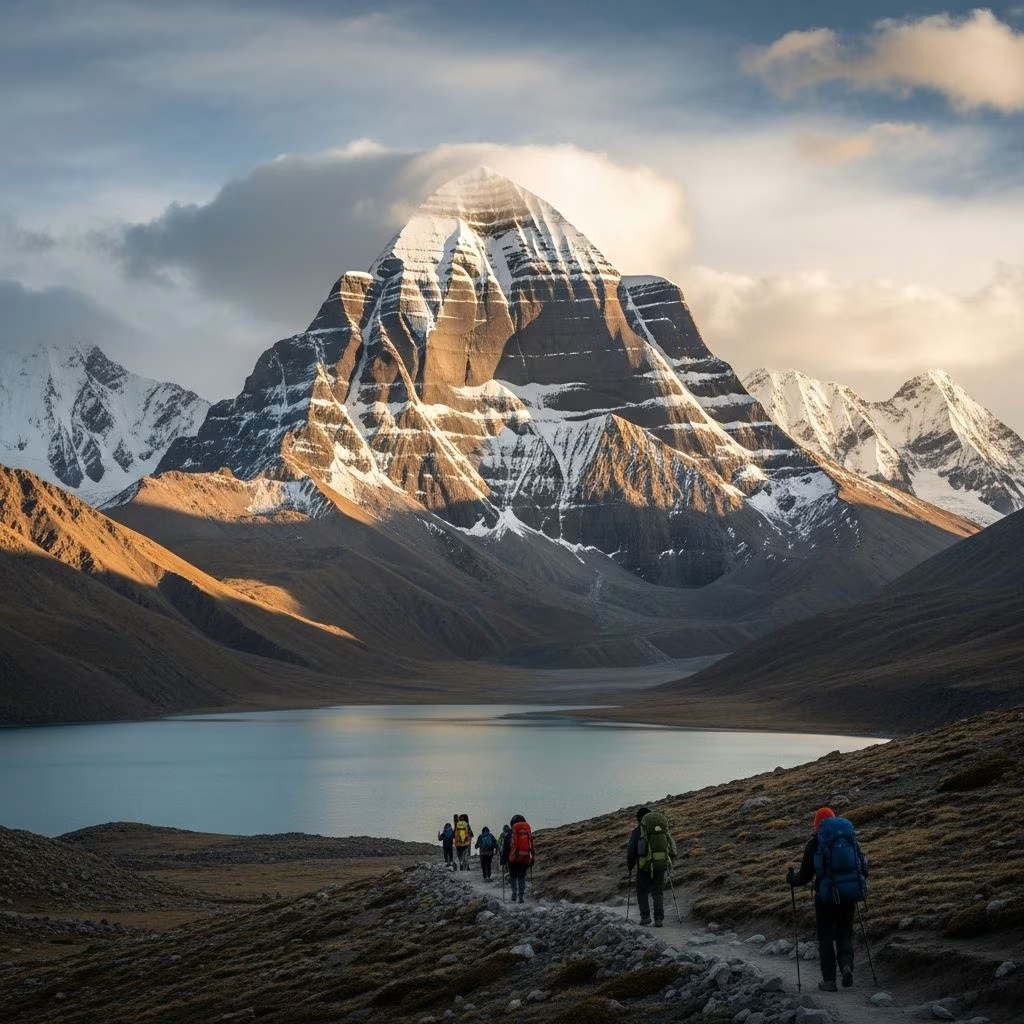
Mount Kailash, standing majestically at 6,638 meters in western Tibet, draws pilgrims and adventurers from around the globe for its profound spiritual aura and breathtaking isolation. This guide delves into the iconic 52-kilometer clockwise circumambulation, known as the kora, a three-day journey starting at around 4,670 meters and culminating at the Dolma La Pass at 5,650 meters. Sacred to Buddhists, Hindus, Jains, and Bön followers, the trek offers not just physical exertion but a deep spiritual renewal.
Known as Kang Rinpoche or ‘Precious Snow Mountain’ in Tibetan, Mount Kailash rises dramatically from the Tibetan plateau, detached from the Himalayan chain. Its symmetrical, pyramid-like form with four faces aligned to the cardinal directions symbolizes cosmic perfection in various traditions. From its base flow the headwaters of Asia’s mighty rivers: the Indus, Sutlej, Brahmaputra, and Karnali (a Ganges tributary), amplifying its mythological status as the world’s axis.
For Hindus, it is the abode of Lord Shiva; Buddhists see it as the seat of Demchok (a form of Chakrasamvara); Jains link it to the liberation of their first Tirthankara; and Bön practitioners, who circle anti-clockwise, revere it as the site of their founder Tonpa Shenrab’s descent to earth. Completing one kora is believed to erase a lifetime’s sins, with 108 koras promising enlightenment.
Success on this high-altitude trek demands meticulous planning. Physical fitness is crucial, though the trek isn’t technically demanding—daily distances are manageable (12-24 km), but thin air at 4,600-5,600m tests endurance. Acclimatization is non-negotiable: spend 3-5 days in Lhasa (3,650m) or similar elevations beforehand.
Hire yaks or porters at Darchen base for CNY 150-200/day. Basic guesthouses at Dirapuk and Zutulpuk monasteries offer dorm beds; camping is an alternative.
The kora begins at Darchen (4,670m), 40km from Lake Manasarovar, and spans 52km total. Days are short, allowing rest amid stunning vistas of nomad tents, prayer flags, and mani stones.
From Darchen, follow the Lha Chu Valley upstream. The flat-to-gentle terrain passes Lha Chu Monastery and reaches Dirapuk (4,970m) by afternoon. Marvel at Kailash’s north face, a sheer cliff glowing golden at sunset. Overnight in pilgrim huts with basic meals (dal bhat, noodles).
Ascend steeply from Dirapuk through boulder fields to Dolma La Pass (5,650m), adorned with tattered prayer flags. Views encompass icefalls and distant peaks. Descend rugged slopes past Shiva-tsal (where pilgrims discard personal items symbolizing ego death) and a sky burial site to Zutulpuk Monastery (4,790m). This day demands early starts; porters ease the load.
Follow the Chaktsal Gang Chu canyon, passing sacred caves and the ‘Miracle Rock.’ The path flattens near Darchen, ending triumphantly. Celebrate with a dip in hot springs if time allows.
| Day | Distance | Elevation Gain/Loss | Highlights |
|---|---|---|---|
| 1 | 12km | +300m | North face views, Lha Chu Valley |
| 2 | 24km | +600m / -900m | Dolma La Pass, Shiva-tsal |
| 3 | 14km | -200m | Chaktsal Gang Chu, return to base |
The kora transcends hiking—it’s a rite. Encounter prostrating pilgrims, Bön anti-kora walkers, and prayer wheels. Key sites include:
During Saga Dawa (May-June), thousands gather for flag-raising at Tarboche, amplifying energy. Hardcore devotees complete multiple koras or inner kora (34km, 5,860m pass, for advanced pilgrims after 13 outer).
Adjacent to Kailash, this 410 sq km freshwater lake at 4,590m is equally holy. Hindus bathe for purification; Buddhists circumambulate its 90km shore. Drive or trek around, visiting Chiu, Gossul monasteries. Stay lakeside for sunrise reflections of Kailash and Gurla Mandhata.
Direct flights to Tibet are limited; fly/train to Lhasa from Beijing/Chengdu or Kathmandu. From Lhasa, a 4-5 day overland drive (1,200km) via Shigatse, Sakya, Rongbuk (Everest BC option). Paved roads and guesthouses make it feasible. Kathmandu routes via Kyirong border (Nepalese side). Budget: $2,000-3,500 for 14-day tours including permits.
Beyond the outer kora, the inner circuit demands elite fitness: 34km in one day over 5,000m averages, peaking at 5,860m. Reserved for those who’ve done 13 outer koras. Multi-kora marathons test ultra-endurance.
Q: Is the Kailash trek suitable for beginners?
A: No—requires fitness and acclimatization due to altitude; not technical but strenuous.
Q: What’s the cost of yaks/porters?
A: Around CNY 150-200/day per yak; porters similar. Book via tour.
Q: Can women trek Kailash?
A: Yes, fully accessible; many female pilgrims participate.
Q: Best time for fewer crowds?
A: Early May or September; avoid Saga Dawa peak.
Q: Permits needed?
A: Tibet Travel Permit + regionals; only via agencies.
Tourism grows, but respect prevails: no climbing Kailash (banned since 2001), leave no trace, support locals. This pilgrimage blends adventure with reverence, leaving indelible transformation.
