

 Travel Essentials
 Travel Essentials

Plan a rewarding 2-day trek to North Africa’s highest peak with summit views, Berber villages, guides, seasons, and packing tips.
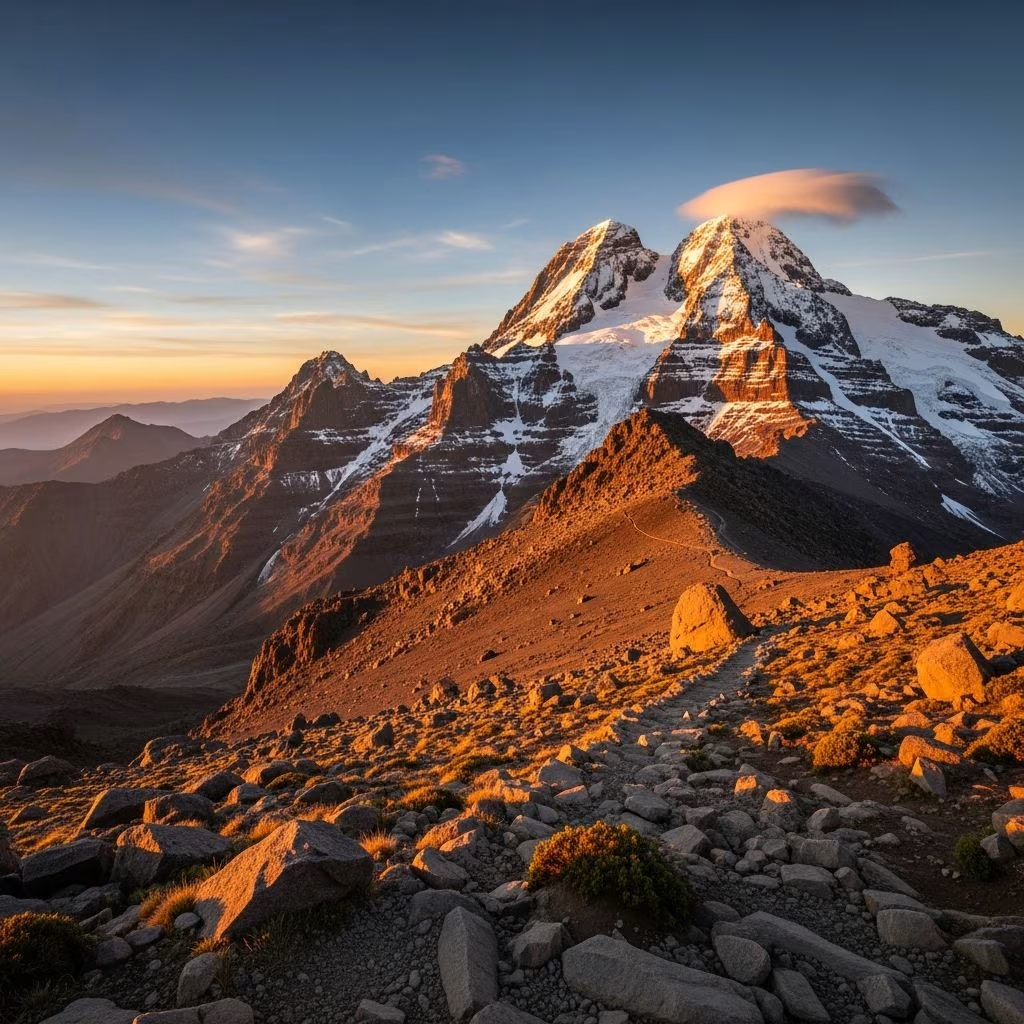 Travel Essentials
Mount Toubkal towers at 4,167 meters as the highest point in North Africa and the Atlas Mountains range, drawing adventurers eager for stunning vistas and cultural immersion in Morocco’s High Atlas region. This non-technical trek offers a rewarding challenge suitable for fit hikers, typically completed over two days from the village of Imlil.
The allure of Toubkal lies in its accessibility combined with dramatic elevation gain, breathtaking panoramic views of jagged peaks, and the chance to experience Berber village life. Hikers summit for the sunrise triumph, passing terraced fields, ancient shrines, and alpine refuges. Rated as a Grade 3 trek (moderate to challenging), it demands endurance for steep ascents and rocky paths but requires no ropes or prior mountaineering skills in summer conditions.
Proximity to Marrakech makes it ideal for a short escape: just 1.5 hours by road to the trailhead. The journey blends physical exertion with Morocco’s warm hospitality, from mint tea in villages to starry nights at high altitude.
Start in vibrant Marrakech, then head to Imlil (1,740-1,800m), the bustling gateway village at the edge of Toubkal National Park. Travel options include:
From Imlil, the Bureau des Guides is centrally located—ask locals or use maps to find it. All treks begin here since independent hiking has been prohibited since 2018 for safety reasons following incidents with hikers.
Since 2018, hiring a licensed guide is compulsory for all climbers, Moroccan or foreign, enforced at checkpoints to ensure safety amid remote terrain. Official rates from Imlil’s Bureau des Guides are around 500 MAD (50 EUR/USD) per day, covering two days for 800-1,000 MAD total. Private agencies may charge slightly more but offer extras like meals.
| Option | Cost (MAD) | Pros | Cons |
|---|---|---|---|
| Bureau des Guides | 500/day | Official, affordable | Basic service |
| Travel Agency | 600-800/day | Transport, food included | Higher cost |
| Private Operator (e.g., Berber-run) | 400-600/day | Personalized, cultural insights | Variable availability |
Choose reputable operators like those based in Imlil for local expertise. Guides provide navigation, pace management, and emergency support.
The classic route covers 14km one way with 2,367m total elevation from Imlil to summit. Expect 6-8 hours daily.
Depart Imlil early, following the Mizane Valley past Aroumd village’s stone houses and walnut groves. Ascend steadily (1,467m gain over 10km), stopping at Sidi Chamharouch shrine (2,500m) for lunch—try fresh orange juice from stalls. The path zigzags up rocky slopes to the refuge, arriving by late afternoon. Overnight in dorm-style bunks; book ahead in peak season. Time: 4-6 hours.
Alarms at 2-3 AM for the 3-4 hour ascent (960m gain). Navigate loose scree and steep switchbacks by headlamp to reach the summit cairn for sunrise over the Atlas. Descend to refuge for breakfast, then full return to Imlil (7-8 hours total). Poles are invaluable on scree.
Total Stats: Distance: ~28km round-trip; Difficulty: Strenuous due to altitude and descent.
Prime windows are late spring (May-June) and early autumn (September-October) for mild temps (10-25°C days) and minimal snow. Summer brings heat exhaustion risks; avoid July-August. Winter (December-March) offers snowy drama but requires crampons, ice axe, and expert guidance—elevated difficulty with avalanche potential.
Toubkal demands cardiovascular stamina for rapid altitude gain from sea level. Train with hill walks, stair climbs, and loaded backpack hikes 4-6 weeks prior. Acclimatize in Marrakech or Imlil. Common pitfalls: rushing pace, dehydration, ignoring altitude symptoms (headache, nausea).
Altitude Tips:
Layer for variable weather: cold nights (-5°C at refuge), hot days.
| Category | Essentials |
|---|---|
| Clothing | Breathable base layers, fleece mid-layer, waterproof jacket/pants, thermal hat/gloves, 2-3 pairs wool socks, gaiters (winter). |
| Footwear | Broken-in trekking boots with ankle support; camp shoes for refuge. |
| Gear | Trekking poles, headlamp + batteries, 30-40L daypack, water bottles/bladder, sunscreen, sunglasses, first-aid kit (blister pads, ibuprofen). |
| Winter Add-Ons | Crampons, ice axe, helmet. |
| Misc | Snacks (nuts, bars), cash for refuge (200-300 MAD/night), earplugs for dorms. |
Refuge Tombe d’Argent (3,207m) is basic: bunk beds, shared facilities, meals (tajine, soup). Cost: 150-200 MAD/night + food. Imlil offers guesthouses (200-400 MAD) with hot showers. Budget total for solo trek: 1,500-2,500 MAD (transport, guide, refuge, meals).
Key hurdles: loose scree descents (knee strain), altitude sickness (20-30% risk), weather shifts. Mitigate with slow pacing, poles, and guides who monitor groups. No technical sections in summer, but winter demands experience. Emergency: Guides carry radios; nearest clinic in Asni.
Interact with Berber communities in Imlil and Aroumd, savoring tagines and learning about nomadic heritage. Visit Sidi Chamharouch, a pilgrimage site blending Islam and pre-Islamic traditions. Support local by buying crafts.
Beyond two days, consider 4-5 day circuits via Imili or Lac d’Ifni for acclimatization and scenery. Combine with Marrakech souks or Ouzoud Falls.
Fit beginners can manage with preparation; it’s strenuous but non-technical. Train for endurance.
Not essential, but helpful. Acclimatize gradually and heed symptoms.
Yes, with licensed guides; groups common and areas patrolled.
Operators vary; book flexible packages.
Peak weekends busy; midweek quieter.
