

 Travel Essentials
 Travel Essentials

Explore Mount Yoshino's breathtaking cherry blossoms, historic temples, and scenic trails. Learn about peak bloom times, access tips, and why it's a UNESCO gem for spring visitors.
 Travel Essentials
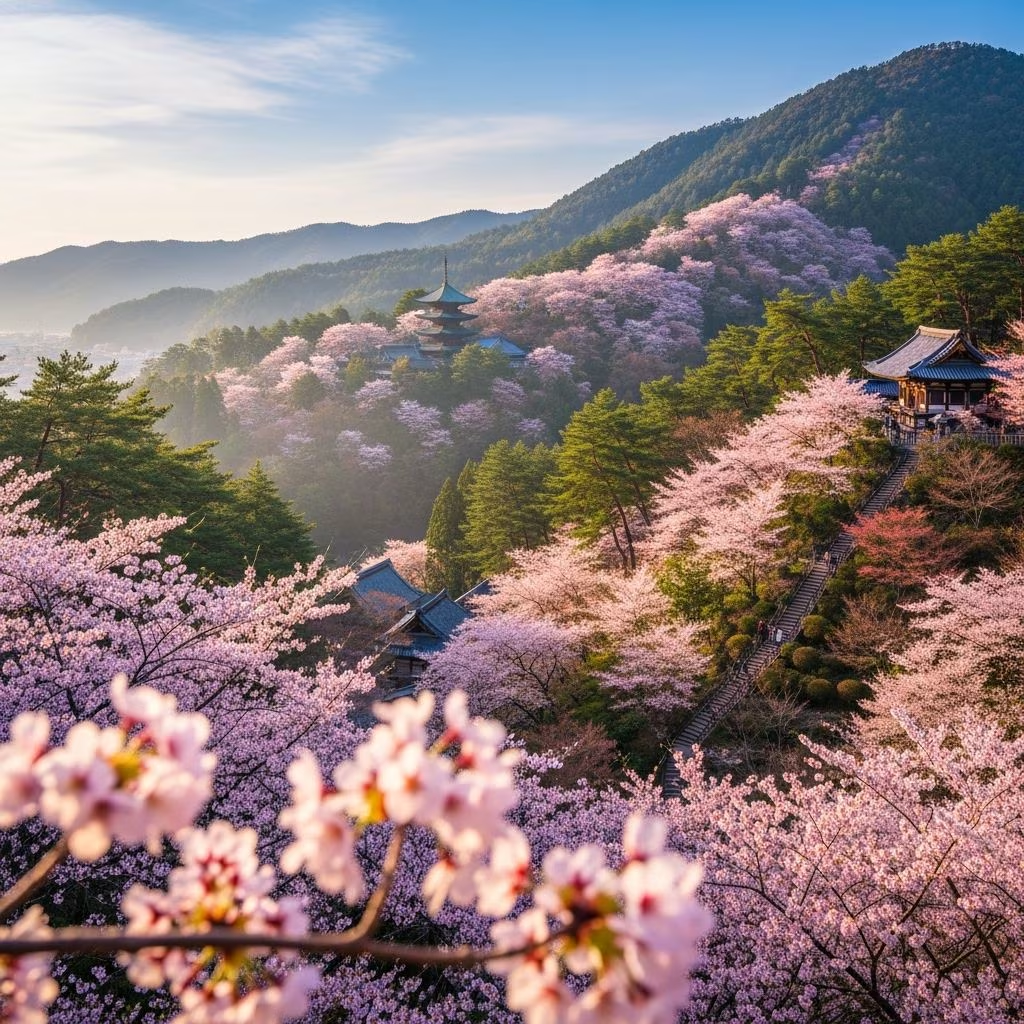
Perched in the Nara Prefecture of Japan’s Kansai region, Mount Yoshino stands as a living testament to the nation’s enduring love affair with cherry blossoms. Home to approximately 30,000 trees spanning more than 200 varieties, this mountain transforms into a sea of pink and white each spring, drawing travelers from around the globe for the cherished tradition of hanami—flower viewing. Unlike fleeting urban blooms, Yoshino’s sakura unfold in stages across varying altitudes, extending the spectacle for weeks.
Mount Yoshino’s unique topography creates a graduated blooming pattern that is its hallmark. The mountain divides into four distinct zones: Shimo Senbon (lower thousand trees), Naka Senbon (middle thousand trees), Oku Senbon (inner thousand trees), and Kami Senbon (upper thousand trees). Lower areas burst into flower first, typically late March, while higher elevations peak later, often into early May.
This elevation-based progression means visitors can chase the bloom, witnessing early buds at the base and full canopies higher up. In a typical year, Shimo Senbon reaches full bloom around early April, Naka Senbon mid-April, and upper zones shortly after. Weather plays a pivotal role; warmer springs accelerate the show, while cooler conditions prolong it.
Forecasts from sites like japan-guide.com help pinpoint peak times relative to nearby Kyoto or Osaka blooms, ensuring you arrive at optimal moments.
Yoshino’s sakura legacy dates back over 1,300 years, with trees first planted during the Nara period (710–794 CE). It gained prominence in the Heian era (794–1185) as an imperial retreat, where nobility escaped to savor blossoms. The site holds UNESCO World Heritage status as part of the “Sacred Sites and Pilgrimage Routes in the Kii Mountain Range,” underscoring its spiritual and natural value.
Legends tie Yoshino to warriors like Minamoto no Yoshitsune, whose artifacts grace shrines such as Yoshimizu-jinja. This blend of nature and history elevates hanami beyond aesthetics, inviting reflection on Japan’s poetic past.
Beyond the sakura, Yoshino brims with cultural treasures. Key highlights include:
For adventurers, trails weave through all zones, from gentle station walks to strenuous summit hikes. Nearby Asuka and Tsubosaka-dera Temple extend the itinerary with ancient ruins and blossom-engulfed Buddhas.
Spring (late March to mid-May) dominates, but shoulder seasons reveal autumn foliage or winter solitude. Peak crowds hit early-mid April; arrive pre-dawn to beat lines.
| Zone | Typical Full Bloom | Crowd Level | Highlights |
|---|---|---|---|
| Shimo Senbon | Late March–Early April | Moderate | Easy access, town vibes |
| Naka Senbon | Early–Mid April | High | Temples, shuttles, lights |
| Oku/Kami Senbon | Mid–Late April | Lower | Views, hikes, serenity |
Monitor updates via official Nara guides, as 2025 saw delayed peaks (e.g., Naka Senbon on April 9).
From Osaka or Kyoto, take Kintetsu trains to Yoshino Station (90–120 minutes, ~¥1,500 one-way). Direct limited expresses run frequently during sakura season.
On-site, options abound:
Day trips from Kyoto work seamlessly; overnight stays in mountain ryokans enhance the romance.
Yoshino’s ryokans offer tatami immersion with kaiseki feasts featuring local sansai (mountain vegetables) and sakura-infused dishes. Budget hostels near the station suit backpackers.
Book months ahead for peak season.
Early to mid-April for most zones, but the staggered bloom spans late March to early May. Check annual forecasts.
Shimo and Naka Senbon offer bus/shuttle access; upper areas require hiking. Ropeways aid ascents.
Very busy weekends; weekdays quieter. Early mornings or higher zones evade peaks.
Yes, ~2 hours by train. Allow 8–10 hours on-site for full exploration.
Yes, select Naka Senbon sites illuminate trees, with kimono-clad crowds enhancing the magic.
In an era of fleeting distractions, Yoshino reminds us of nature’s poetry. Here, 30,000 sakura whisper tales of emperors and samurai, framing hikes with ephemeral beauty. Whether chasing blooms tier by tier or meditating in ancient temples, this mountain delivers Japan’s sakura essence unadulterated. Plan ahead, tread lightly, and let Yoshino’s pink tide wash over you.
