

 Travel Essentials
 Travel Essentials

Mountain gorilla numbers have rebounded from fewer than 400 to 1,063, showing how cross-border conservation can revive an endangered species.
 Travel Essentials
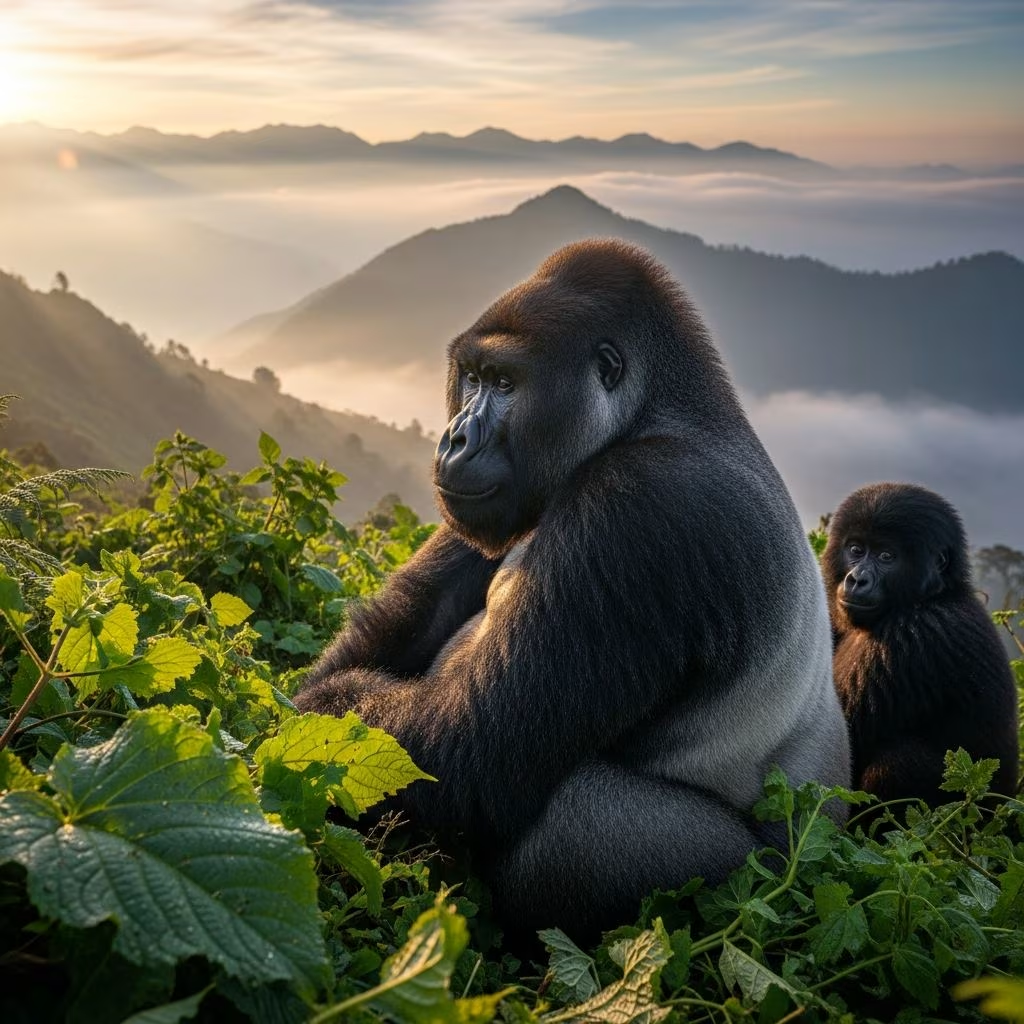
Mountain gorillas, one of the world’s most iconic primates, have experienced a remarkable population rebound, increasing from fewer than 400 individuals in the early 1980s to 1,063 as of recent censuses. This subspecies of eastern gorilla, classified as endangered by the IUCN, inhabits high-altitude forests in central Africa.
Mountain gorillas reside exclusively in two primary regions: the Virunga Massif and Bwindi Impenetrable National Park. The Virunga Massif spans eight volcanoes across Rwanda, Uganda, and the Democratic Republic of Congo (DRC), hosting around 604 individuals according to a 2015-2016 survey. Bwindi, located in southwestern Uganda and contiguous with Sarambwe Nature Reserve in DRC, shelters approximately 459 gorillas, up from 400 estimated in 2011.
These montane forests, at elevations between 2,200 and 4,300 meters, feature dense vegetation including bamboo, wild celery, and thistles that form the bulk of their diet. Gorillas live in cohesive family groups led by a silverback male, with females, juveniles, and infants, navigating steep, misty slopes that provide natural protection but also isolation from human encroachment.
In the 1980s, relentless pressures reduced mountain gorilla numbers to around 254-400. Uncontrolled poaching for bushmeat, trophies, and live capture decimated groups. Habitat fragmentation from agriculture, fuelwood collection, and human expansion further isolated populations. Civil wars in the region exacerbated these issues, with snares and bullets claiming lives indiscriminately.
By 2008, censuses recorded 680 individuals. Steady gains followed: 786 in 2010, 1,004 in 2018, and 1,063 confirmed today. This 26.3% rise over seven years equates to a 3.7% annual growth rate, with habituated groups—those tracked for tourism and research—showing faster reproduction rates than unhabituated ones.
| Year | Population Estimate | Key Region |
|---|---|---|
| 1981 | 254 | Virunga |
| 2011 | 400 | Bwindi-Sarambwe |
| 2015-2016 | 604 | Virunga Massif |
| 2018 | 1,004 | Total |
| Recent | 1,063 | Total |
This table illustrates the consistent upward trajectory, validated by nest counts, dung sampling, and direct observations during periodic censuses every 5-10 years.
Success stems from multi-faceted, collaborative initiatives. The International Gorilla Conservation Programme (IGCP), founded in 1991 by WWF, Fauna & Flora International, and Conservation International, coordinates efforts across borders. It trains rangers to patrol parks, remove snares—88 found and destroyed in recent surveys—and engage communities.
Protected area authorities enforce anti-poaching laws, while revenue from gorilla trekking permits funds habitat restoration and local development. In Bwindi, populations grew 6% from 2002-2006 and 12% from 1997-2006, partly due to these funds. Habituation for tourism allows close monitoring, veterinary interventions against diseases, and data collection that informs policy.
Community programs are pivotal: locals receive alternatives to forest reliance, like beekeeping and ecotourism jobs, reducing human-wildlife conflict. Transboundary cooperation ensures contiguous habitats remain intact despite political borders.
Despite progress, vulnerabilities persist. Habitat loss from agriculture and charcoal production fragments forests. Poaching snares, meant for antelope, ensnare gorillas, causing injuries or deaths. Diseases transmit easily from humans—respiratory illnesses have wiped out groups. Civil unrest in DRC disrupts patrols, and climate change alters vegetation patterns.
With only 1,063 individuals, genetic diversity is low, amplifying risks. Experts like Kirsten Gilardi of UC Davis emphasize sustained funding from tourism directed to gorillas and communities. Matt Walpole of Fauna & Flora International warns that complacency could reverse gains.
Accurate population tracking is foundational. Teams employ ground surveys, camera traps, and genetic analysis of fecal samples to identify individuals and families. The 2018-2020 Bwindi census confirmed 459 gorillas, combining with Virunga data for the 1,063 total. These efforts, supported by IGCP, occur every 5-10 years, providing benchmarks for IUCN assessments.
Habituation accelerates growth: monitored groups receive health checks, and tourism revenue—millions annually—bolsters protection. Research shows habituated families expand faster, contributing to overall recovery.
International backing amplifies local actions. Organizations like WWF fund ranger training and community incentives. The IUCN’s 2018 upgrade from critically endangered to endangered reflects doubled numbers since 2008, yet underscores fragility.
Tourism sustains efforts: visitors trek to see families like Rwanda’s Susa group, generating funds while fostering appreciation. Future plans include expanding patrols, restoring corridors, and mitigating climate effects through reforestation.
Projections suggest continued growth if threats are managed, potentially stabilizing at sustainable levels. However, experts call for vigilance, warning that resources must target root causes.
Recent censuses confirm 1,063 individuals across Virunga and Bwindi regions.
Poaching, habitat loss, diseases, and conflicts reduced populations to under 400 in the 1980s.
Population surpassing 1,000, driven by conservation, prompted IUCN upgrade in 2018.
Yes, through ethical gorilla trekking, donations to IGCP/WWF, or supporting sustainable tourism.
Not fully—ongoing threats require sustained efforts to prevent reversal.
Mountain gorillas exemplify how targeted conservation yields results. From 680 in 2008 to 1,063 today, their story inspires global efforts. Continued collaboration promises a secure future for these gentle giants.
