

 Travel Essentials
 Travel Essentials

Explore India’s most iconic Mughal monuments, from the Taj Mahal to Red Fort, and discover the history, design, and legacy behind them.
 Travel Essentials
The Mughal Empire, ruling India from the 16th to 19th centuries, left an indelible mark on the subcontinent’s landscape through its breathtaking architecture. Blending Persian, Islamic, and Indian elements, these structures feature symmetrical layouts, intricate carvings, expansive gardens, and gleaming domes that symbolize imperial power and artistic excellence. From the marble wonder of Agra to the red sandstone fortresses of Delhi, Mughal buildings continue to draw millions, offering insights into a golden era of creativity and engineering.
Mughal architecture emerged with Babur’s arrival in 1526, but it truly flourished under emperors like Akbar, Jahangir, Shah Jahan, and Aurangzeb. Early influences came from Central Asian and Persian styles, evident in the use of arches, minarets, and charbagh gardens—quadrilateral layouts divided by water channels representing paradise. Akbar introduced red sandstone and fusion with Hindu motifs, while Shah Jahan perfected white marble inlay work known as pietra dura.
Over three centuries, this style evolved from sturdy tombs to opulent palaces and grand mosques, adapting to regional materials and climates. Structures were not just functional but poetic expressions of eternity, with Quranic inscriptions and floral motifs adorning every surface.
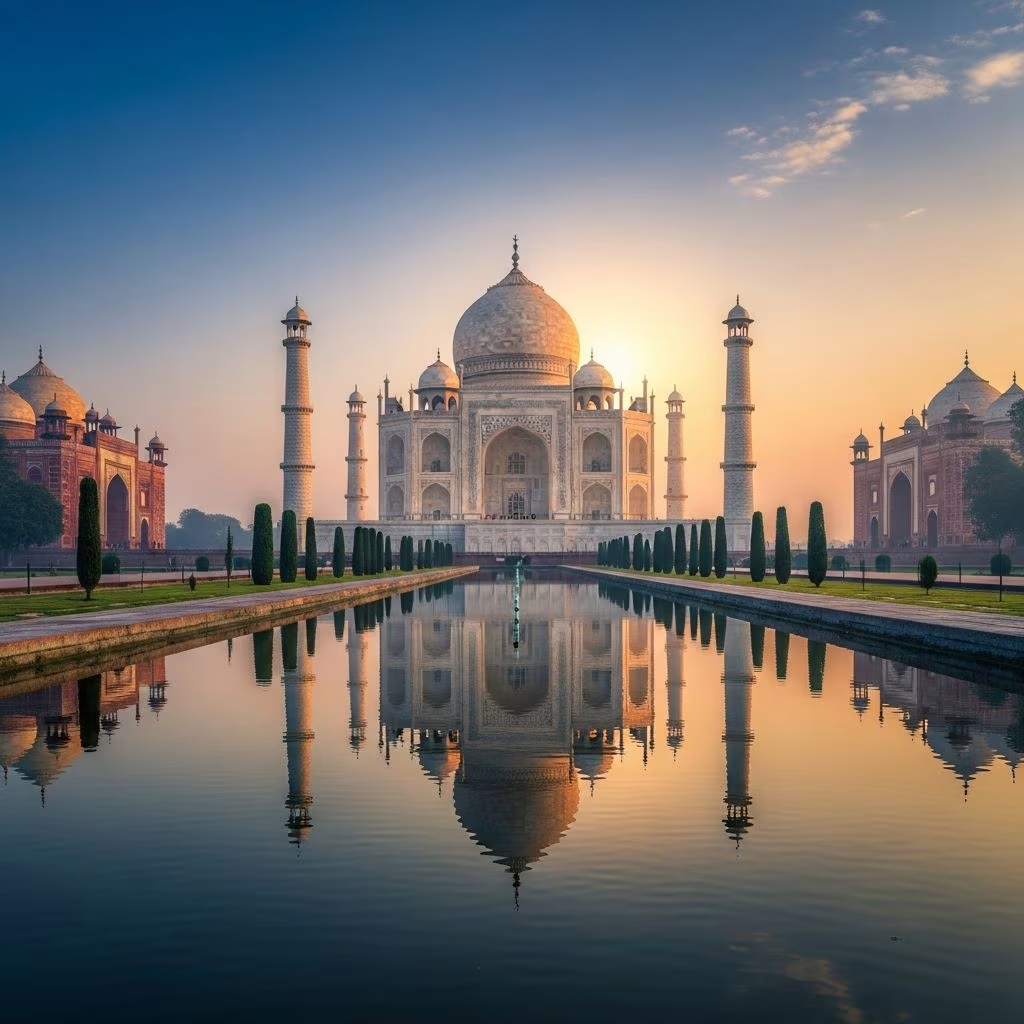
No discussion of Mughal architecture is complete without the Taj Mahal in Agra, commissioned by Emperor Shah Jahan in 1632 as a mausoleum for his wife Mumtaz Mahal. Completed in 1653 after 22 years of labor involving over 20,000 artisans, this white marble icon rises from the Yamuna River banks, framed by four minarets and a massive central dome. Its optical illusion—minarets leaning slightly outward—ensures they protect the tomb during earthquakes.
The complex spans 17 hectares, featuring reflective pools, mosques, and guest houses in perfect symmetry. Intricate semi-precious stone inlays depict flowers and calligraphy, changing hues with sunlight. A UNESCO World Heritage Site since 1983, it exemplifies Shah Jahan’s vision of eternal beauty.
Agra Fort, built by Akbar in 1565 and expanded by later rulers, served as the Mughal capital’s military and residential hub. Enclosed by 2.5 km of red sandstone walls rising 20 meters, it houses palaces like Jahangir Mahal with its Hindu-inspired brackets and Shah Jahan’s Musamman Burj, offering Taj Mahal views. UNESCO-listed, it blends defense with luxury.
In Delhi, the Red Fort (Lal Qila), constructed by Shah Jahan in 1648, epitomizes urban Mughal planning. Spanning 255 acres, its red sandstone ramparts conceal marble pavilions like Diwan-i-Aam for public audiences and Diwan-i-Khas with its famed peacock throne. The fort’s Lahore Gate and sound-and-light shows evoke imperial ceremonies.
| Fort | Builder | Key Features | Location |
|---|---|---|---|
| Agra Fort | Akbar (1565) | Red sandstone walls, Jahangir Mahal, river views | Agra |
| Red Fort | Shah Jahan (1648) | Marble halls, gardens, massive gates | Delhi |
Humayun’s Tomb in Delhi, built in 1570 by his widow Bega Begum, pioneered the Mughal garden-tomb style. The first major structure using red sandstone and white marble, its double dome and charbagh layout influenced the Taj Mahal. Restored in the 20th century, this UNESCO site houses tombs of later Mughals.
Adjacent Jama Masjid, India’s largest mosque, was Shah Jahan’s 1656 gift to Old Delhi. Accommodating 25,000 worshippers under three domes and two 40-meter minarets, its red sandstone stripes with marble create a striking facade. Climb for panoramic views of Chandni Chowk markets.
Near Agra, Fatehpur Sikri was Akbar’s short-lived capital from 1571-1585, blending Islamic and Hindu designs. Buland Darwaza, a 54-meter victory gate commemorating Gujarat’s conquest in 1601, features red sandstone panels with Quranic verses. Panch Mahal’s five-tiered colonnade offered breezy retreats, while Jodha Bai Palace fused Rajput and Mughal aesthetics.
The white marble Tomb of Salim Chishti, with its lattice screens for light and air, adds ethereal charm. This UNESCO complex showcases Akbar’s religious tolerance through diverse motifs.
In Srinagar, Shalimar Bagh (1619) reflects Jahangir’s love for nature. Terraced over 12 hectares, its fountains, pavilions, and flowerbeds follow Persian charbagh principles, with black marble channels and chinar trees. UNESCO-recognized, it hosts cultural events amid Himalayan vistas.
Bibi Ka Maqbara in Aurangabad, dubbed the Taj of the Deccan, was erected in 1660 by Aurangzeb’s son for his mother. Its onion dome and minarets mimic Agra’s masterpiece using local plaster.
In Bhopal, Taj-ul-Masajid (1844-1901) boasts India’s largest mosque at 23,000 sq m, with pink sandstone, vast courtyards, and 18-story minarets. Lahore’s Wazir Khan Mosque (1642) dazzles with kashi-kari tiles and frescoes, though outside India.
Modern efforts by the Archaeological Survey of India (ASI) combat pollution and tourism wear, ensuring these gems endure.
These monuments transcend stone, embodying harmony of cultures and human ambition. They inspire architects globally, proving symmetry and detail create timeless allure. Plan a circuit—Delhi to Agra to Fatehpur Sikri—for an immersive journey.
Symmetrical layouts, domes, minarets, inlay work, and charbagh gardens blending Persian and Indian styles.
Yes, daily except Fridays (prayer day); sunrise/sunset slots recommended.
At least six, including Taj Mahal, Agra Fort, Fatehpur Sikri, Humayun’s Tomb, Red Fort, and Qutub Minar complex.
Yes, Golden Triangle (Delhi-Agra-Jaipur) covers key ones efficiently.
Yes, varying INR 40-1100; foreign tourists pay more at major sites.
