

 Travel Essentials
 Travel Essentials

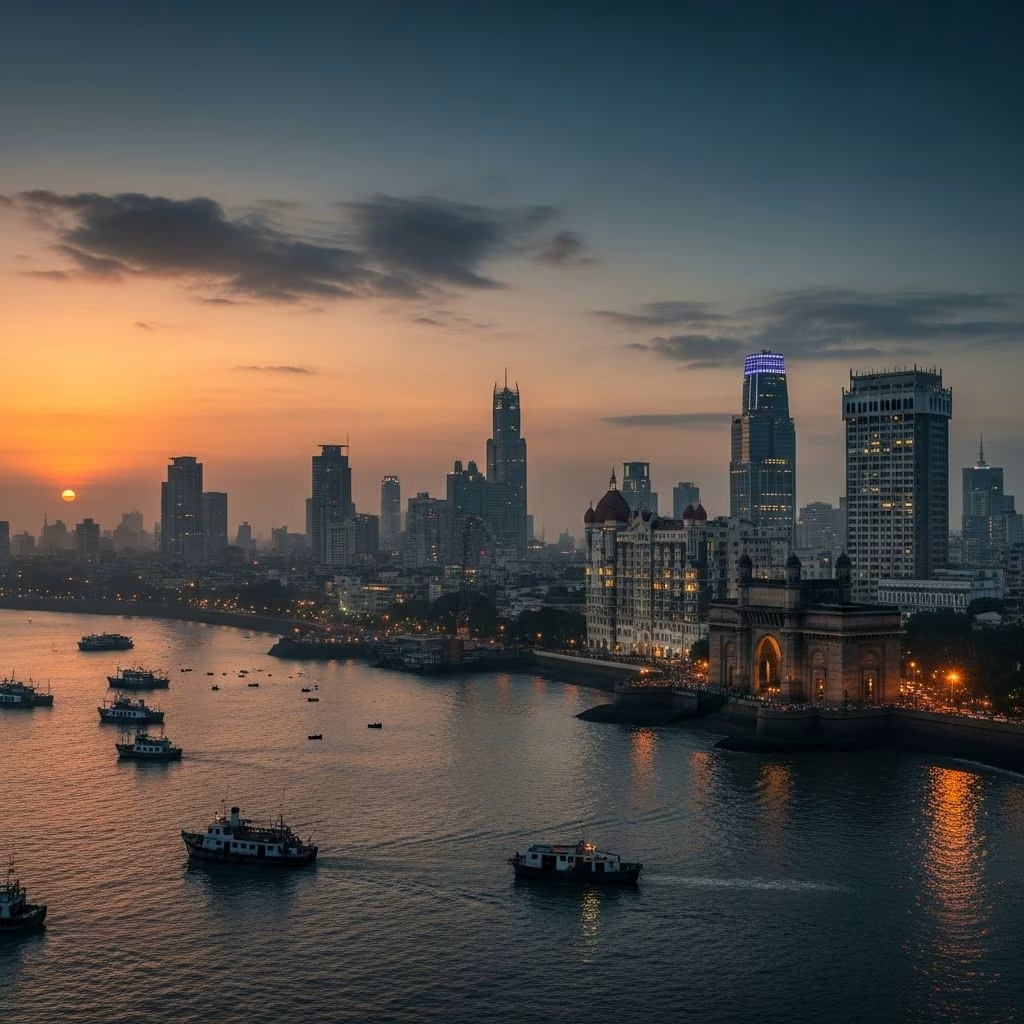
Mumbai claims Asia's most iconic skyline, fusing historic landmarks like Gateway of India with soaring skyscrapers, outshining rivals in cultural depth and visual drama.
 Travel Essentials
Mumbai’s skyline has earned the title of Asia’s most iconic, scoring an impressive 7.84 out of 10 in recent analyses, surpassing other major cities through its unique fusion of historical monuments and contemporary high-rises. This coastal metropolis captivates with views that stretch across the Arabian Sea, where Victorian spires pierce the sky alongside gleaming glass towers, embodying the city’s relentless evolution.
Mumbai’s visual identity stems from centuries of layered development, starting with British colonial influences in the 18th century. Neoclassical designs gave way to Victorian Gothic Revival, which dominates many landmarks today. This progression created a skyline that tells a story of transformation, from trading port to financial powerhouse.
Key elements include:
At the heart of Mumbai’s allure are its instantly recognizable structures. The Gateway of India, an Indo-Saracenic archway built in 1924, stands as a waterfront sentinel with its massive basalt frame and intricate latticework. Nearby, the Taj Mahal Palace Hotel rises in timeless opulence, its domes and turrets evoking royal splendor since 1903.
| Landmark | Style | Key Feature | Best Viewpoint |
|---|---|---|---|
| Gateway of India | Indo-Saracenic | 37m triumphal arch | Apollo Bunder promenade |
| Chhatrapati Shivaji Terminus | Victorian Gothic | Stone carvings, domes | VT platform level |
| Rajabai Clock Tower | Venetian Gothic | 85m height, carillon | University of Mumbai campus |
| Taj Mahal Palace | Indo-Saracenic | Multiple towers | Across the harbor |
Chhatrapati Shivaji Maharaj Terminus (CST), a UNESCO site, exemplifies High Victorian Gothic with its fusion of Italianate elements and Indian motifs like peacocks and monkeys etched into honey-colored stone. The Rajabai Tower chimes melodiously, its 85-meter spire mimicking Italian campaniles while overlooking the Fort area bustle.
While cities like Hong Kong and Tokyo dazzle with uniform glass forests, Mumbai’s edge lies in its eclecticism. A recent survey highlighted its 7.84 score, crediting the seamless blend of old and new against a dramatic sea backdrop. New York leads globally at 9.68, but Mumbai’s cultural density gives it regional supremacy.
This mix fosters a skyline that’s not just tall but alive, reflecting Bollywood dreams, street markets, and monsoon moods.
To truly appreciate Mumbai’s panorama, head to elevated vantage points. Marine Drive, the 3-km promenade, offers twilight glows where art deco apartments curve like a necklace along the bay. From here, Nariman Point’s office blocks merge with distant Bandra-Worli Sea Link’s cable-stayed grace.
Worli Sea Face provides foreground sea towers framing southern icons, while Hanging Gardens atop Malabar Hill gifts 360-degree sweeps including CST’s Gothic fantasy. For dusk magic, Bandra Fort promenade captures the Bandra-Worli bridge illuminated against fading light, blending infrastructure with heritage.
Mumbai’s horizon isn’t static; urban policies now mandate iconic designs for towers over 100m, aiming for symbols of progress that honor context. Developments like Lodha World One (442m) and Palais Royale exemplify this, with setbacks and motifs echoing art deco neighbors.
This approach ensures growth enhances rather than erases identity, positioning Mumbai as a model for sustainable skyline curation.
Beyond aesthetics, the skyline pulses with Mumbai’s spirit. CST isn’t merely a station but a hive for 3 million daily commuters, its vaults echoing multilingual chatter. The Gateway witnesses festivals, proposals, and protests, its shadow dancing on waves.
Art deco Marine Drive apartments house diverse families, their curves hiding tales of partition migrations. Modern towers like those in Lower Parel repurposed mills into creative hubs, symbolizing industrial reinvention.
Despite accolades, pressures mount: coastal regulations limit heights in key zones, while climate resilience demands elevated bases. Slum encroachments obscure views, yet redevelopment promises cleaner lines.
Looking ahead, projects like the Mumbai Metro and coastal road will frame new vistas, potentially elevating scores further. Balancing density with preservation remains key to sustaining icon status.
Its 7.84/10 score stems from blending Victorian Gothic, Art Deco, and modern towers with sea views, outpacing uniform Asian rivals.
Gateway of India, with Indo-Saracenic arches, greets visitors and frames the harbor panorama.
Marine Drive at sunset, showcasing the Queen’s Necklace effect.
Yes, heritage walks cover Art Deco and Gothic sites; book via tourism boards.
New policies favor iconic towers over 100m, enhancing while preserving heritage.
