

 Travel Essentials
 Travel Essentials

Explore the Musée d'Orsay's history, highlights like Monet and Van Gogh works, architecture, and tips for visiting this iconic Paris museum in a former train station.
 Travel Essentials
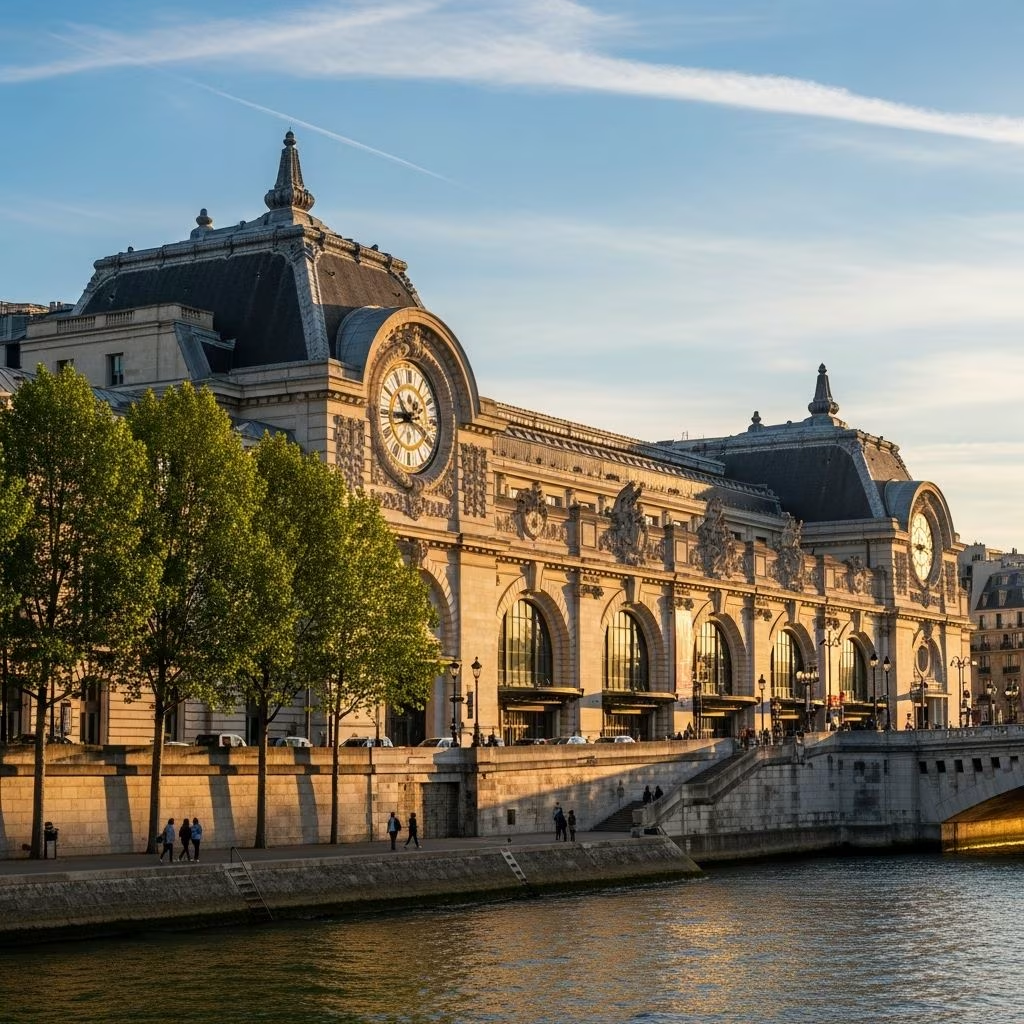
The Musée d’Orsay stands as one of Paris’s crown jewels, transforming a grand Belle Époque train station into a world-class repository of 19th- and early 20th-century art. Overlooking the Seine on the Left Bank, it houses unparalleled collections of Impressionist and Post-Impressionist masterpieces, drawing millions of visitors annually who come to marvel at works by Claude Monet, Vincent van Gogh, and Pierre-Auguste Renoir.
Originally built as the Gare d’Orsay between 1898 and 1900, this architectural marvel was designed to welcome passengers arriving from southwestern France. Its vast glass-vaulted nave and ornate Beaux-Arts details captured the optimism of the era. By the mid-20th century, the station became obsolete due to longer trains, falling into disrepair until visionary architects Gae Aulenti and ACT-International spearheaded its 1986 rebirth as a museum. Today, the station’s skeletal clock faces and sweeping staircases blend seamlessly with the art, creating an immersive atmosphere where industrial history meets cultural splendor.
This metamorphosis symbolizes Paris’s knack for repurposing icons—much like the Eiffel Tower evolved from temporary World’s Fair structure to eternal landmark. The museum’s luminous atrium, flooded with natural light through its massive arched roof, sets the stage for artworks that celebrate light itself, particularly in Impressionist paintings.
The Musée d’Orsay’s collections span 1848 to 1914, organized chronologically across five levels. Ground and middle floors focus on pre-Impressionist works, sculptures, and decorative arts, while upper levels immerse visitors in the luminous world of Impressionism.
Enter beneath the iconic clock and descend to the ground floor, where towering sculptures dominate the nave. Highlights include Jean-Baptiste Carpeaux’s dynamic Les Quatre Parties du Monde Soutenant la Sphère Céleste (1872), symbolizing global harmony, and James Pradier’s graceful Sapho (1852). These pieces benefit from the diffused light filtering through the glass canopy, enhancing their dramatic forms.
Adjacent galleries showcase Art Nouveau furniture and decor—curved lines inspired by nature, from flowing vases to sinuous cabinets. This collection, among Paris’s finest, evokes the era’s artistic revolution in everyday objects.
Ascend to levels 0 and 2 for 19th-century paintings and decorative arts. Rooms brim with realist works by Gustave Courbet and Édouard Manet, transitioning to Symbolists like Odilon Redon. Photography exhibits trace the medium’s evolution, complementing paintings with early snapshots of Parisian life.
The 5th floor is the museum’s heartbeat, dedicated to Impressionism and Post-Impressionism. Claude Monet’s snowy La Pie and La Charrette capture winter’s crisp light, while his family portraits glow with domestic warmth. Pierre-Auguste Renoir’s joyful scenes, Paul Cézanne’s structured landscapes, and Vincent van Gogh’s emotive Starry Night Over the Rhône await in sequential galleries. Curators rotate pieces, so grab a free map at entry for current layouts.
Family visits shine here too—the building’s scale fascinates kids, with downloadable game booklets like “Traces of Impressionism” turning art into treasure hunts.
These icons represent the movement’s break from academic rigidity, prioritizing fleeting moments over studio polish.
Open Tuesday–Sunday, 9:30 AM–6 PM (Thursdays to 9:45 PM), the museum welcomes 3–4 million visitors yearly. Tickets cost €16 (adults), with free entry first Sundays and for under-18s EU residents. Book timed slots online to skip lines—peak hours are 10 AM–3 PM.
| Aspect | Details |
|---|---|
| Location | 1 Rue de la Légion d’Honneur, 75007 Paris (RER C: Musée d’Orsay) |
| Access | Metro Solférino (Line 12), wheelchair-friendly |
| Bags | Large bags to cloakroom; no food inside |
| Audio Guides | €5, multilingual apps available |
Allow 3–4 hours; early mornings or late Thursdays offer quieter vibes. Photography permitted without flash.
Kids adore the station’s grandeur—giant clocks and vast spaces spark imagination. Free family trails guide hunts for hidden details in Impressionist works. Special tours like “Inspirer pour s’inspirer” blend mindfulness with art viewing.
For deeper dives, join 1.5-hour guided walks focusing on permanent collections. Mini-guides cover eras from 1848–1914 concisely.
| Museum | Focus | Size/Visitors | Best For |
|---|---|---|---|
| Musée d’Orsay | 1848–1914 art, Impressionism | 70,000 m², 3.7M/year | Monet, Van Gogh fans |
| Louvre | Ancient to 19th C. | 380,000 m², 10M/year | Mona Lisa, antiquities |
| Orangerie | Monet’s Water Lilies | Small, intimate | Immersive Monet |
Orsay excels in modern sensibilities, less crowded than the Louvre.
Beyond stars, seek Art Nouveau salons with Hector Guimard’s whiplash motifs or Eugène Carrière’s misty portraits. The museum café under the clock offers Seine views amid gilded surrounds. Rooftop terraces provide panoramas toward Sacré-Cœur.
Rotating exhibits—like recent Post-Impressionist loans—keep visits fresh; check the official site.
Absolutely—its Impressionist collection rivals any worldwide, in a uniquely atmospheric building.
3–4 hours for highlights; full day for completists.
Yes, no flash; tripods prohibited.
Early morning or late afternoon; avoid weekends.
Yes, with kids’ activities and awe-inspiring architecture.
In a digital age, Orsay reminds us of art’s power to capture ephemeral beauty. Its evolution from station to sanctuary underscores adaptive cultural heritage, inspiring global museums. Whether first-timer or aficionado, it promises revelation amid luminous canvases.
