

 Travel Essentials
 Travel Essentials

Understand the Myanmar vs. Burma debate, plus practical 2026 travel tips, safety advice, and top destinations for your trip.
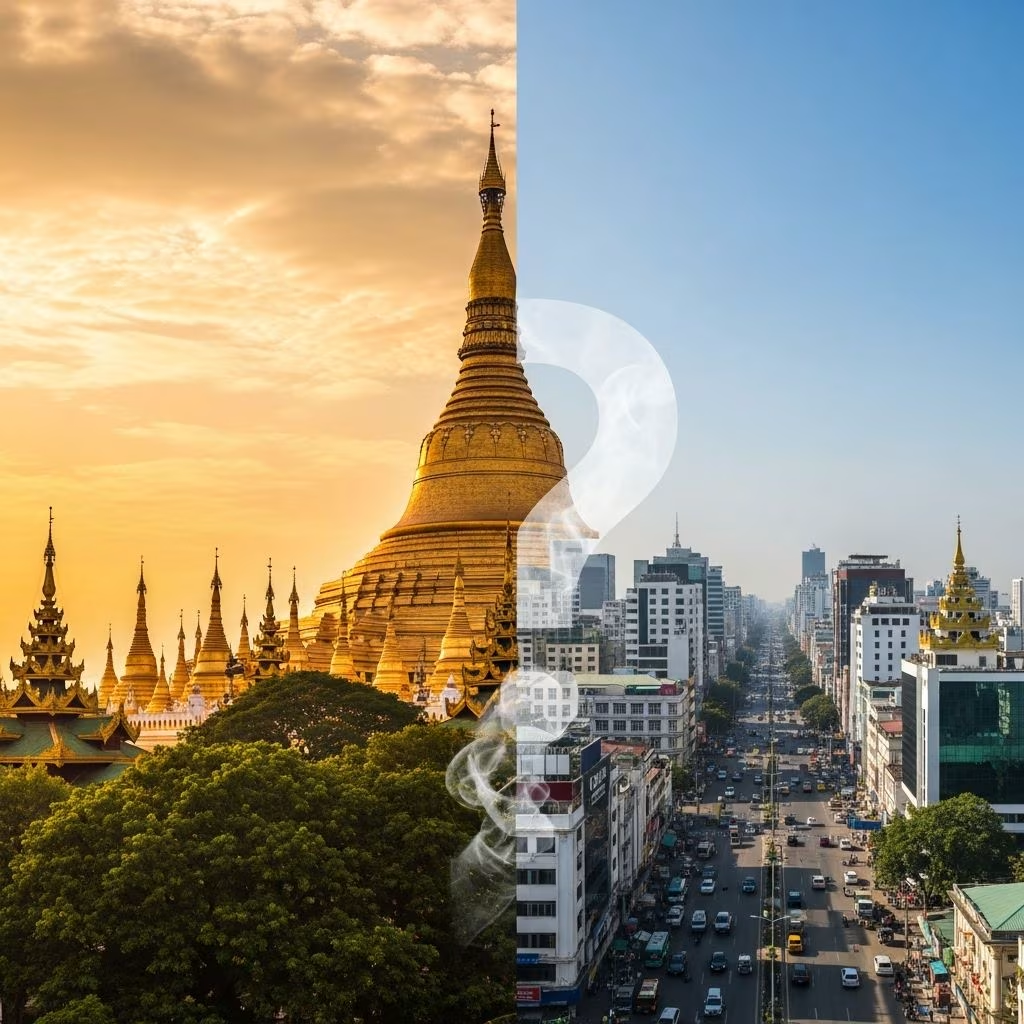 Travel Essentials
The Southeast Asian nation officially known as the Republic of the Union of Myanmar is often referred to interchangeably as Burma by some travelers, media outlets, and governments. This dual naming stems from a complex interplay of history, politics, and cultural identity, influencing how visitors approach their journeys in 2026.
The name ‘Burma’ derives from the dominant Bamar ethnic group, who form the majority of the population. European colonizers, particularly the British during their rule from 1824 to 1948, adopted this term based on Portuguese renditions of ‘Brahma’ or local pronunciations. Colonial maps, literature, and administrative records solidified ‘Burma’ in Western lexicons.
Post-independence in 1948, the country retained ‘Burma’ until 1989, when the military junta rebranded it ‘Myanmar’ to reflect a broader national identity encompassing all ethnic groups. ‘Myanmar,’ from the ancient name ‘Myanma,’ appears in classical literature and aims for inclusivity beyond the Bamar-centric ‘Burma.’ This shift mirrored efforts to decolonize nomenclature, similar to Ceylon becoming Sri Lanka or Siam turning into Thailand.
The 1989 renaming occurred amid military rule, prompting skepticism. Pro-democracy leader Aung San Suu Kyi and her National League for Democracy favored ‘Burma’ to underscore resistance against the junta, which they viewed as illegitimate. Western governments, including the US and UK, continued using ‘Burma’ until the early 2010s as a symbolic protest.
By 2016, following political reforms and Aung San Suu Kyi’s rise, many nations shifted to ‘Myanmar.’ The United Nations and Association of Southeast Asian Nations (ASEAN) officially recognize ‘Myanmar.’ However, usage remains split: the BBC and some outlets still say ‘Burma’ in political contexts, while travel guides predominantly use ‘Myanmar.’ In 2026, with ongoing conflicts post-2021 coup, the name evokes nuanced diplomatic stances.
Locals primarily use ‘Myanmar’ in formal settings and media, but ‘Burma’ persists colloquially, especially among older generations or in ethnic minority regions. Bamar people in Yangon or Mandalay might not mind either, viewing the debate as external. In Shan State or Kachin areas, ethnic identities overshadow national labels altogether.
Travelers report warm receptions regardless of nomenclature. Using ‘Myanmar’ shows respect for officialdom, while ‘Burma’ nods to historical familiarity. Learning basic phrases in Burmese, like ‘Mingalaba’ (hello), bridges gaps more effectively than name choices.
For visas, flights, and bookings, always use ‘Myanmar’—airports like Yangon International (RGN) and Mandalay (MDL) list it officially. Maps and apps such as Google Maps default to ‘Myanmar,’ aiding navigation. In conversations, follow your guide’s lead; most tourism operators prefer ‘Myanmar’ for consistency.
Safety considerations in 2026 favor core tourist circuits: Yangon, Bagan, Inle Lake, and Mandalay remain accessible and welcoming despite peripheral conflicts. Avoid border zones in Rakhine, Shan, or Kachin states, where instability lingers. Check updated advisories from your government’s foreign office.
Experience transcends labels in these highlights:
Getting There: Fly into Yangon, Mandalay, or Nay Pyi Taw. E-visas streamline entry for most nationalities.
Getting Around: Overnight buses save costs; scenic trains like Mandalay-Hsipaw wow. Domestic flights link majors; boats ply Irrawaddy and Inle.
| Route | Mode | Duration | Cost (USD) |
|---|---|---|---|
| Yangon to Bagan | Bus/Night Train | 12-18 hrs | 15-30 |
| Mandalay to Hsipaw | Train | 6-8 hrs | 10-20 |
| Bagan to Inle | Bus | 7 hrs | 12-25 |
| Inle to Yangon | Flight | 1 hr | 50-100 |
Best Time: November to February for cool, dry weather. April’s Thingyan Water Festival splashes joy nationwide. Avoid May-October monsoons.
Budget Tips: Accommodations from $10/night in guesthouses. Meals under $5; beer flows cheaply. Total for 2 weeks: $500-800 excluding flights.
Core areas like the ‘backpacker triangle’ (Bagan-Mandalay-Inle) are safe for 2026 visits. Stick to tourist paths, dress modestly at pagodas (cover shoulders/knees), and remove shoes. Bargain politely at markets; tipping isn’t customary but appreciated.
Avoid political discussions; post-coup sensitivities persist. Use registered taxis or rideshares; ATMs are widespread in cities but carry cash for rural spots.
Untouched authenticity shines: pristine beaches in Myeik Archipelago, Golden Rock’s precarious perch, tribal treks in Shan hills. Friendliest locals, dirt-cheap adventures, and jaw-dropping landscapes make it backpacking gold. Despite challenges, tourism supports communities ethically.
Yes, major sites like Yangon, Bagan, Inle, and Mandalay are welcoming and stable. Avoid conflict zones; monitor advisories.
‘Myanmar’ is the official post-1989 name for national unity; ‘Burma’ is the historical, colonial-era term still used politically by some.
Cool dry season (Nov-Feb); April for festivals.
Apply online for e-visa; most get approval in days.
Absolutely—cheap, scenic routes, friendly vibes, epic temples.
