

 Travel Essentials
 Travel Essentials

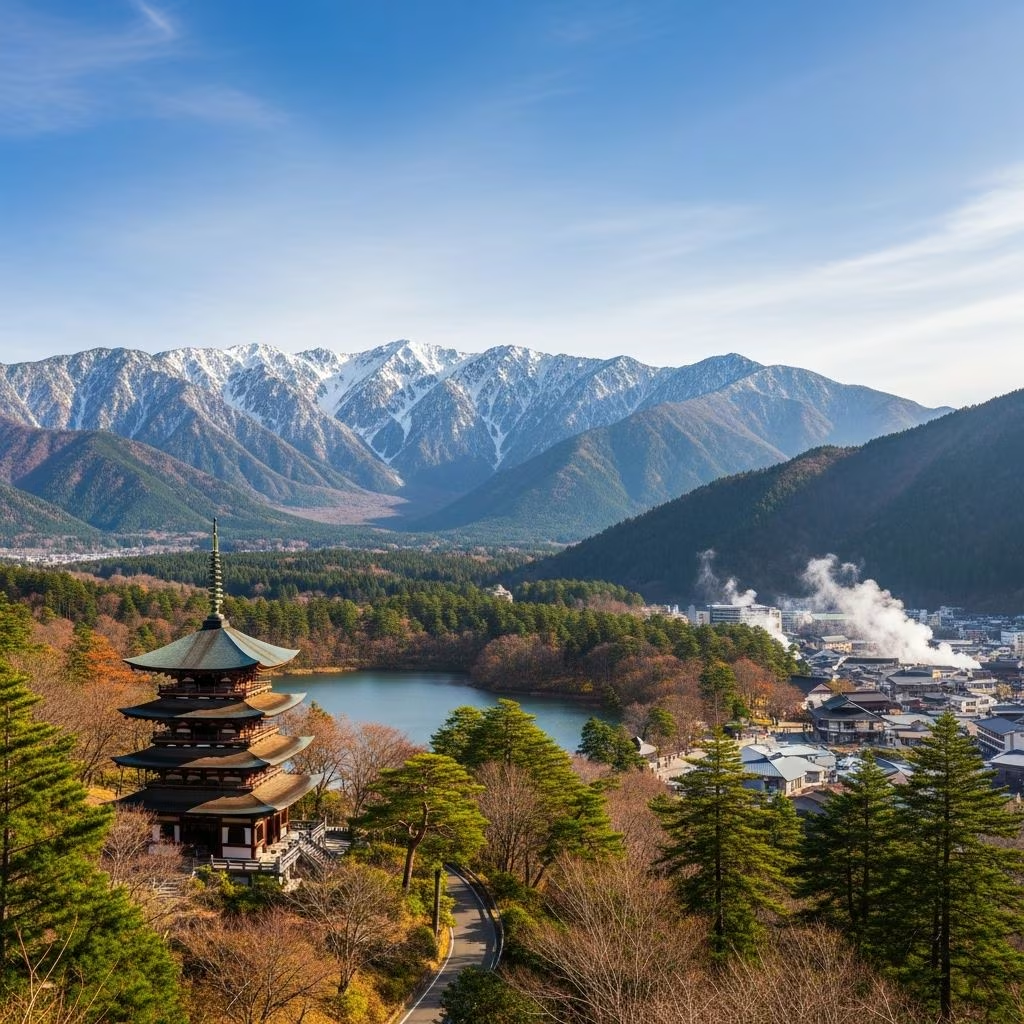
Explore Nagano Prefecture's Japanese Alps, historic post towns, world-class ski resorts, sacred temples, and rejuvenating hot springs across all seasons.
 Travel Essentials
Nestled in central Japan, Nagano Prefecture represents one of the country’s most geographically diverse and captivating regions. Spanning from towering alpine peaks to serene valley towns, this prefecture offers visitors an extraordinary blend of natural splendor, spiritual heritage, and outdoor recreation opportunities. Whether you arrive during snow-laden winters or verdant summers, Nagano presents a compelling destination that transforms with the seasons while maintaining its essential character as a place where tradition intersects with adventure.
Nagano Prefecture encompasses one of Japan’s most extensive mountain systems, often referred to as the “roof of Japan” due to its commanding peaks and vast elevation variations. The prefecture stretches across the Hokuriku and Shinetsu regions, creating a landscape that has shaped centuries of Japanese history and continues to define the lifestyle and identity of its inhabitants. From the perspective of geography and accessibility, Nagano benefits from modern transportation infrastructure, including the Hokuriku Shinkansen connection to Tokyo, which has transformed it from a remote mountain region into an easily accessible destination.
The cultural tapestry of Nagano reflects deep historical layers. During Japan’s feudal period, the region served as a crucial passage between Kyoto and Edo (present-day Tokyo), establishing trade routes that would later evolve into one of Japan’s most celebrated hiking corridors. This historical significance permeates the landscape today, with preserved villages and traditional architecture serving as tangible links to Japan’s samurai era.
Each season in Nagano presents distinct advantages and atmospheric qualities. Winter transforms the region into an international snow sports destination, with world-class facilities attracting enthusiasts from across the globe. Spring brings cherry blossoms to the traditional villages, creating postcard-perfect scenes amid historic wooden structures. Summer offers respite from Japan’s intense heat through cooler mountain temperatures and clear alpine air. Autumn paints the forested slopes in brilliant orange and red hues, drawing landscape photographers and nature enthusiasts seeking dramatic seasonal beauty.
Understanding seasonal variations helps travelers plan their visit strategically. Winter visits require specialized equipment and preparation for snow conditions, while summer months necessitate different packing considerations for mountain weather patterns. Spring and autumn offer milder conditions and serve as bridge seasons for diverse activity options.
Nagano’s international reputation as a winter sports destination stems from both natural advantages and modern infrastructure development. The region hosted the 1998 Winter Olympics, which accelerated facility development and established world-recognized ski areas. Today, several premier ski destinations attract everyone from beginner snowboarders to professional athletes.
Hakuba Valley stands as the prefecture’s flagship winter sports destination, featuring more than 200 individual runs distributed across 11 interconnected resorts. This concentration of ski terrain creates one of Asia’s largest ski areas, offering terrain suitable for virtually every skill level. The valley’s elevation and consistent snow conditions provide reliable conditions throughout the winter season.
Nozawa Onsen represents an alternative skiing experience that combines snow sports with authentic Japanese alpine village atmosphere. The resort offers well-maintained runs for various skill levels while the surrounding town retains traditional wooden buildings, narrow streets, and public bathhouses that provide post-skiing relaxation and cultural immersion.
Beyond ski resorts, Nagano’s mountains provide opportunities for snowshoeing, cross-country skiing, and winter hiking for travelers seeking less commercial alpine experiences. The combination of reliable snow, quality accommodations, and diverse terrain has established Nagano as a premier winter destination within Japan and throughout Asia.
Religious significance permeates Nagano’s landscape through temples and shrines that have attracted pilgrims for centuries. Zenkoji Temple in Nagano City stands as the prefecture’s spiritual centerpiece and one of Japan’s most important Buddhist temples. For over 1,400 years, this temple has drawn pilgrims seeking spiritual experience and blessing. The temple’s cultural importance extends beyond religious practice into Japanese folklore, with a saying that visiting Zenkoji Temple constitutes a required pilgrimage for every Japanese person.
The temple’s presence fundamentally shaped Nagano City’s development, transforming it into a temple town organized around religious and pilgrim accommodation needs. Today, the surrounding streets retain this historical function while modern tourism infrastructure has been thoughtfully integrated.
Togakushi Shrine and the surrounding Togakushi area present another significant spiritual destination, historically associated with the legendary Togakure Ninja School. The Togakushi Ninpo Museum provides cultural context for understanding ninja history within the region’s broader narrative, while the Kids Ninja Village offers interactive experiences for families seeking entertainment alongside historical education.
Several of Nagano’s most enchanting destinations comprise well-preserved post towns that served traveling merchants, pilgrims, and officials during Japan’s feudal period. During the Tokugawa shogunate, strict governmental controls on movement necessitated that most travel occur on foot along designated routes. Communities along these routes developed “post towns” that provided lodging, meals, and supplies for travelers.
Tsumago and Narai represent the most celebrated examples of preserved post town architecture and atmosphere. Tsumago, accessible via a pleasant 8-kilometer forest walk from Magome, showcases exceptional preservation of traditional buildings, narrow streets, and historical infrastructure. Walking these villages transports visitors into historical periods when these streets bustled with commercial and cultural activity.
The Nakasendo Way constitutes one of Japan’s most rewarding hiking routes, retracing the ancient trade path between Kyoto and Edo. Modern travelers can experience portions of this trail through day hikes or multi-day treks, with multiple village bases offering comfortable accommodation options. This combination of historical significance, natural scenery, and cultural immersion has established the Nakasendo as increasingly popular among international trekkers seeking authentic Japanese experiences beyond conventional tourist circuits.
Matsumoto Castle stands as Nagano’s most iconic architectural monument and one of Japan’s most distinctive castles. Unique among Japan’s 12 remaining original castles, Matsumoto Castle distinguishes itself through its striking black exterior, earned it the nickname “Crow Castle”. Built in the 16th century, the castle reflects masterful samurai-era engineering while its current preservation status enables visitors to experience authentic defensive architecture largely unmodified by modern restoration.
Beyond castle architecture, Matsumoto City presents a compact, walkable urban environment that encourages spontaneous exploration. Coffee shops, restaurants, and cultural institutions populate charming streets that invite leisurely wandering. The Matsumoto City Museum of Art features significant works by Yayoi Kusama, the internationally recognized Matsumoto-born artist famous for polka-dot imagery and innovative installations.
The Ishii Miso Brewery offers visitors insight into traditional miso production methods while providing opportunities to taste and purchase artisanal products. Such specialist destinations allow visitors to engage with local food culture at profound levels beyond casual dining.
Nagano’s volcanic geology creates numerous hot spring destinations that have functioned as healing centers and social gathering places throughout Japanese history. Jigokudani Monkey Park presents one of Japan’s most distinctive natural attractions, where snow monkeys bathe in naturally heated geothermal pools during winter months. This phenomenon, found nowhere else in the world, draws naturalists, photographers, and cultural enthusiasts seeking authentic wildlife observation experiences.
Beyond wildlife watching, traditional hot spring towns like Bessho Onsen and Yudanaka Onsen preserve authentic bathing culture through public bathhouses and ryokan (traditional inns) that provide social and wellness-focused hospitality. These communities demonstrate how hot springs function as cultural centers rather than mere tourist amenities, integrating bathing rituals into daily life and social interaction patterns.
For serious mountain enthusiasts, Nagano provides access to Japan’s most dramatic alpine scenery. Kamikochi offers panoramic mountain vistas and well-maintained trekking trails through high-altitude environments. The Tateyama Kurobe Alpine Route presents an engineered marvel where visitors traverse multiple transportation modes—cable cars, ropeway systems, alpine buses—while ascending through distinct ecological zones and encountering increasingly dramatic mountain landscapes.
The Senjojiki Cirque provides hiking experiences through glacially carved amphitheater formations, while the Venus Line scenic route connects multiple viewpoints and natural attractions suitable for both vehicle travel and hiking. These destinations accommodate varying fitness levels and time commitments, from leisurely scenic drives to challenging multi-day backpacking expeditions.
Nagano’s culinary traditions reflect both mountain geography and agricultural heritage. Soba noodles constitute a regional specialty, with particular preparation techniques and ingredient sources that distinguish Nagano soba from other Japanese regional varieties. The Daio Wasabi Farm showcases cultivation methods for Japan’s most prized horseradish plant, demonstrating sustainable agricultural practices in mountain environments.
The prefecture’s numerous sake breweries preserve fermentation traditions developed through centuries of refinement, while local food culture emphasizes seasonal ingredients and sustainable harvesting practices that minimize environmental impact while maximizing nutritional value and flavor complexity.
Beyond major attractions, Nagano contains numerous smaller destinations worthy of exploration. Karuizawa serves as an accessible gateway destination with shopping and recreational facilities suitable for first-time visitors. Obuse offers cultural experiences centered on historical art and craft traditions. Star Village Achi provides stargazing opportunities in locations minimally affected by light pollution, enabling astronomical observation rarely possible in densely populated areas.
Efficient transportation access has transformed Nagano from remote mountain prefecture into easily accessible destination. The Hokuriku Shinkansen operates from Tokyo Station with stops at Karuizawa and Ueda along the route to Nagano City. From Nagoya, the Shinano Limited Express traverses the scenic Kiso Valley, providing convenient stops for travelers interested in post town exploration. Within the prefecture, JR rail lines, local buses, and rental car services facilitate movement between attractions.
For travelers prioritizing efficiency, basing operations in Matsumoto provides convenient access to northern Japanese Alps and multiple trekking destinations. Alternatively, Nagano City offers urban amenities and cultural attractions alongside mountain accessibility.
Timing depends on desired activities. Winter (December-February) offers world-class skiing and snow activities, though requiring cold-weather preparation. Spring (March-May) and autumn (September-November) provide milder weather, comfortable hiking conditions, and distinctive seasonal beauty. Summer (June-August) offers mountain retreat from Japan’s heat but brings occasional thunderstorms in alpine areas.
Three to five days allows comprehensive exploration of major attractions including temples, historical villages, and either mountain scenery or winter sports. Longer stays enable deeper engagement with hiking trails, multiple hot spring experiences, and exploration of smaller destinations.
Yes, the Hokuriku Shinkansen provides direct connection from Tokyo Station to Nagano City in approximately 90 minutes, making day trips feasible while overnight stays provide optimal exploration opportunities.
Seasonal packing varies significantly. Winter requires heavy coats, thermal layers, waterproof outerwear, and quality winter boots. Summer necessitates lightweight clothing and sturdy hiking boots for mountain trails. Spring and autumn require layerable clothing accommodating temperature fluctuations between valley and alpine areas.
Major cities including Matsumoto and Nagano City provide English signage and staff at principal attractions and accommodations. Rural villages offer limited English resources, making advance planning and offline maps beneficial for independent travelers.
Nagano Prefecture transcends simple categorization as either mountain destination, cultural heritage site, or spiritual pilgrimage location. Instead, it synthesizes these elements into cohesive visitor experience that accommodates diverse interests and travel styles. Whether seeking alpine adventure, historical exploration, spiritual connection, or seasonal natural beauty, Nagano provides compelling reasons to extend any Japan itinerary beyond conventional urban centers. The prefecture’s thoughtful balance of preservation and development, tradition and modernity, accessibility and authentic experience establishes it as essential destination for travelers seeking comprehensive understanding of Japan’s geographic, cultural, and spiritual dimensions.
