

 Travel Essentials
 Travel Essentials

Discover how visitors can responsibly explore Namibia's biodiversity hotspots, adhere to vital conservation rules, and contribute to protecting its rich natural heritage amid updated national strategies.
 Travel Essentials
Namibia stands as a beacon of natural splendor in southern Africa, boasting deserts, savannas, and coastal zones teeming with unique flora and fauna. As tourism surges, the nation emphasizes responsible visitation to shield its ecosystems from harm. This guide equips travelers with knowledge on regulations, best practices, and contributions to ongoing conservation initiatives.
Namibia’s landscapes harbor extraordinary life forms, from the resilient oryx in the Namib Desert to endemic plants in the Brandberg Mountains. Article 95 of the Namibian Constitution recognizes this diversity as a core national asset, prioritizing its maintenance for sustainable development.
The country has ratified key international agreements, including the Convention on Biological Diversity signed at the 1992 Earth Summit. These commitments underpin national efforts to combat habitat loss and promote ecological balance.
Recent updates to the National Biodiversity Strategy for 2025-2031 align with the Kunming-Montreal Global Biodiversity Framework, targeting 30% protection of land and sea by 2030.
To preserve these treasures, Namibia enforces strict rules. Visitors must familiarize themselves with guidelines from the Ministry of Environment, Forestry and Tourism (MEFT).
| Activity | Key Rule | Reason |
|---|---|---|
| Off-road driving | Prohibited outside designated tracks | Prevents soil erosion and habitat destruction |
| Drone usage | Permit required; bans near wildlife | Avoids disturbing animals |
| Campfires | Banned; use gas stoves | Reduces fire risk in dry areas |
| Plant/animal collection | Strictly forbidden | Protects genetic resources |
Landowners control property access but not genetic resources, governed by the Access to Biological and Genetic Resources Act. Researchers and collectors need permits for any sampling, ensuring benefit-sharing and preventing exploitation.
Namibia’s protected zones, like Namib-Naukluft and Dorob National Parks, demand adherence to specific protocols. Obtain pamphlets with maps from MEFT offices outlining boundaries and rules.
In Dorob, holidaymakers are urged to stick to paths, avoiding sensitive dune systems. The forthcoming Wildlife and Protected Areas Management Bill will modernize governance, replacing outdated ordinances with principles for sustainable use and community involvement.
Concessions in state lands empower local communities, generating jobs and funding conservation.
Namibia safeguards its biological wealth through the Access and Benefit-Sharing (ABS) framework. No one owns genetic material on private land; MEFT issues permits for research or commercial use.
Training for enforcers and media underscores transparency. Internationally Recognized Certificates of Compliance (IRCCs) are forthcoming, aligning with global standards. Visitors engaging in photography or study should avoid unauthorized collection.
The updated 2025-2031 strategy integrates global targets, deploying environmental officers across 14 regions for law enforcement. It promotes green economies, inclusive participation of indigenous groups, women, and youth.
Historical plans like the 2001-2010 NBSAP emphasized participatory conservation, a model continuing today. Private sectors are encouraged to adopt biodiversity accounting.
Plan ahead: Check MEFT websites for updates. Choose operators certified for sustainability.
In arid zones, water wisely—refill from reliable sources only.
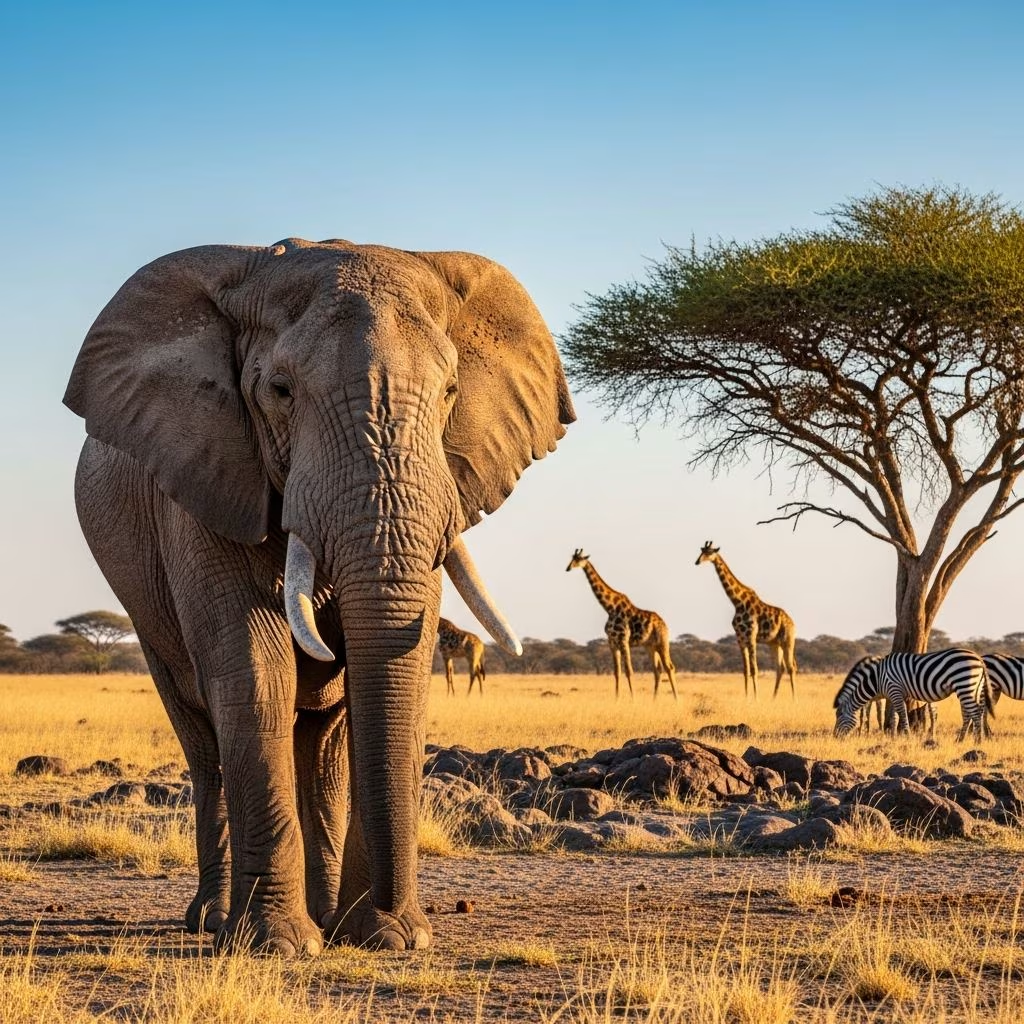
Climate change exacerbates droughts, while human-wildlife conflict rises. Poaching threatens rhinos and elephants. Tourism pressures demand vigilance.
The new Bill addresses mining restrictions in sensitive areas and cultural heritage protection, like sacred sites for the Hai||om people.
Local involvement is pivotal. Conservancies return benefits to residents, fostering ownership. Visitors can contribute via donations or volunteering.
Entry fees suffice for most trails, but special permits apply for remote or research areas. Always confirm with rangers.
No—stick to tracks to protect fragile soils. Fines are steep.
Do not approach; contact MEFT hotlines immediately.
Only with prior approval; bans protect breeding herds.
Fees support anti-poaching and habitat restoration.
Every trip shapes Namibia’s future. By following rules, you aid in halting biodiversity loss and sustaining livelihoods. Embrace these practices for unforgettable, guilt-free adventures.
