

 Travel Essentials
 Travel Essentials

Discover Nara and Wakayama’s sacred sites, temple stays, pilgrim trails, and regional cuisine on a 4-day journey through Japan’s spiritual heart.
 Travel Essentials
Japan’s Kii Peninsula, encompassing Nara and Wakayama prefectures, serves as a living museum of spiritual and cultural practices that have endured for centuries. These regions, part of the UNESCO-listed sacred sites and pilgrimage routes, offer travelers an authentic encounter with Shinto shrines, Buddhist temples, mountain asceticism, and artisanal crafts. Far from the urban bustle of Tokyo or Kyoto, this area invites disconnection from modern life through immersive experiences in nature, cuisine, and rituals.
Nara, recognized as the birthplace of Japanese culture over 1,300 years ago, was Japan’s first permanent capital and the cradle of Buddhism’s introduction. Adjacent Wakayama extends this legacy into the rugged Kii Mountains, where ancient pilgrimage paths connect venerated sites. Together, they form a spiritual heartland intertwined with Shugendo—a syncretic faith blending Shinto, Buddhism, and mountain worship.
Visitors can trace these roots via the Kumano Kodo routes, ancient trails walked by emperors, samurai, and commoners alike. Unlike class-restricted pilgrimages elsewhere, Kumano welcomed all, fostering over 3,000 shrines across Japan today. Seasonal festivals, hot springs, and cedar forests enhance the mystical allure, making this a prime destination for cultural immersion.
A four-day itinerary from Osaka provides easy access via efficient trains like JR and Nankai lines. This path weaves through forests, villages, and culinary hotspots, balancing physical exploration with reflective moments.
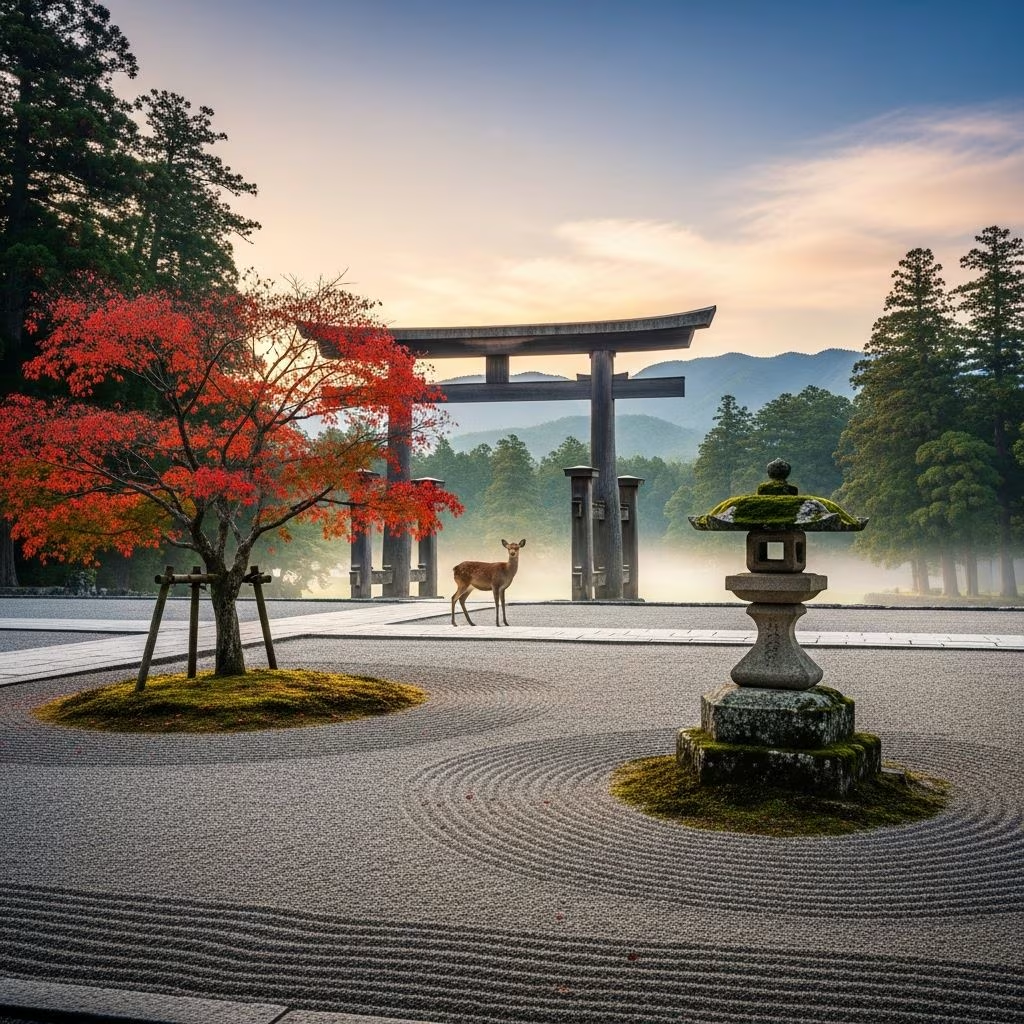
Begin in Sakurai, Nara Prefecture, home to Ohmiwa Jinja, potentially Japan’s oldest Shinto shrine. Nestled at Mount Miwa’s base amid ancient cedars, it uniquely honors the mountain itself rather than a hall-bound deity—a practice predating standard Shinto customs.
Conclude at a family-run ryokan, savoring kaiseki multi-course meals and onsen soaks. Reserve meals in advance as rural dining options are limited.
Rise early for Kinpusen-ji Temple’s morning otsutome ritual, featuring taiko drums and conch blasts—a Shugendo ceremony invoking spiritual energy. This massive wooden complex, Japan’s second-largest after Nara’s Todaiji, exemplifies alpine temple architecture.
Train to Uda’s Murouji Temple, known as ‘Women’s Koyasan’ for admitting female pilgrims in the 9th century when others barred them. Hike cedar-lined paths to its five-story pagoda, surrounded by rice fields and farmhouses.
Overnight in a ryokan with hot springs, promoting rejuvenation through mineral-rich waters believed to restore vitality.
Ascend to Mount Koya (Koyasan), Shingon Buddhism’s headquarters founded in 816 CE. Wander Okunoin cemetery’s mossy paths lined with 200,000 tombstones, leading to Kobo Daishi’s eternal meditation hall.
Participate in temple lodging (shukubo), joining morning prayers, vegetarian shojin ryori meals, and copying sutras. This monk-like routine fosters mindfulness amid cedar groves.
| Site | Location | Unique Feature | Best For |
|---|---|---|---|
| Ohmiwa Jinja | Sakurai, Nara | Mountain deity worship | Shinto origins |
| Kinpusen-ji | Yoshino, Nara | Shugendo rituals | Mountain asceticism |
| Murouji Temple | Uda, Nara | Women-friendly access | Forest hikes |
| Kongobu-ji | Koyasan, Wakayama | Buddhist rock garden | Monastic stay |
Descend to Wakayama’s Kumano region for Nachi Falls and Kumano Nachi Taisha, part of the UNESCO Kumano Sanzan trio. Hike trails evoking Heian-era ‘ant marches’ of pilgrims.
Engage in washi paper-making or sake tasting—rice wines fermented with local water and koji molds. Nearby, soy sauce production ties into ancient Buddhist influences from Asian exchanges.
End with river cruises through Dorokyo Gorge or cherry blossom views in Yoshino (spring peak with 30,000 trees).
Food here reflects monastic and seasonal ethos. Shojin ryori emphasizes harmony with nature using foraged items. Miwa somen and goma-dofu highlight preservation techniques born from shrine needs.
Sake brewing thrives due to pristine mountain waters. Soy sauce evolution, linked to 6th-century Buddhist imports, underscores cultural fusion.
Artisans perpetuate techniques like kakinoha wrapping and washi production. Ryokans showcase lacquerware and textiles, supporting rural economies.
Ecotourism initiatives promote sustainable visits, preserving forests and trails.
Shugendo fuses Shinto mountain reverence, Buddhism, and Taoism through ascetic practices in Yoshino and Koyasan.
Yes, shorter trails like Nakahechi suit novices; full routes span days.
Absolutely—shojin ryori is vegan, focusing on seasonal veggies and tofu.
Onges (sacred dances), easy shrine walks, and onsen bathing appeal to all ages.
Remove shoes indoors, bow at shrines, avoid trail littering.
