

 Travel Essentials
 Travel Essentials

Discover Nashville’s Black heritage on a self-guided trail through HBCUs, civil rights landmarks, and music history that shaped Music City.
 Travel Essentials
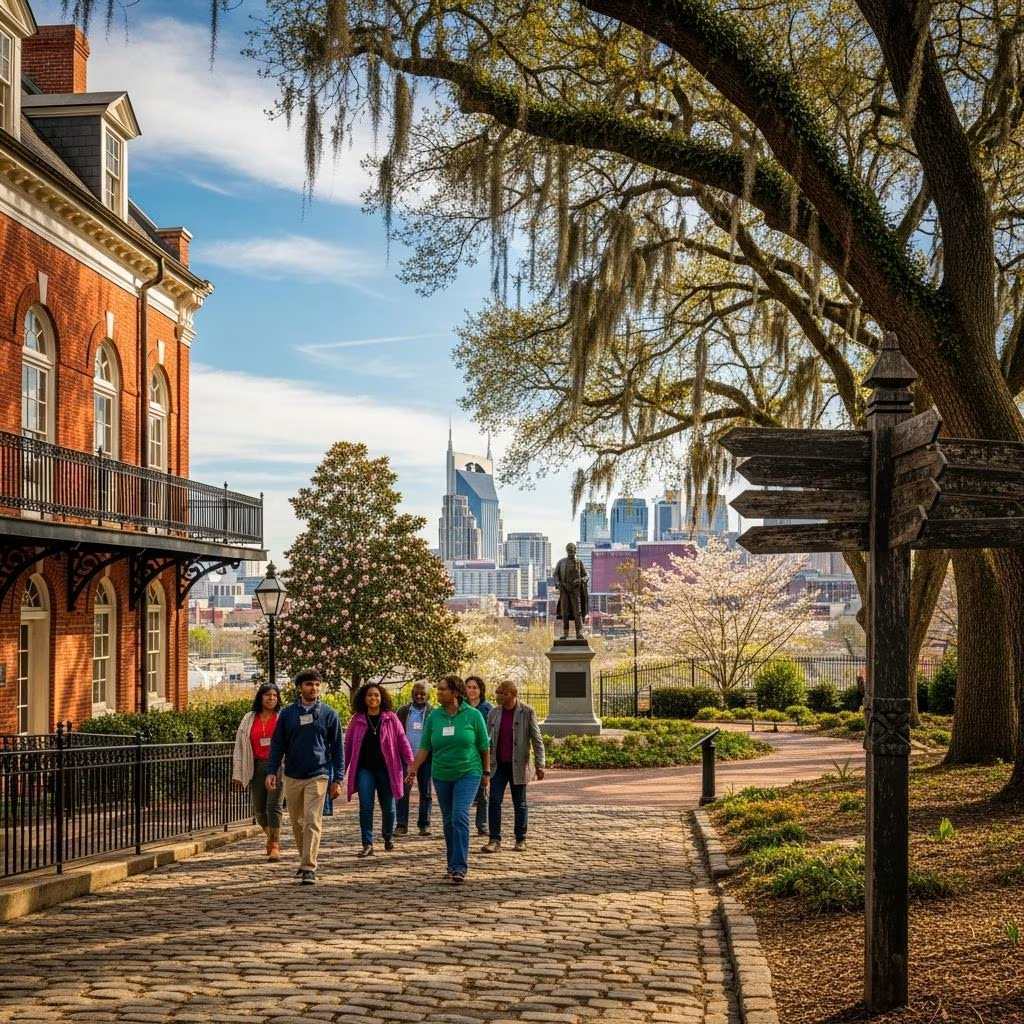
Immerse yourself in the vibrant tapestry of African American contributions that define Nashville, Tennessee. This self-guided walking trail weaves through downtown and nearby neighborhoods, spotlighting sites where Black innovators, musicians, educators, and activists left indelible marks. From the pulsating rhythms of segregated music venues to the scholarly halls of historic universities, each stop reveals layers of resilience amid adversity. Plan for 3-4 hours, wearing comfortable shoes for about 3 miles of moderate walking. Start early to avoid peak heat, and use public transit or rideshares for flexibility.
Nashville earns its ‘Music City’ moniker partly through Black artistry that birthed genres like gospel, blues, and rhythm & blues. During segregation, Black communities built parallel economies and cultural powerhouses, fostering talents who influenced global sounds. Today, these sites honor that legacy, offering context to the city’s modern vibrancy. Guided options exist, but this trail empowers independent discovery with interpretive insights.
Begin at the bustling heart of downtown and loop northward, ending near cultural museums. Hydrate often and pause at cafes owned by Black entrepreneurs for authentic bites.
Kick off at the replica of Fort Nashborough along the Cumberland River, marking Nashville’s 1779 founding. Here, enslaved Africans like Robert “Black Bob” Renfro toiled, laying the city’s foundations. Renfro, an early settler, embodied the paradox of Black labor fueling white prosperity. Interpretive panels detail how free and enslaved Black Nashvillians shaped frontier life, from farming to craftsmanship. Reflect on this origin story, where survival forged community bonds.
Walk 0.5 miles north to the next cluster, noting riverfront murals depicting these pioneers.
Arrive at Fisk University, Tennessee State University (TSU), and Meharry Medical College—collectively the United Negro College Fund hubs. Fisk’s Jubilee Hall, built in 1875 by students with freedmen’s donations, stands as the oldest academic building by African Americans. It symbolizes post-emancipation education drives. Nearby, TSU nurtured athletes and artists; Meharry pioneered Black medical training, producing 50% of U.S. Black doctors historically.
Stroll Fisk’s serene campus, visiting the Jubilee Singer exhibit if open. These institutions countered Jim Crow by producing leaders like W.E.B. Du Bois, who lectured here. Soul of America Tours highlights this ‘United Triangle’ as a bedrock of Black intellectualism.
| Institution | Founded | Signature Contribution |
|---|---|---|
| Fisk University | 1866 | Jubilee Singers; liberal arts excellence |
| TSU | 1912 | Agriculture, engineering, music programs |
| Meharry Medical | 1876 | Black physician training; public health |
Head 1 mile south to the Civil Rights Room at the Country Music Hall of Fame or nearby Witness Walls. These etched granite slabs commemorate the 1960 Nashville Sit-Ins, where students from Fisk and TSU desegregated lunch counters through nonviolent protest. Leaders like Diane Nash and John Lewis honed strategies here, influencing national movements.
United Street Tours’ Civil Rights Walk spotlights women like Gloria Johnson Patterson. Stand where 81 protesters faced arrests, igniting change. Adjacent murals and markers evoke the ‘Nashville Way’ of peaceful integration.
Venture 1.5 miles northwest to Jefferson Street, Black Nashville’s entertainment nexus from the 1930s-1960s. Bypassed by I-40 construction, it hosted clubs like Club Daisy, where Little Richard and Fats Domino performed on the Chitlin’ Circuit—a vital network for Black artists barred from mainstream venues.
Visit the Jefferson Street Sound Museum for artifacts, photos, and audio clips reviving stars like Bobby Bland. This strip pulsed with juke joints, theaters, and record shops, birthing hits that crossed barriers. Today, revitalization efforts host festivals, reclaiming its legacy.
Return downtown (1 mile) to the gleaming NMAAM, opened 2021. This interactive haven traces 50+ genres from African roots via the Rivers of Rhythm exhibit. Touchscreens play spirituals evolving into hip-hop; artifacts include stage costumes and rare instruments. It contextualizes how Black Nashville musicians shaped Music Row and beyond.
Allow 1-2 hours; admission ~$27. Pair with Ryman Auditorium tours noting Black performers’ breakthroughs there.
For deeper dives, book UTG’s 2-hour African American Heritage Tour covering 1779-1960s essentials.
Guided Alternatives:
Eating Stops: Prince’s Hot Chicken (legendary Black-owned), Hattie B’s nods to heritage, or Jefferson Street BBQ joints.
One-Day Itinerary: Morning universities, lunch downtown, afternoon Jefferson/NMAAM, evening live music.
Yes, all ages welcome; content is educational, not graphic. Group limit 15 for guided versions.
Many indoor stops like museums; check forecasts and prioritize covered sites.
Trail free; museums $20-30, tours $50-250. Student discounts at HBCUs.
Focuses Black influences underpinning all genres, often overlooked in mainstream narratives.
Add Black Wall Street markers or TSU sports hall of fame for full day.
This trail not only educates but inspires appreciation for Black Nashvillians’ enduring impact. Share your photos with #NashvilleBlackHeritage.
