

 Travel Essentials
 Travel Essentials

Explore the National Civil Rights Museum's immersive exhibits on slavery, segregation, and Dr. King's legacy at the Lorraine Motel site.
 Travel Essentials
Located in Memphis, Tennessee, the National Civil Rights Museum stands as a profound testament to the American civil rights movement, encompassing centuries of struggle from slavery to contemporary justice efforts. Housed at the historic Lorraine Motel where Dr. Martin Luther King Jr. was assassinated in 1968, this institution offers visitors an immersive journey through pivotal events that shaped the nation.
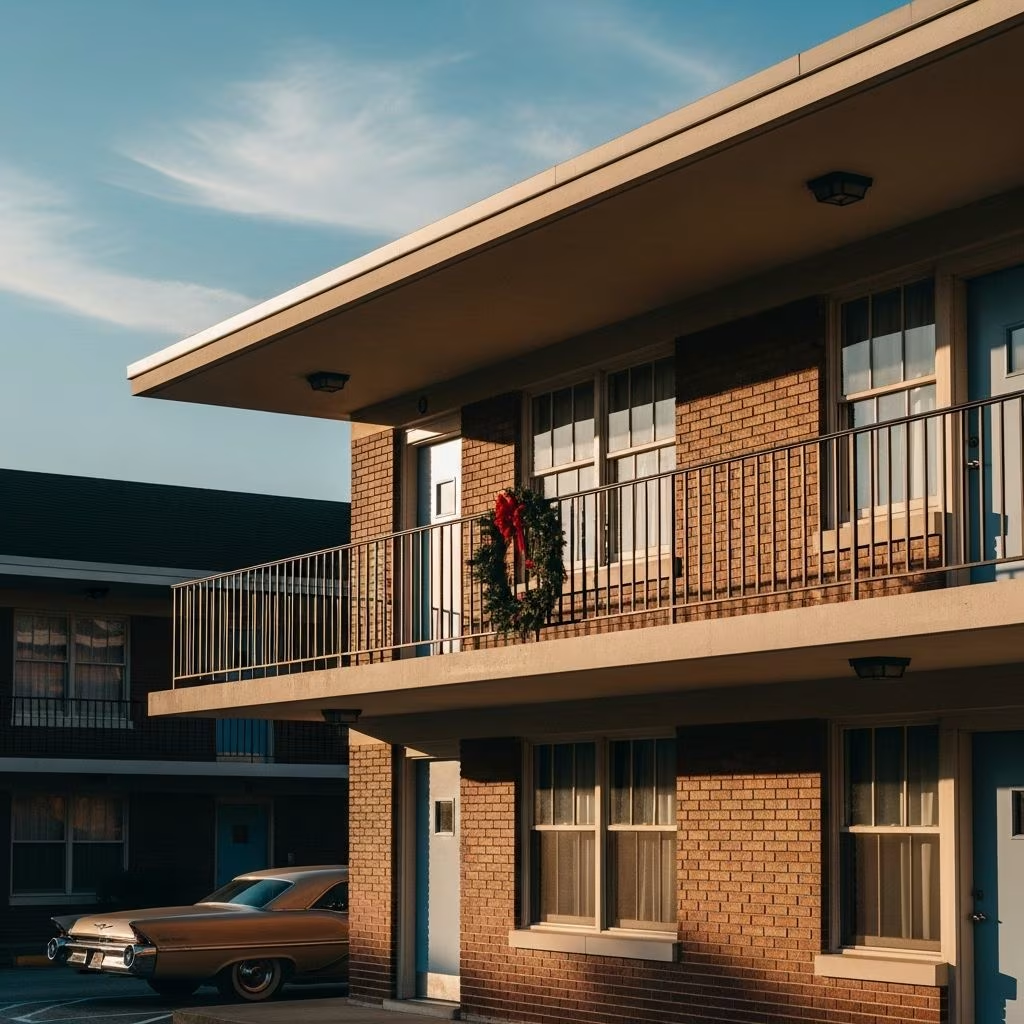
The museum’s core revolves around the Lorraine Motel, a site forever etched in history due to the tragic events of April 4, 1968. Dr. King, standing on the motel’s balcony outside Room 306, was fatally shot, an act that galvanized the world and intensified the push for racial equality. The motel, preserved in its 1960s appearance, allows visitors to peer into Room 306, frozen in time with King’s personal effects, evoking a somber reflection on his final moments.
Expanding beyond the motel, the museum incorporates the former boarding house across the street—now part of the Legacy Building—where James Earl Ray allegedly fired the shot. A symbolic underground tunnel connects these structures, representing the passage from tragedy to resilience, lined with exhibits on global reactions to King’s death and the movement’s continuation. This complex spans 4.14 acres in Memphis’s South Main Arts District, blending preservation with education.
Spanning five centuries, the museum’s permanent collection features over 260 artifacts, more than 40 films, oral histories, and interactive stations that bring the civil rights narrative to life. Visitors begin with the harsh realities of slavery from 1619 to 1861, progressing through the Civil War, Reconstruction, Jim Crow segregation, and landmark protests.
The renovated space, updated in 2014 after a multimillion-dollar overhaul, incorporates cutting-edge technology for a multi-sensory experience praised by scholars like Clayborne Carson for its scholarly depth. A 2016 Smithsonian affiliation further elevates its status.
Open daily except Tuesdays, the museum welcomes visitors from 9 AM to 5 PM, with extended hours on weekends. Admission starts at $18 for adults, with discounts for students, seniors, and groups. Advance tickets are recommended, especially during peak seasons like Martin Luther King Jr. Day or Black History Month.
| Visitor Category | Price (USD) | Includes |
|---|---|---|
| Adult (18+) | $18 | General admission, all exhibits |
| Senior (65+) | $15 | General admission |
| Youth (5-17) | $13 | General admission |
| Child (under 5) | Free | General admission |
| Group (10+) | $14/person | Guided options available |
Accessibility features include wheelchair ramps, audio guides, and ASL-interpreted tours. Parking is available onsite, and the museum is a short walk from downtown Memphis attractions. Allow 2-3 hours for a thorough visit, though many spend longer reflecting.
Beyond commemoration, the museum inspires action against modern injustices. Exhibits underscore that the civil rights struggle persists through everyday advocates, connecting historical victories to current debates on equity, voting rights, and police reform. Visitors often describe it as transformative, fostering empathy and a commitment to justice.
Memphis’s location enhances the experience; pair your visit with Beale Street’s music scene or the National Civil Rights Museum’s proximity to the Mississippi River for a fuller cultural immersion.
Enhance your trip with expert-led tours focusing on themes like women’s roles in the movement or Dr. King’s global influence. Virtual options and school programs make it accessible year-round. Seasonal events, such as anniversary commemorations, feature guest speakers and live performances.
Yes, non-flash photography is permitted in most areas, but restrictions apply near artifacts. Drones and tripods are prohibited.
Plan for 2-3 hours, though the emotional depth may extend your stay.
Absolutely—interactive stations and youth guides engage children, with free admission for under 5s.
Explore Stax Museum of American Soul Music, Slave Haven Underground Railroad, or Memphis Rock ‘n’ Soul Museum.
Yes, multilingual audio tours are available for rent, enhancing the self-guided experience.
Travelers worldwide share how the museum reshaped their worldview. One visitor noted, “Standing where Dr. King fell bridges the past to our responsibilities today.” Reviews highlight the emotional balcony overlook and rifle display in the Legacy Building.
For Memphis road trippers, it’s a must-stop on the U.S. Civil Rights Trail, linking to sites like Birmingham’s 16th Street Baptist Church.
The National Civil Rights Museum isn’t just a destination; it’s a call to action, preserving lessons for future generations amid America’s ongoing quest for equality.
