

 Travel Essentials
 Travel Essentials

Learn how FAA and NPS regulate commercial air tours over national parks, balancing scenic flights with noise control and conservation.
 Travel Essentials
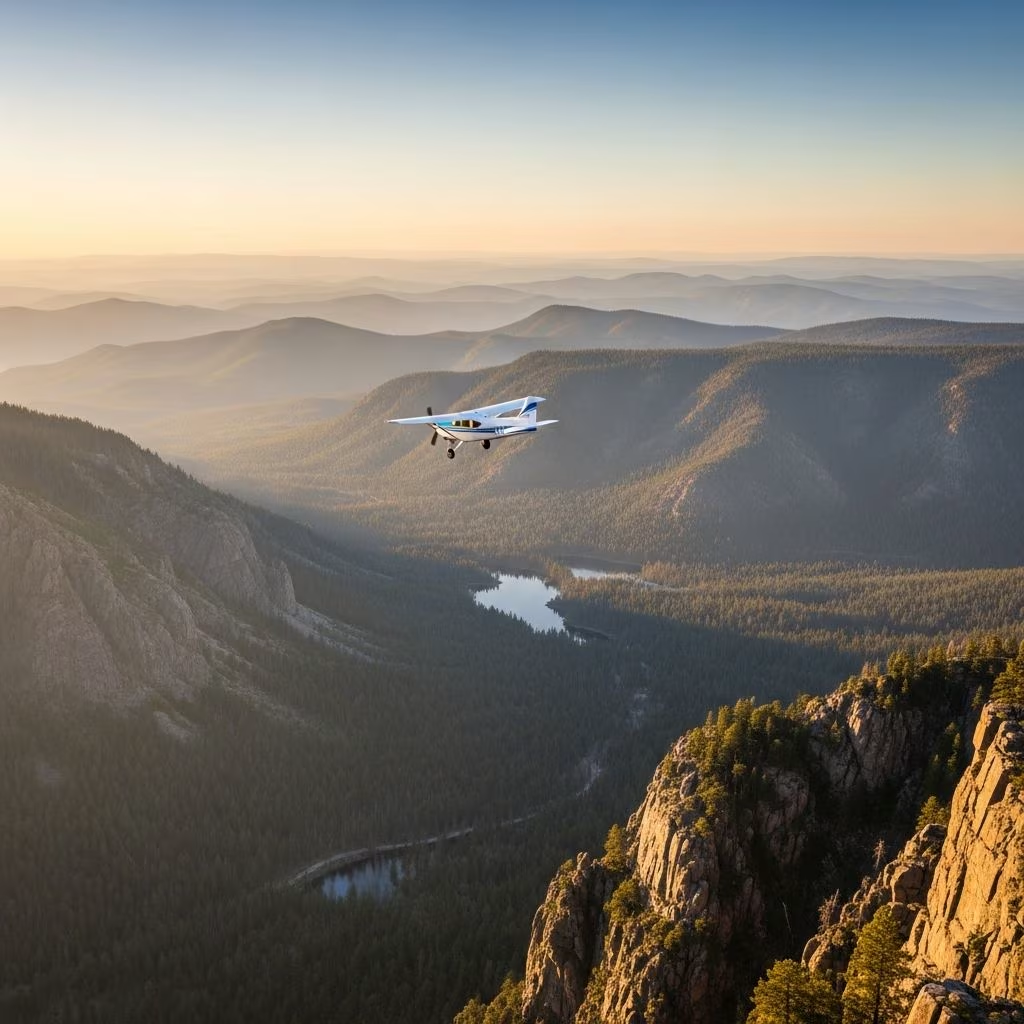
Commercial air tours provide breathtaking views of America’s iconic national parks, but they must adhere to strict federal rules to protect these treasured landscapes from noise pollution and environmental impact. The Federal Aviation Administration (FAA) and National Park Service (NPS) collaborate to regulate these flights under laws like 49 U.S.C. § 40128 and 14 C.F.R. § 136.37, ensuring a balance between aviation access and wilderness preservation.
Federal statutes and regulations form the backbone of oversight for flights over national parks and adjacent tribal lands. At its core, 49 U.S.C. § 40128 prohibits commercial air tour operators from conducting operations over these areas without prior FAA authorization, specific conditions, and compliance with any applicable Air Tour Management Plan (ATMP) or voluntary agreement. This law mandates that operators apply to the FAA before starting tours, marking a pivotal shift in how scenic flights are managed.
Complementing this, 14 C.F.R. § 136.37 outlines operational standards, requiring tours to follow FAA and NPS-prescribed limitations. These rules emerged from decades of debate, starting with the National Parks Overflights Act of 1987, which addressed growing concerns over aircraft noise disrupting park ecosystems and visitor experiences.
The FAA holds primary responsibility for airspace safety and efficiency, while the NPS focuses on resource protection. Their partnership intensified through the National Parks Overflights Working Group (NPOWG), established to recommend regulations mitigating adverse effects from commercial sightseeing flights. This group’s efforts influenced the Air-21 legislation in 2000, laying groundwork for modern ATMPs.
Historical flashpoints, such as disputes at Grand Canyon National Park, drove reforms. In 1996, proposed FAA rules sought tighter restrictions, but aviation advocates like the Aircraft Owners and Pilots Association (AOPA) argued they overreached, potentially compromising safety and general aviation freedoms. Compromises preserved FAA leadership while incorporating NPS input.
ATMPs are customized strategies developed jointly by the FAA (as lead agency) and NPS for parks with commercial air tour applications. These plans can fully prohibit flights, set routes, altitudes, time restrictions, or cap operations per time unit. They must justify measures through environmental assessments compliant with NEPA regulations (40 C.F.R. §§ 1501.3, 1501.5–1501.8).
For allocation, ATMPs equitably distribute flight opportunities when limits apply, prioritizing historic operators while promoting noise reduction. Grand Canyon serves as a benchmark, aiming for 50% of the park to remain free of commercial tour noise for 75% of each day.
Not all parks require full ATMPs. Parks with 50 or fewer annual commercial operations qualify for exemptions, listed yearly by FAA and NPS, though withdrawable if resources demand protection. Another exception allows up to five flights per 30 days per park, provided operators hold Part 119 certification and secure a letter of agreement from the FAA Administrator and park superintendent.
| Exception Type | Conditions | Limitations |
|---|---|---|
| Low-Volume Parks | <50 ops/year | Annual list; withdrawable |
| Letters of Agreement | Part 119 ops + FAA/NPS approval | Max 5 flights/30 days/park |
| General Aviation | Non-commercial, transient | Protected from new restrictions |
General aviation gets safeguards: transient flights remain largely unrestricted, and some Part 91 tours qualify for carve-outs, addressing AOPA concerns that rules shouldn’t penalize non-commercial pilots.
Pending ATMP completion, operators receive interim authority based on prior flight volumes—either the last 12 months or 36-month average (seasonal adjusted), whichever is greater. This prevents expansions without FAA/NPS consent, is published for comment, revocable for cause, and expires 180 days post-ATMP. It prioritizes park protection during transitions.
Regulations address multifaceted impacts: noise on wildlife, visual intrusions, and visitor enjoyment. NPS studies from the 1990s highlighted these, prompting cooperative solutions like designated corridors and quiet technology incentives. FAA ensures safety via airspace rules, while NPS mitigates ground effects.
Tribal lands abutting parks fall under similar scrutiny, with privacy considerations in ATMPs. Ongoing advisory groups, like the National Park Service Overflights Advisory Group, provide counsel on evolving regulations.
Aspiring tour operators must apply to FAA, demonstrating compliance readiness. Existing ones monitor Federal Register notices for interim authorities and ATMP updates. Visitors benefit from quieter experiences, with apps tracking flight-free zones in parks like Grand Canyon.
A flight for compensation or hire primarily over a national park or tribal land for sightseeing, excluding scheduled interstate service.
No; many have ATMPs allowing regulated flights, while low-activity parks are exempt.
Yes, general aviation overflights are generally permitted unless restricted by ATMPs, with protections for transient flights.
ATMPs set caps, routes, and altitudes; Grand Canyon targets 50% natural quiet daily.
Interim authority applies based on historical ops until one is developed.
Technological advances like electric aircraft and noise abatement tech promise quieter skies, potentially easing tensions. FAA/NPS continue refining rules via advisory committees, adapting to tourism growth and environmental priorities. Operators embracing sustainable practices may gain advantages in allocations.
These regulations exemplify cooperative federalism, safeguarding 85 million acres of parkland for generations while accommodating aerial appreciation. Compliance ensures thriving ecosystems and memorable flights.
