

 Travel Essentials
 Travel Essentials

Explore how U.S. national parks safeguard Native American heritage through ancient sites, sacred landscapes, and ongoing tribal connections, offering visitors authentic glimpses into millennia of history.
 Travel Essentials
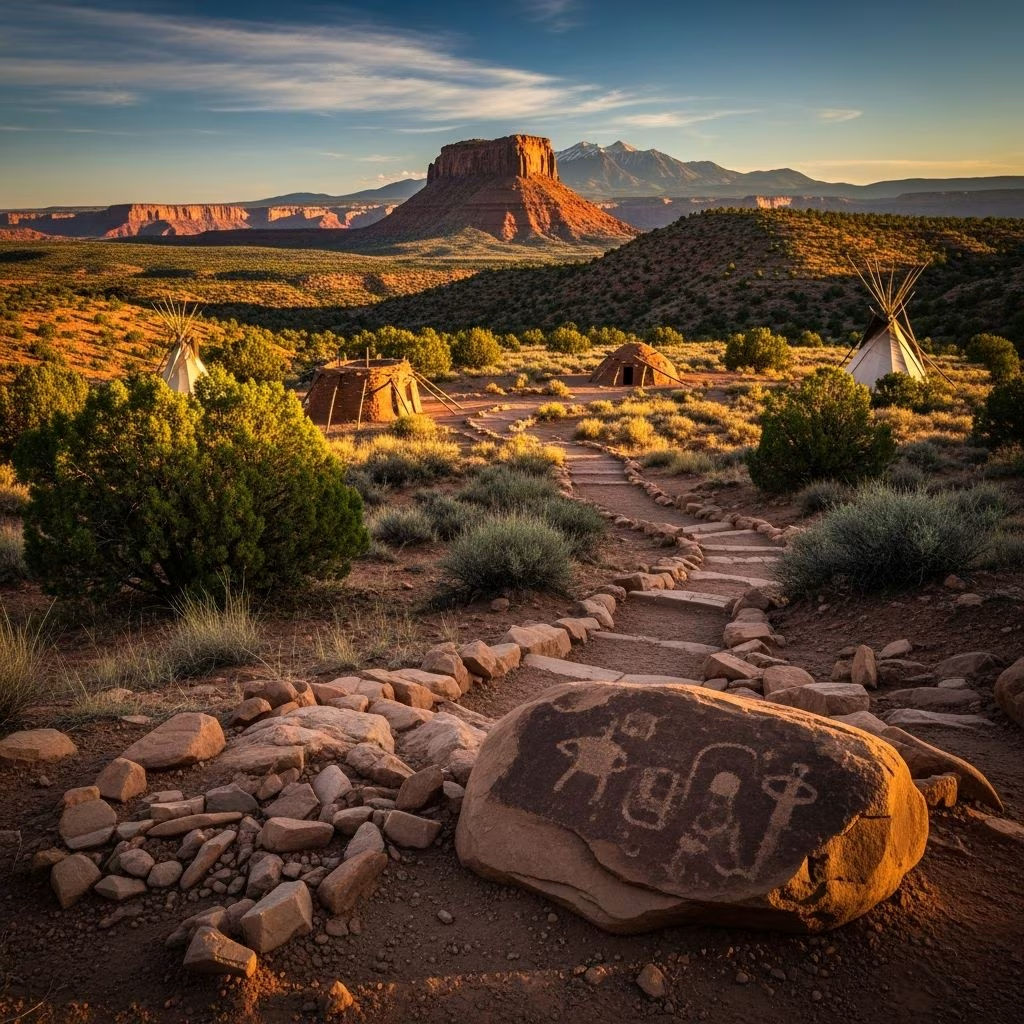
Across the vast expanse of the United States, national parks stand as more than just natural wonders—they are living repositories of Indigenous history, culture, and spirituality. These protected areas, managed by the National Park Service (NPS), often encompass ancestral homelands where Native American tribes built communities, conducted ceremonies, and shaped the land for thousands of years. Today, visitors can engage with these legacies through ranger-led tours, preserved artifacts, and collaborative efforts with tribal nations, fostering a deeper appreciation for the first peoples of this continent.
Every national park in the U.S. sits on traditional Indigenous territories, reflecting millennia of human interaction with the environment. From the forced displacements during park establishments to modern co-management agreements, these sites highlight both historical challenges and contemporary partnerships. The NPS actively works with American Indians, Alaska Natives, and Native Hawaiians to preserve cultural heritage, ensuring that tribal stories are told authentically.
Indigenous presence predates European arrival by over 12,000 years in some areas, with evidence of hunting, gathering, and monumental constructions. Subsistence practices continue in places like Alaska’s parks, where Native communities hunt, fish, and gather under federal programs. This ongoing connection underscores that national parks are not relics of the past but dynamic spaces where cultures thrive.
The Four Corners region, where Arizona, New Mexico, Utah, and Colorado converge, is a hotspot of Native American density and history. Here, the Ancestral Puebloans constructed sophisticated villages between 600 and 1300 CE, leaving behind cliff dwellings that defy gravity and time. Mesa Verde National Park protects over 5,000 archaeological sites, including the UNESCO-listed Cliff Palace, the largest such structure. Visitors climb ladders to Balcony House, entering kivas—ceremonial chambers used for rituals and community gatherings.
Nearby, Canyon de Chelly National Monument, jointly managed by the NPS and Navajo Nation, offers immersive experiences into Diné (Navajo) life. White House Ruin Trail descends into the canyon, revealing ancient Anasazi pueblos, while Spider Rock symbolizes Navajo creation stories. Guided tours by Navajo rangers provide personal narratives, emphasizing the monument’s role as a living cultural landscape.
Other Southwest gems include Montezuma Castle National Monument in Arizona, with its Sinagua apartment-like cliff dwellings, and Natural Bridges National Monument in Utah, showcasing Ancestral Puebloan bridges and petroglyphs. These sites reveal advanced engineering adapted to arid environments.
The sweeping prairies and eroded buttes of the Great Plains were home to nomadic tribes who followed vast bison herds. Badlands National Park in South Dakota preserves this pre-colonial vista, where bighorn sheep and prairie dogs evoke the ecosystems hunted by Lakota, Cheyenne, and others. The park’s Stronghold Table features the 1890 Wounded Knee Massacre site, a poignant reminder of U.S. military conflicts with tribes.
Little Bighorn Battlefield National Monument in Montana commemorates the 1876 Battle of the Little Bighorn, where Lakota, Cheyenne, and Arapaho warriors defeated Custer’s forces. The Reno-Benteen Battlefield and Indian Memorial honor Native perspectives, shifting focus from defeat to victory in Lakota oral histories.
In Iowa’s Effigy Mounds National Monument, over 200 earthen mounds crafted by Woodland peoples from 650-1200 CE depict animals like bears, birds, and serpents. These effigies, sacred to descendant tribes such as the Ho-Chunk and Sac & Fox, served ceremonial purposes, aligning with celestial events. Boardwalks allow non-intrusive exploration, preserving these UNESCO tentative sites.
Knife River Indian Villages National Historic Site in North Dakota reconstructs Hidatsa and Mandan earth lodges, sites of Lewis and Clark’s encounters. Visitors enter replicas to understand fortified villages that thrived on agriculture and trade along the Missouri River.
Devils Tower National Monument in Wyoming, known as Mato Tipila (Bear’s Lodge) to the Lakota, is a volcanic plug central to Northern Plains creation myths. Tribes including Cheyenne, Kiowa, and Shoshone pilgrimage here for ceremonies, leaving prayer cloths at its base. A voluntary climbing closure in June respects these practices, balancing recreation with reverence.
Hubbell Trading Post National Historic Site in Arizona illustrates Navajo interactions with settlers, where wool and silverwork were exchanged. Demonstrations of traditional crafts continue today.
Lava Beds National Monument in California preserves Modoc War sites and petroglyphs, recounting 1870s resistance against U.S. forces. Captain Jack’s Stronghold tours detail defensive lava fortifications.
In Hawaiʻi Volcanoes National Park, Puʻuloa Petroglyphs feature thousands of carvings by Native Hawaiians, depicting family, canoes, and deities. The Ainapo Trail ascends Mauna Loa, trod by pilgrims honoring Pele, goddess of volcanoes. Footprints Trail shows fossilized human tracks in volcanic ash.
Kenai Fjords National Park in Alaska highlights Dena’ina heritage amid glaciers, with subsistence fishing integral to Alaska Native life. About 20% of Alaskans identify as Native, maintaining traditions in 20% of U.S. parklands.
Everglades National Park in Florida protects Seminole and Miccosukee homelands in the subtropical wilderness. Anhinga Trail offers glimpses of tribal adaptations to wetlands, where tribes navigated by canoe.
| Park/Monument | Tribe(s) | Key Feature |
|---|---|---|
| Mesa Verde NP | Ancestral Puebloans | Cliff dwellings |
| Effigy Mounds NM | Woodland cultures | Animal-shaped mounds |
| Devils Tower NM | Lakota, Cheyenne | Sacred butte |
| Hawaiʻi Volcanoes NP | Native Hawaiians | Petroglyphs & trails |
Enhance visits with tribe-led experiences: Navajo guides at Canyon de Chelly, Iñupiat exhibits at Bering Land Bridge, or ranger talks at most sites. Respect protocols—no photography in sacred areas, stay on trails, and support tribal enterprises.
Museums like the Iñupiat Heritage Center in Alaska or park visitor centers display artifacts, baskets, and regalia, contextualizing histories.
While parks protect heritage, issues persist: sacred site access, name changes (e.g., from derogatory terms), and co-stewardship. Tribes advocate for accurate narratives, countering Eurocentric views. Recent NPS initiatives expand tribal involvement, ensuring futures honor the past.
Mesa Verde, Canyon de Chelly, Effigy Mounds, Devils Tower, and Hawaiʻi Volcanoes stand out for preserved sites and tribal partnerships.
Yes, at sites like Canyon de Chelly (Navajo) and Little Bighorn (tribal historians), offering authentic insights.
Follow closures, avoid touching artifacts, purchase from tribal vendors, and learn from NPS resources.
Absolutely—Kenai Fjords, Lake Clark, and Denali support Alaska Native subsistence and heritage centers.
Mesa Verde is a World Heritage Site; effigy mounds are tentative, recognizing global Indigenous significance.
