

 Travel Essentials
 Travel Essentials

Discover London’s free Dinosaurs Gallery at the Natural History Museum, home to iconic fossils, interactive displays, and family-friendly wonder.
 Travel Essentials
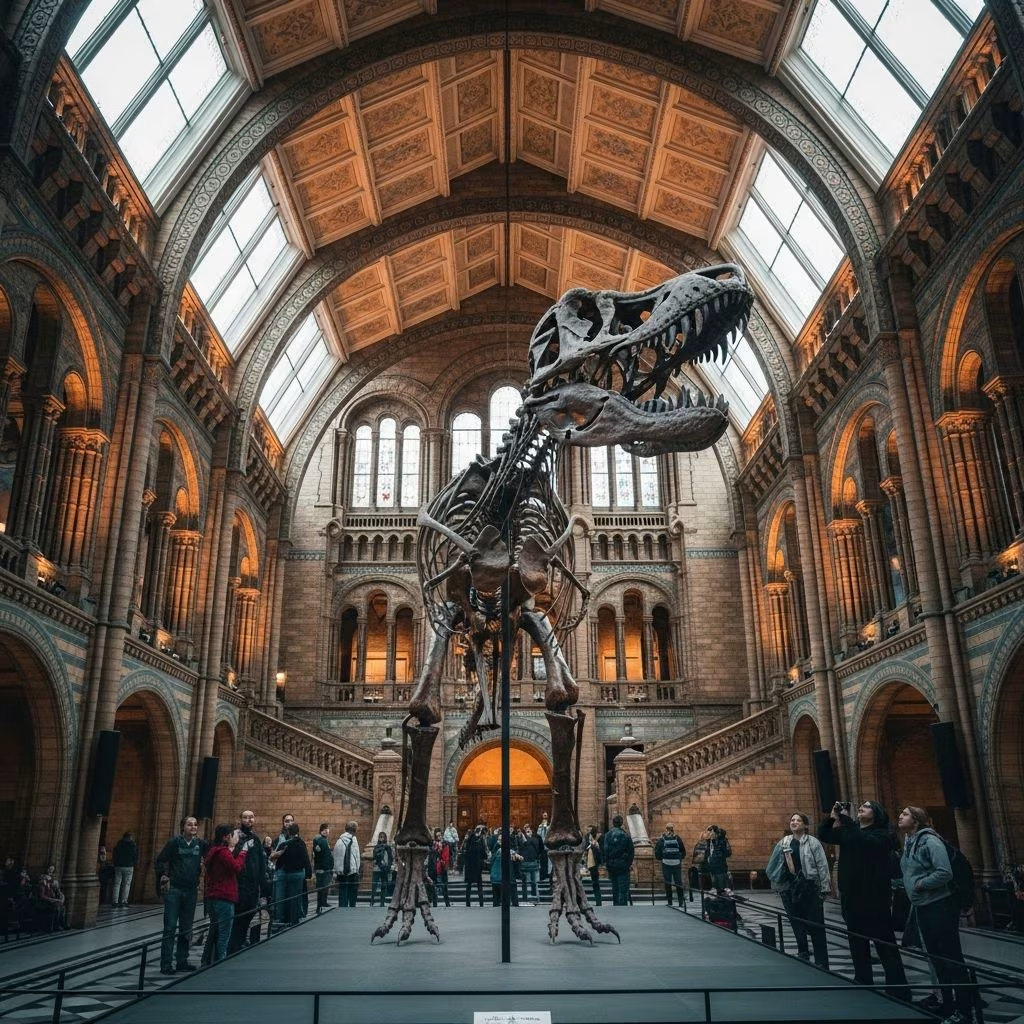
The Natural History Museum in London stands as a beacon for anyone fascinated by Earth’s ancient past, particularly through its renowned Dinosaurs Gallery. This free, permanent exhibit transports visitors back millions of years to encounter some of the most iconic creatures that once roamed the planet. Nestled in the Blue Zone on the ground floor, the gallery showcases extraordinary fossils that have shaped our understanding of paleontology.
Entering the Dinosaurs Gallery feels like stepping into a time machine. The space is alive with the presence of massive skeletons and detailed replicas that evoke the raw power of these long-extinct beasts. Highlights include parts of the first Tyrannosaurus rex skeleton ever unearthed, revealing one of the largest carnivores in history. Visitors can also gaze upon the skull of a Triceratops, a formidable herbivore with its signature horns, and the armored Scolosaurus, whose bony plates offer clues to Cretaceous defenses.
The gallery’s layout encourages a chronological journey through the Mesozoic Era, from the Triassic to the Cretaceous periods. Interactive elements and informative panels provide context on how these fossils were discovered and what they teach us about dinosaur behavior, evolution, and extinction. Families with children find it especially engaging, as the roaring animatronic T. rex model brings the exhibit to life, sparking wonder and curiosity.
At the heart of the collection lies historical significance. The first Iguanodon skeleton known to science resides here, pivotal in the 19th-century recognition of dinosaurs as a distinct group. This specimen, alongside a near-complete Mantellisaurus fossil, underscores the museum’s role in early paleontological breakthroughs.
These artifacts are not mere displays; they represent type specimens and original material from the museum’s vast collection of 157 dinosaur taxa, including 69 type specimens—among the world’s most important.
The Dinosaurs Gallery anchors the Blue Zone, dedicated to life’s diversity. Adjacent to the grand Hintze Hall—once home to the Diplodocus ‘Dippy’ cast, now featuring a blue whale skeleton—the gallery is easily accessible. Download the museum map for seamless navigation, as dinosaurs appear throughout the building, from Hintze Hall’s giant sequoia to other fossil zones.
| Zone | Key Attractions | Location |
|---|---|---|
| Blue Zone | Dinosaurs, Fish & Reptiles, Mammals | Ground Floor, left of Hintze Hall |
| Green Zone | Fossil Marine Reptiles, Minerals | Various floors |
| Red Zone | Earth’s Treasures, Human Evolution | Upper levels |
Open daily from 10:00 to 17:50 (except 24-26 December), entry is free, making it an ideal stop for London travelers.
The Natural History Museum isn’t just a display hall; it’s a global hub for research. Its dinosaur collection fuels studies on evolution, with recent finds like Enigmacursor, a new species discovered by museum scientists. The gallery educates on Darwin’s influence, displaying a first edition of On the Origin of Species nearby, linking dinosaurs to broader evolutionary narratives.
Paleontologists continue to analyze these fossils using cutting-edge tech like CT scanning, revealing hidden details about growth, diet, and movement. The museum’s role in naming taxa emphasizes its authority in the field.
Designed for all ages, the gallery includes touchscreens, quizzes, and models that engage young minds. The animatronic T. rex roars periodically, delighting kids while teaching about apex predators. Seasonal touches, like a festive T. rex during holidays, add fun without detracting from science.
Tips for Your Visit:
While dinosaurs steal the show, the museum offers complementary exhibits. The Fossil Marine Reptiles gallery features ichthyosaurs and plesiosaurs, contemporaries of dinosaurs. The Images of Nature gallery displays stunning photography, and the Wildlife Photographer of the Year rotates in the East Pavilion.
Don’t miss the Treasures in the Cadogan Gallery or the Vault for rare gems. For deeper dives, the Anning Rooms cater to members, honoring fossil hunter Mary Anning.
The Dinosaurs Gallery has evolved since the 1970s, when stark presentations focused on raw fossils. Modern updates incorporate immersive storytelling, lighting, and tech for better visitor well-being and education. ‘Dippy’s’ relocation in 2017 to tour nationally made space for ‘Hope,’ the blue whale, but dinosaurs remain central.
Tours like Dinosaurs Live bring museum expertise to theaters, featuring life-like models from Triassic to Cretaceous eras.
As of 2026, the gallery continues to captivate with fresh interpretations and potential new displays. Its free access, central South Kensington location (near tube stations), and blend of science and spectacle make it unmissable. Whether a dino-obsessed child or lifelong learner, the NHM delivers awe-inspiring insights into our planet’s history.
Yes, it’s a permanent, free exhibit open daily except late December.
Allow 45-90 minutes; extend for interactivity and nearby zones.
Yes, including animatronics, quizzes, and trails via the museum app.
Photography is permitted for personal use; no flash or tripods.
Science Museum and V&A, plus cafes in Exhibition Road.
Fully wheelchair-accessible with lifts and loaner chairs.
