

 Travel Essentials
 Travel Essentials

Explore key locations tied to Nelson Mandela's life, from his childhood homes and prisons to inauguration sites, offering deep insights into South Africa's fight against apartheid.
 Travel Essentials
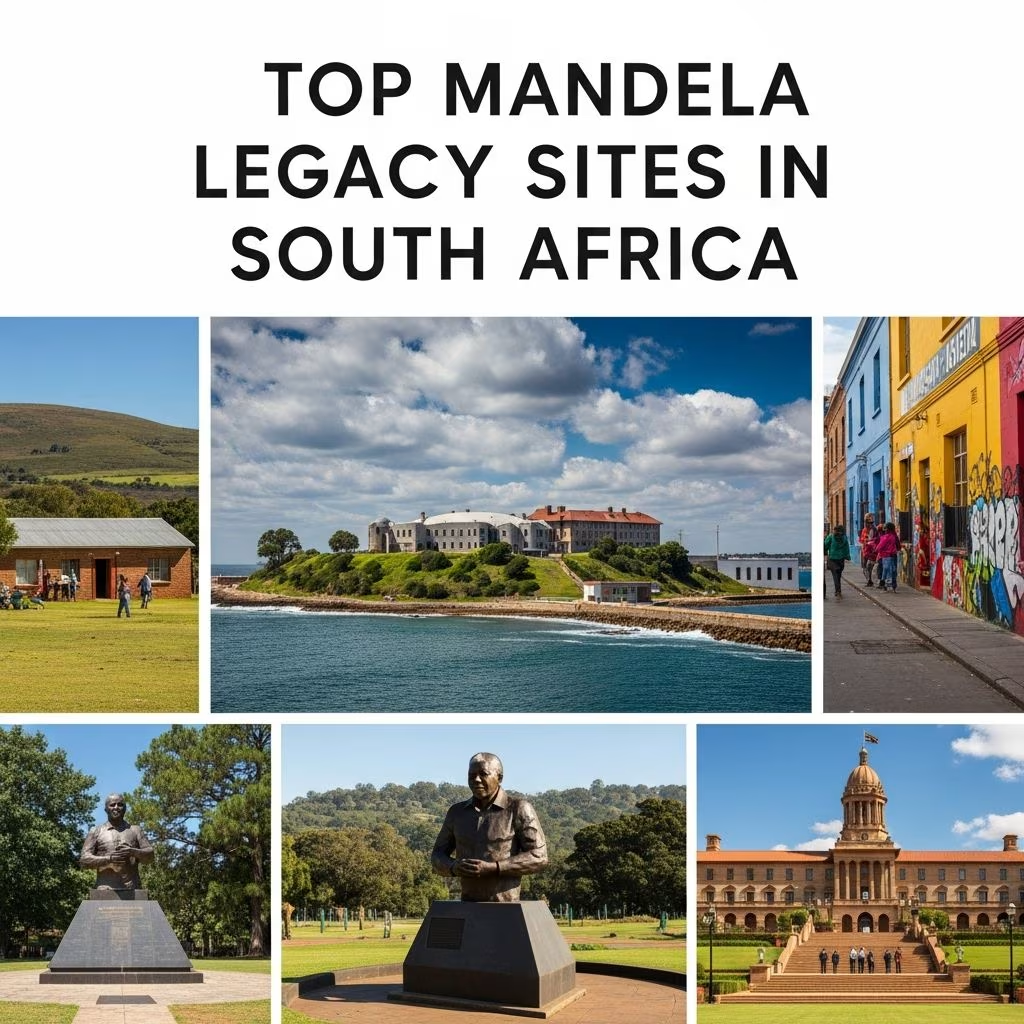
Nelson Mandela’s life story is woven into the fabric of South Africa’s history, marking the nation’s path from oppression to democracy. These sites, spanning prisons, museums, and symbolic landmarks, offer visitors a tangible connection to his struggles, triumphs, and vision for reconciliation. Many are part of the UNESCO-recognized Nelson Mandela Legacy Sites, highlighting their global importance in human rights history.
Mandela’s journey embodies South Africa’s transition from apartheid—a system of racial segregation enforced from 1948 to the early 1990s—to a multiracial democracy. Born in 1918, he rose as a leader in the African National Congress (ANC), endured 27 years in prison, and became the country’s first post-apartheid president in 1994. The 14 UNESCO-listed sites across four provinces commemorate this era, focusing on human rights denial, liberation struggles, and post-apartheid healing.
Visiting these places provides more than historical facts; they immerse travelers in the emotional weight of events like massacres, trials, and inaugurations. Plan trips with guided tours for deeper context, and consider combining sites in regions like Gauteng or the Eastern Cape for efficient exploration.
Mandela’s imprisonment defined much of his adult life, with several sites preserving the harsh realities of apartheid detention.
These locations starkly illustrate the regime’s brutality, yet also Mandela’s resilience, as he studied and organized from within.
Museums offer interactive narratives of Mandela’s evolution from rural youth to statesman.
| Museum | Location | Key Highlights |
|---|---|---|
| Apartheid Museum | Johannesburg | Exhibits on segregation laws, personal artifacts, and multimedia on resistance movements; allow 2+ hours. |
| Liliesleaf Farm | Rivonia, Johannesburg | Site of 1963 police raid on ANC hideout; restored buildings with audio-visual stories of underground operations. |
| Nelson Mandela Museum | Mthatha & Qunu, Eastern Cape | Bhunga Building details his life phases; Qunu Youth Centre near his burial site with local guides for contextual tours. |
These venues use artifacts, films, and reconstructions to humanize the anti-apartheid fight, drawing fewer crowds at Liliesleaf for a reflective visit.
Mandela’s early years in the rural Eastern Cape instilled values of leadership and community. The Great Place at Mqhekezweni, where he lived after his father’s death under regent Jongintaba, symbolizes traditional Tembu authority. Nearby Qunu, his birthplace and resting place, features a heritage center, baptism church ruins, and school remnants—essential for fans of his autobiography Long Walk to Freedom. Local guides reveal personal anecdotes, making this a pilgrimage for understanding his formative influences.
Gauteng province hosts pivotal urban sites of activism.
Soweto’s vibrant energy contrasts its painful past, offering street art and shebeens alongside historical reflection.
Cape Town marks both captivity and freedom.
These areas evoke triumphant release amid ongoing reconciliation themes.
Pretoria’s Union Buildings hosted Mandela’s 1994 inauguration as South Africa’s first democratically elected Black president and later his lying in state. In Bloemfontein, Waaihoek Wesleyan Church birthed the ANC in 1912 as the South African Native National Congress. Further afield, the Nelson Mandela Capture Site near Howick features a striking steel sculpture at his 1962 arrest location, and Durban boasts a prominent statue.
To visit effectively:
Combine with wildlife safaris or wine routes for balanced itineraries, respecting these sacred spaces with mindful tourism.
Yes, the 14 Nelson Mandela Legacy Sites form a single UNESCO World Heritage property, emphasizing their collective role in human rights history.
Full tours last 3.5-4 hours, including ferry; ex-prisoner guides provide profound insights.
The Youth & Heritage Centre is accessible; private family areas are not, but guided walks cover key spots like his grave.
Easily: Focus on Gauteng (Johannesburg/Pretoria) or a multi-province road trip spanning 7-10 days.
Expect crowds at Vilakazi Street; support local vendors and learn about ongoing community resilience.
These sites not only honor Mandela but inspire global human rights efforts. As South Africa evolves, they remind visitors of unity’s power. Engage respectfully, perhaps journaling reflections or discussing with locals to fully absorb the legacy.
