

 Travel Essentials
 Travel Essentials

Compare Nepal and Bhutan across accessibility, cost, culture, and trekking to choose your ideal Himalayan adventure destination.
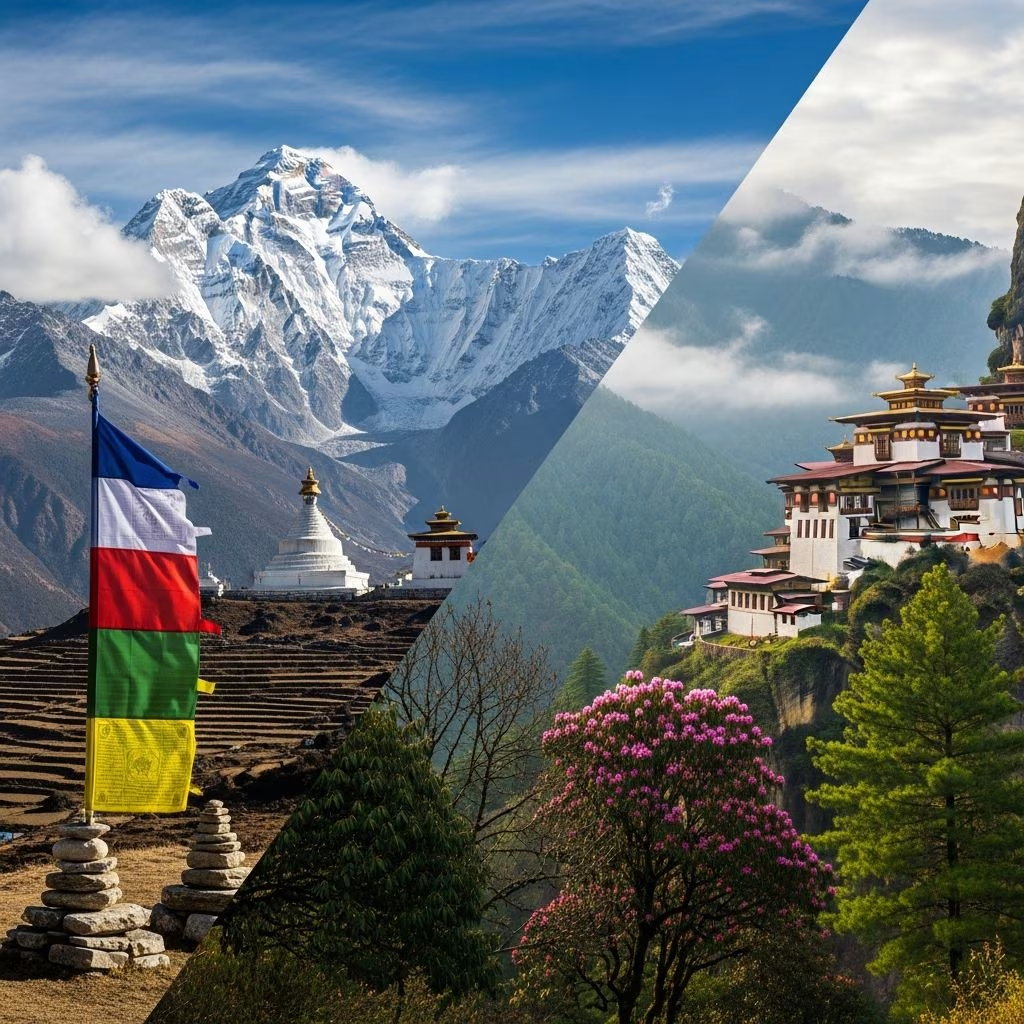 Travel Essentials
The Himalayan region offers two compelling destinations for travelers seeking mountain experiences, spiritual encounters, and cultural immersion. While Nepal and Bhutan both occupy the southern slopes of the world’s highest mountain range, they present distinctly different travel experiences shaped by their geographical positions, tourism philosophies, and regulatory frameworks. Understanding these differences allows travelers to select the destination that aligns with their priorities, whether that involves budget considerations, accessibility preferences, or the type of experience they seek.
One of the most significant distinctions between these two nations involves how easily travelers can arrive and establish legal entry.
Nepal’s accessibility advantage stems from its major international hub at Tribhuvan International Airport in Kathmandu, which receives direct flights from numerous countries across Asia, Europe, and beyond. The nation’s central location within South Asia has established it as a crucial transit point for regional travel. Additionally, Nepal maintains open land borders with India, allowing overland crossings at multiple checkpoints. Most nationalities can obtain a visa upon arrival, a process that takes minutes and requires minimal advance planning.
Bhutan presents a more deliberate entry system. The nation operates Paro International Airport as its sole international gateway, with limited direct flights available exclusively from five countries: Nepal, India, Bangladesh, Thailand, and Singapore. Most international visitors must route through one of these nations. Overland access from India exists but requires pre-arranged permits and specific entry points. Critically, all visitors except Indian citizens must obtain pre-approved visas through licensed travel agencies before arrival, a requirement that necessitates advance booking and planning.
The fundamental philosophies governing tourism in each country reflect their distinct national priorities and create markedly different travel experiences.
Nepal’s open tourism model permits independent travel throughout most of the country. Visitors can explore cities, villages, and trekking routes at their own pace, book accommodations directly, hire local guides if desired, and modify itineraries spontaneously. This flexibility attracts solo travelers, budget backpackers, and those preferring unstructured exploration. While certain high-altitude mountain regions require special permits, the vast majority of Nepal remains accessible to independent travelers.
Bhutan enforces a controlled tourism system designed to limit visitor numbers and preserve cultural and environmental integrity. The nation requires all non-Indian tourists to book through licensed travel agencies and travel with government-approved guides. Daily packages include accommodation, meals, guide services, and transportation, with fixed itineraries that cannot be substantially altered. This “High Value, Low Impact” model restricts spontaneity but ensures quality experiences and environmental protection.
Travel expenses represent a crucial decision factor for most visitors, and these destinations occupy different price categories.
Nepal maintains its reputation as a budget-friendly destination. Hostel accommodations with dormitory beds remain inexpensive, local restaurants serve meals for minimal cost, and visa fees are low. The nation’s long history as a backpacker destination has created robust infrastructure supporting budget travelers. Trekking gear rental and purchase options in Kathmandu’s Thamel district offer particularly economical choices compared to bringing equipment from home. Street food, public transportation, and basic services remain affordable, enabling travelers to experience the country extensively on modest daily budgets.
Bhutan operates on a premium pricing structure. The mandatory daily package system costs $200-$250 per person per day, including all accommodation, meals, guide services, and transportation. This represents significantly higher expenditure than Nepal’s typical budget of $30-$50 daily for budget-conscious travelers. However, Bhutan’s pricing reflects higher service quality, smaller group sizes, environmental sustainability efforts, and cultural preservation investments. For travelers seeking luxury experiences, Bhutan’s premium offerings provide exceptional value relative to the service caliber provided.
Both destinations showcase exceptional Himalayan terrain, though their trekking offerings differ significantly in scope and character.
Nepal’s trekking advantage derives partly from Mount Everest’s location within its territory. The Everest Base Camp trek represents the world’s most popular mountaineering approach route, attracting millions of visitors annually. Beyond Everest, Nepal offers extensive trekking networks across diverse terrain: the Annapurna Circuit, Langtang Valley, Manaslu trek, and numerous others provide options ranging from gentle walks to extreme expeditions. The mature trekking industry has established abundant lodges, porter services, and established trails across the country.
Bhutan’s trekking experiences emphasize spiritual and cultural immersion alongside natural beauty. While the country offers exceptional mountain trails including the Druk Path Trek and Bumo Khari Trek, these routes remain less commercially developed than Nepal’s options. Bhutan’s treks typically incorporate interactions with traditional communities maintaining ancestral lifestyles, visits to sacred monasteries, and experiences of pristine wilderness. The guided-tour requirement means fewer independent trekkers and smaller group sizes, creating a more exclusive atmosphere. The trekking style emphasizes contemplative pace and cultural connection rather than peak-bagging or record-setting athletic achievements.
These nations express their Buddhist heritage through distinct cultural frameworks that shape visitor experiences differently.
Nepal celebrates religious and cultural diversity. The nation encompasses multiple ethnic groups, religious traditions, and cultural expressions. Hinduism, Buddhism, and indigenous traditions coexist throughout the country. Major festivals like Dashain and Tihar attract vibrant public celebrations involving fireworks, family gatherings, and community festivities. Sacred sites range from the Hindu temple of Pashupatinath to Buddhist stupas like Boudhanath. This religious pluralism means visitors encounter varied spiritual expressions and can observe different traditions simultaneously.
Bhutan prioritizes cultural preservation and Buddhist values. The nation maintains an officially Buddhist identity reflected in architecture, daily practices, and national policies. Monasteries occupy dramatic cliff-side locations, and spiritual practice remains integrated into everyday life. Festivals showcase traditional dance, music, and ceremonial practices largely unchanged across centuries. Bhutan’s government actively restricts cultural dilution through tourism regulations, ensuring visitors observe rather than fundamentally alter traditional communities. This approach creates more profound cultural immersion but less spontaneous interaction than Nepal’s approach.
Physical environment significantly impacts travel comfort and health during extended visits.
Bhutan maintains notably superior air quality compared to Nepal. The nation implements strict environmental policies including annual emission testing for all vehicles, with those exceeding standards removed from roads until repaired. Remarkably, Bhutan maintains a “negative” carbon footprint, meaning forests produce more oxygen than the nation’s activities emit, resulting in some of the world’s freshest air. This environmental commitment reflects national policy prioritizing ecological sustainability.
Nepal experiences air quality challenges primarily related to vehicle emissions, particularly in Kathmandu Valley during winter months when temperature inversions trap pollutants. While the city’s air quality has improved from earlier decades, visitors with respiratory sensitivities may experience discomfort, especially during November through January. Mountain regions maintain cleaner air than urban centers, though pollution from lower elevations can ascend valley systems.
Travel style preferences significantly influence destination suitability for different visitor profiles.
Nepal accommodates solo travelers extensively. Independent travelers can book accommodations, hire guides, join trekking groups, or explore entirely independently. The country’s social atmosphere and widespread traveler infrastructure create natural opportunities for meeting other visitors while maintaining solo exploration options. Solo trekking along established routes is common and considered safe, with porter and guide services available at reasonable rates.
Bhutan channels visitors through organized experiences. While solo travel technically occurs through agency bookings, the mandatory guide requirement means even solo visitors receive structured companionship. This approach ensures cultural compatibility and language support but limits spontaneous interaction. Group experiences naturally emerge from shared accommodations and transportation within package tours.
Climate considerations affect experience quality and require strategic planning.
Optimal visiting periods overlap significantly. Both destinations feature ideal conditions during spring months (March-May) with clear skies, moderate temperatures, and blooming landscapes. Autumn months (September-November) provide crisp air and excellent visibility. Nepal extends autumn favorability into December with continued excellent trekking weather. Bhutan’s spring season showcases rhododendron blooms and cultural festivals featuring traditional celebrations.
Winter considerations differ between destinations. Nepal’s Kathmandu Valley experiences air quality challenges and fog obscuring mountain views during December-February, though high-altitude regions remain clear and accessible. Bhutan becomes colder and experiences occasional snow, making lower-altitude trekking more challenging but sky viewing excellent.
| Feature | Nepal | Bhutan |
|---|---|---|
| International Airport Access | Multiple global connections through Kathmandu | Limited flights through 5 specific nations |
| Visa Process | Visa-on-arrival for most nationalities | Pre-approved visa required through agencies |
| Independent Travel | Permitted throughout most regions | Guided tours mandatory for non-Indians |
| Daily Cost | $30-$50 budget to $150+ luxury | $200-$250 minimum daily package |
| Trekking Options | Extensive including Mount Everest | Moderate with spiritual emphasis |
| Cultural Experience | Diverse religions and traditions | Buddhist-centric and preserved |
| Air Quality | Variable, urban pollution concerns | Among world’s cleanest |
| Travel Pace | Flexible and spontaneous | Structured and deliberate |
Nepal generally accommodates first-time visitors more comfortably due to easier access, lower costs, and flexible itineraries. However, Bhutan appeals to those prioritizing cultural preservation and peaceful environments over budget considerations.
While Bhutan’s minimum daily package ($200-$250) exceeds typical budget travel costs, the pricing includes all essentials with high service quality, making it accessible for travelers willing to allocate higher daily budgets for shorter durations.
Nepal provides more trekking variety and famous routes like Everest Base Camp. Bhutan offers more exclusive, culturally immersive trekking experiences with smaller crowds and spiritual significance.
Nepal strongly favors solo travelers through unrestricted access and flexibility. Bhutan requires agency bookings but provides structured support and naturally facilitates group connections during guided tours.
Standard approaches include visiting Nepal first for flexibility and exploration, then transitioning to Bhutan for a structured cultural experience. The proximity of Paro, Bhutan to Indian border towns enables seamless transitions via Nepal or India.
Selecting between Nepal and Bhutan ultimately reflects personal travel philosophy, budget capacity, and experience priorities. Nepal appeals to independent explorers, budget-conscious travelers, and those seeking cultural diversity combined with world-class mountaineering opportunities. The nation’s openness enables spontaneous discovery and flexible itinerary adjustment.
Bhutan attracts travelers prioritizing environmental sustainability, cultural preservation, peaceful experiences, and structured luxury. The nation’s regulated approach ensures quality interactions, limited environmental impact, and exclusive atmospheres unavailable in more commercialized destinations.
Many travelers visit both countries, allowing Nepal’s energetic exploration to balance with Bhutan’s contemplative stillness, creating complementary experiences that together showcase the Himalayan region’s diverse character. Whether choosing one destination or planning sequential visits, both nations offer profound mountain experiences shaped by distinctive national identities and philosophies.
