

 Travel Essentials
 Travel Essentials

Rampaging rhinos from Nepal's Chitwan National Park invade nearby towns, causing fatalities and injuries amid booming populations and shrinking habitats.
 Travel Essentials
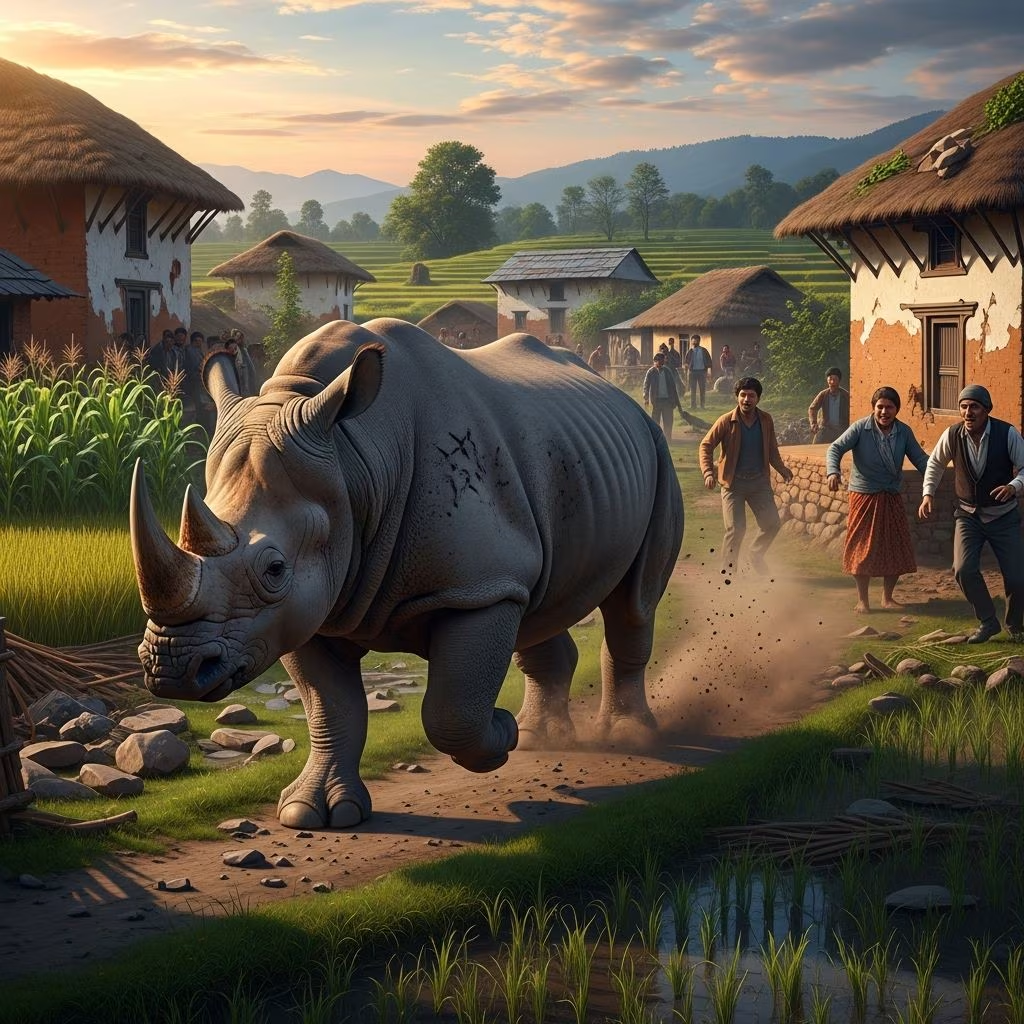
In the lush lowlands of southern Nepal, a conservation miracle is unfolding—but at a steep human cost. Chitwan National Park, a UNESCO World Heritage site, boasts a thriving greater one-horned rhino population that has rebounded from near extinction. Yet, this success story has a dark side: rhinos increasingly venture into nearby towns like Sauraha and Meghauli, charging at residents, destroying crops, and claiming lives. Recent incidents underscore a growing crisis where protected wildlife collides with everyday human life.
Once numbering fewer than 100 in the 1960s, Nepal’s one-horned rhinos have exploded to over 750 today, thanks to rigorous anti-poaching efforts, habitat restoration, and translocation programs.1 Chitwan National Park serves as the epicenter, sheltering about 700 of these massive herbivores. Their resurgence is a testament to Nepal’s commitment to biodiversity, but rapid population growth strains limited forest areas.
Experts attribute the boom to successful breeding and protection measures. However, with forests unable to sustain the numbers, rhinos push boundaries, raiding farmlands and urban fringes for fresh grass and water. This isn’t isolated; similar pressures affect elephants and tigers, but rhinos’ aggressive temperament makes encounters particularly lethal.1
Urban rhino raids have become alarmingly frequent. In one harrowing event near Sauraha, a rhino stormed into town, killing a woman and injuring several others as panicked residents fled through streets.3 Witnesses described chaos: the beast charging vehicles, overturning market stalls, and pursuing fishermen along riverbanks.
Another tragedy struck in Chitwan when a young man gathering fodder by the Marad River was fatally gored.4 These aren’t anomalies. Since 1998, rhinos have killed 55 people, with five fatalities last year alone.1 Survivors recount narrow escapes, like Isswari Chapagain climbing trees to evade charges, noting rhinos’ danger surpasses even tigers.1
Habitat loss drives this exodus. Chitwan’s forests, though expanded, can’t keep pace with rhino numbers. Human infrastructure encroaches: road expansions create deadly ditches where 165 rhinos have perished since records began.1 Electric fences shock others, while river constructions alter flows, shrinking grazing areas and intensifying food competition.
Climate change exacerbates issues. Warming temperatures fuel territorial fights—36 rhinos died from such clashes in 2022 alone—pushing subordinates outward.1 Proximity to livestock spreads diseases, and poaching claims at least six yearly. Orphan rhinos, smelling human scents, face rejection by wild herds, compelling repeated town visits.1
| Factor | Impact on Rhinos | Human Consequences |
|---|---|---|
| Overpopulation | Forces dispersal beyond park | Increased attacks in towns |
| River Alterations | Reduced grazing, competition | Raids on farmlands |
| Infrastructure | Ditches, fences kill rhinos | False sense of security for people |
| Territorial Fights | Deaths, displacement | More aggressive wanderers |
Local communities bear the brunt. In Meghauli and Sauraha, rhinos aren’t abstract threats—they invade homes, trample fields, and turn streets into battlegrounds. A fisherman shared his terror: ‘The rhino charged from the water, hitting our boat and breaking my limbs.’1 Compensation is uneven: park attacks qualify for government aid, but home defenses do not, leaving families destitute.1
Women and children, often foraging, are especially at risk. Economic losses mount from ruined harvests, with no recourse for farm protectors. This imbalance fuels resentment: why prioritize animals over people?
Nepal’s rhino protection is ironclad—legally, even attacking animals can’t be harmed. This stems from global acclaim for Chitwan’s recovery, drawing tourists and funding. Yet, locals feel sidelined. Researchers criticize the government for wildlife bias, urging integrated solutions.1
Positive steps include community patrols and early warning systems via apps and sirens. Translocation to other parks like Shuklaphanta relieves pressure, but scaling up is needed. Buffer zones with tall grasses act as natural barriers, while eco-fencing guides rhinos back without harm.
Nepal’s plight mirrors worldwide human-wildlife conflicts. In Africa, elephant crop raids displace farmers; India’s tiger corridors spark clashes. Success stories, like Namibia’s community conservancies, offer models where locals benefit from tourism, reducing poaching and resentment.
For Chitwan, sustainable tourism—rhino safaris generating revenue—could fund compensation and barriers. Educating visitors on safe distances is crucial, as tourist attacks underscore shared responsibility.1
Stay calm, back away slowly without turning your back. Climb sturdy trees or structures if charged—rhinos have poor eyesight but keen hearing and smell.
Locals report rhinos as deadlier due to their speed (up to 30 mph) and unpredictable charges, outpacing tiger stealth attacks.1
Choose ethical operators, follow guides, support community funds, and advocate for balanced conservation.
Yes, but at a slowing rate; management aims to stabilize at sustainable levels through translocations.
It intensifies droughts, alters rivers, and heightens aggression via habitat stress.1
The rhino’s urban raids spotlight a pivotal challenge: sustaining conservation wins without sacrificing human lives. By blending science, policy, and community voices, Nepal can forge a path where thriving wildlife and safe communities coexist. Chitwan’s story isn’t just local—it’s a blueprint for our crowded planet.
