

 Travel Essentials
 Travel Essentials

Discover Nevada cattle drives, where riders relive Old West tradition, learn ranching skills, and cross rugged high-desert trails.
 Travel Essentials
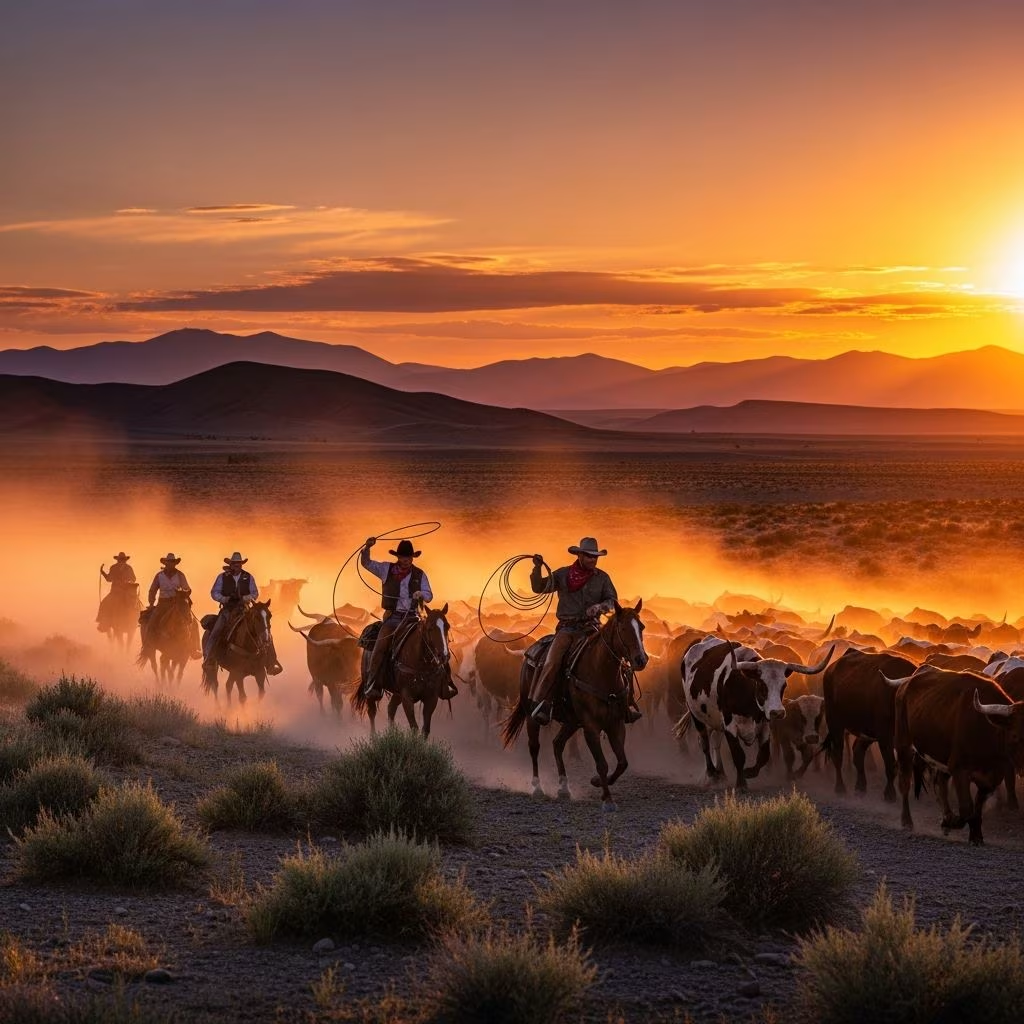
Deep in the heart of Nevada’s expansive high-desert valleys, the echo of hoofbeats and the lowing of cattle still resonate with the spirit of the American West. These cattle drives represent more than mere livestock movement; they embody a enduring tradition that has shaped the Silver State’s ranching culture since the mid-19th century. Today, enthusiasts can step into the boots of historical cowboys, participating in multi-day treks that traverse rugged terrain and foster a profound connection to the land.
Nevada’s cattle industry took root in the 1850s, fueled by the fertile valleys that dotted the landscape. Early cattlemen established operations primarily in the western regions, gradually expanding northward as opportunities grew. By the 1870s, herds roamed freely across northern Nevada, sustained by abundant grazing lands.
The pivotal moment arrived with the completion of the transcontinental railroad in 1869, transforming a nascent trade into a booming enterprise. This iron lifeline connected remote ranches to major markets, enabling efficient shipment of beef to distant cities like Omaha and San Francisco. Longhorn cattle, driven northward from Texas, were fattened in Nevada’s lush pastures before loading onto railcars, marking the birth of a prosperous era.
| Era | Key Development | Impact on Nevada |
|---|---|---|
| 1850s | Initial settlement in western valleys | Foundation of local herds |
| 1870s | Expansion to northern ranges | Widespread grazing operations |
| 1869 | Transcontinental railroad completion | Market access and industry boom |
The broader context of U.S. cattle drives, peaking between the 1850s and 1910s, saw millions of head moved from Texas to railheads in Kansas and beyond. Nevada played a crucial role in this network, serving as a vital fattening ground en route to eastern stockyards. Towns sprang up along these routes, becoming hubs of commerce and culture known as ‘cow towns.’
While large-scale commercial drives faded with expanded rail networks and barbed wire fencing, the practice persisted in smaller, practical forms. Ranchers moved herds across their properties to fresh pastures, preventing overgrazing and maintaining herd health. This adaptation kept the skills and traditions alive, evolving into the experiential events we see today.
Contemporary cattle drives in Nevada offer an authentic immersion into cowboy life, blending physical challenge with cultural enrichment. One standout example is the Reno Rodeo Cattle Drive, an annual tradition spanning five days and roughly 100 miles of northern Nevada terrain. Participants help wrangle over 300 steers from starting points like Doyle, California, through valleys such as Red Rock and Dry Valley, culminating at the Reno rodeo grounds.
These events welcome novices and veterans alike, providing horses, instruction in roping and riding, and guidance from seasoned wranglers. Expect long hours in the saddle, dust-caked chaps, and the satisfaction of steering a living herd.
Success on a cattle drive hinges on proper outfitting. Start with sturdy cowboy boots featuring high shafts for ankle support and rugged heels to secure stirrups. Leather chaps shield legs from thorny brush and whipping branches, while a wide-brimmed hat combats relentless sun exposure.
Clothing prioritizes functionality: long-sleeved shirts for UV protection, bandanas for dust filtration, and gloves to prevent rope burns. Personal saddles are optional but must fit both rider and ranch-provided horses. Hydration gear, including canteens, is non-negotiable in arid conditions.
| Category | Recommended Items | Purpose |
|---|---|---|
| Footwear | Cowboy boots | Grip, protection, stirrup hold |
| Legwear | Chaps, jeans | Brush resistance, durability |
| Head/Upper | Hat, long-sleeve shirt, bandana | Sun/dust defense |
| Accessories | Gloves, canteen, saddle bags | Safety, essentials carry |
Physical fitness matters—core strength for balance, leg endurance for hours astride. Beginners should practice basic horsemanship beforehand. Most outfits supply tack and horses, but confirm policies.
Each day’s end brings respite at mobile camps, where chuckwagon cooks prepare hearty fare over open fires. Staples include Dutch-oven biscuits, beans simmered with bacon, and grilled steaks from the herd’s peers. Coffee brews perpetually, fueling tales swapped among firefighters-turned-wrangler crews.
Evenings foster bonds through impromptu rodeos, horseshoe pitching, or guitar-strummed songs under starlit skies. These gatherings preserve oral histories, passing down techniques from generations of buckaroos. The communal rhythm builds lasting friendships, turning strangers into trail family.
Nevada’s drives showcase diverse topography: sagebrush-studded plains give way to stark mountain passes and hidden valleys. The Reno route winds from California’s border through Red Rock Valley, skirting Dogskin Mountain, into Hungry Valley, ending amid Reno’s urban fringe—a striking contrast.
Ecologically, these paths highlight Nevada’s basin-and-range geology, with wildlife sightings of pronghorn, coyotes, and golden eagles. Seasonal wildflowers punctuate spring drives, while autumn offers cooler temps and golden aspen hues. Riders navigate washes, arroyos, and occasional creek crossings, attuning to the land’s rhythms.
Beyond riding, drives teach practical ranching arts. Learn to read cattle behavior—spotting leaders to flank or laggards to nudge. Roping practice hones precision for sorting strays. Wranglers demonstrate horse training, from ground tying to reading equine cues amid herd chaos.
Trail boss leadership ensures cohesion, with scouts ahead plotting safe paths. These skills empower participants, demystifying the romance of cowboy lore.
Capping many drives is arrival at Reno’s rodeo grounds, tying into an event tracing to 1919’s ‘Nevada Round-Up.’ Evolving into the Reno Rodeo by 1935, it celebrates livestock heritage annually. Delivering cattle symbolizes continuity, with crowds cheering the dusty procession—a living link to Wild West pageantry.
This convergence amplifies community spirit, drawing families to witness history unfold. Post-drive festivities feature rodeo competitions, reinforcing Nevada’s cowboy identity.
Yes, most Nevada drives like Reno’s accommodate novices with training and matched horses. Basic fitness and enthusiasm suffice; no prior experience required.
Fees range $1,500-$3,000 covering horses, meals, camping. Book early via official rodeo sites; spaces fill fast.
Spring (May-June) or fall avoids extremes. Expect 50-90°F days, chilly nights; pack layers.
Outfits provide horses and basics; bring personal saddle/gear if preferred. Confirm with organizers.
Moderately so—6-10 hours riding daily. Build stamina via trail rides beforehand.
In an era of screens and cities, Nevada cattle drives offer tactile authenticity. They sustain rural economies, teach land stewardship, and immortalize a fading craft. Whether chasing horizons or forging bonds, these journeys redefine adventure, inviting all to claim a piece of the West.
