

 Travel Essentials
 Travel Essentials

Discover New Mexico's Space Trail: 52 sites chronicling space history, museums, observatories, and training grounds for astronauts. Perfect for space fans.
 Travel Essentials
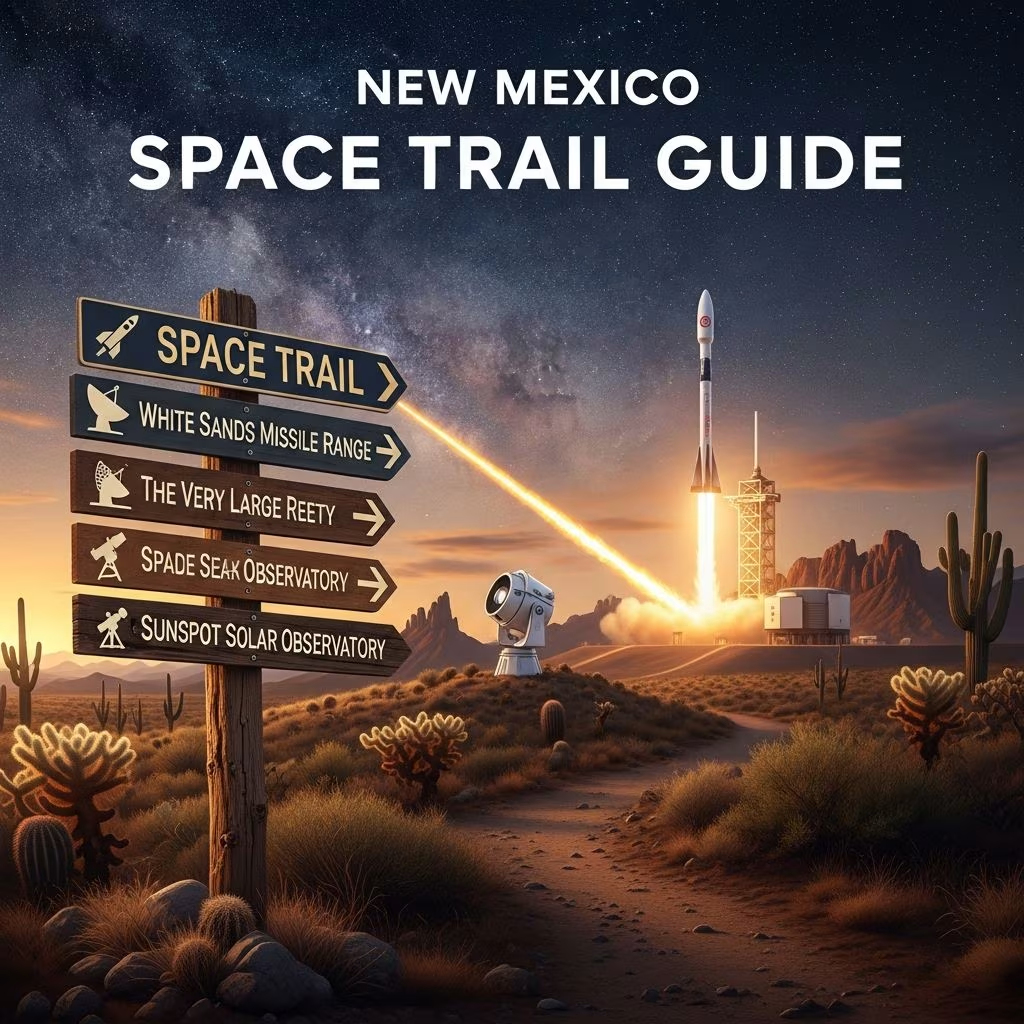
Embark on a journey through New Mexico’s vast landscapes, where the stars feel closer and history meets the future. The New Mexico Space Trail connects 52 remarkable sites that highlight the state’s pivotal role in space exploration, from early rocketry to today’s commercial spaceflights. This self-guided road trip offers museums packed with artifacts, rugged terrains that trained moonwalkers, and facilities pushing the boundaries of human space travel.
New Mexico’s dry deserts, clear skies, and strategic location have made it a hub for aerospace innovation since the mid-20th century. The state hosted critical developments during the Space Race, including rocket testing and astronaut preparation. Today, it hosts Virgin Galactic’s Spaceport America, symbolizing the shift to private space tourism. The trail weaves these stories together, spanning archaeological wonders to high-tech labs, inviting travelers to trace humanity’s cosmic footsteps.
With sites scattered across diverse regions—from the arid Tularosa Basin to forested mountains—the trail accommodates various itineraries. Families, history buffs, and sci-fi enthusiasts alike find appeal in its blend of education and adventure. Official maps from the New Mexico Museum of Space History guide visitors, ensuring no landmark is missed.
Begin your expedition at the New Mexico Museum of Space History in Alamogordo, perched on a hillside with panoramic views. This multi-level complex chronicles spaceflight evolution through interactive exhibits on rocketry, satellite tech, and human spaceflight. Highlights include the International Space Hall of Fame, honoring pioneers like Wernher von Braun, and the John P. Stapp Air & Space Park displaying real spacecraft and test vehicles.
Adjacent attractions like the “Living and Working in Space” gallery immerse visitors in astronaut daily life, while tours to the Trinity Site—where the first atomic bomb detonated—link nuclear tech to rocketry origins. Open select days, these tours reveal blast craters still visible decades later.
New Mexico’s geology mirrored lunar landscapes, making it ideal for Apollo-era training. Sites like the Valles Caldera National Preserve, with its volcanic caldera, taught astronauts to identify rock types under Earth conditions simulating the Moon. The Rio Grande Gorge near Taos provided practice in rugged terrain navigation, while Philmont Scout Ranch hosted survival drills.
| Training Site | Location | Key Use |
|---|---|---|
| Valles Caldera | Near Los Alamos | Lunar geology identification |
| Rio Grande Gorge | Taos area | Terrain navigation |
| Philmont Ranch | Cimarron | Survival and field training |
| New Mexico School for Blind | Alamogordo | Sensory navigation drills |
These preserved areas now offer hiking trails where visitors ponder the same vistas astronauts studied. The preserves blend education with recreation, featuring ranger-led talks on space history.
Clear mountain air hosts world-class observatories. The National Solar Observatory at Sunspot, in Lincoln National Forest, focuses on solar activity with massive telescopes. Visitors explore the Sunspot Visitor Center, viewing equipment that tracks sunspots and solar flares. A short drive from Cloudcroft, it combines alpine beauty with stellar science.
Other sites include radio telescopes scanning for extraterrestrial signals, tying into New Mexico’s UFO lore. The Very Large Array (though not always listed core trail) inspires with its giant dishes, but trail stops emphasize local solar and optical arrays.
No trail visit is complete without Spaceport America, the world’s first purpose-built commercial spaceport near Truth or Consequences. Home to Virgin Galactic and others, it hosts suborbital flights for tourists. Guided tours showcase the futuristic terminal, runway, and control centers, offering glimpses of passenger spacecraft.
Nearby, White Sands Missile Range tested early rockets like the V-2, foundational to U.S. space efforts. Stallion Range facilities continue hypersonic research, bridging past and present.
New Mexico’s space narrative includes enigmatic events. The Socorro UFO incident, where officer Lonnie Zamora witnessed a craft, fuels speculation at marked sites. Cosmic Campground, under dark skies, enhances stargazing, perfect for pondering alien visitors.
Ancient petroglyphs at sites like Comanche Gap depict star-like figures, suggesting early astronomical awareness. These tie prehistoric observations to modern pursuits.
With 52 sites, customize your route: a southern loop hits Alamogordo and Spaceport; northern paths cover Taos and Valles Caldera. Drive times vary; allow 7-10 days for comprehensive exploration. Camp at Cosmic sites or stay in Alamogordo hotels.
Fuel up in towns like Socorro or Cloudcroft. Roadside diners serve green chile alongside space tales from locals.
Time visits for star parties at observatories or the annual Space Symposium in Alamogordo. These feature telescope viewings, expert lectures, and rocket launches. The museum hosts space camps for kids, fostering future explorers.
The trail promotes sustainable tourism, with sites emphasizing conservation. Spaceport initiatives explore eco-friendly launches, while preserves protect training terrains. New Mexico eyes expanded roles in Artemis missions.
A network of 52 sites celebrating the state’s space contributions, from museums to labs.
1-2 weeks by car, depending on pace and stops.
Yes, simulators, planetariums, and hikes suit all ages.
Guided tours available; flights for qualified passengers.
Yes, at Cosmic Campground and national preserves.
Pack binoculars, sun protection, and a star chart. Engage locals for untold stories. The trail not only educates but inspires wonder about our place in the universe. Whether chasing rockets or hiking astronaut paths, New Mexico delivers out-of-this-world experiences.
