

 Travel Essentials
 Travel Essentials

Explore the history, music, dance, and community spirit of New Orleans second line parades, from their roots in mutual aid societies to modern street festivities.
 Travel Essentials
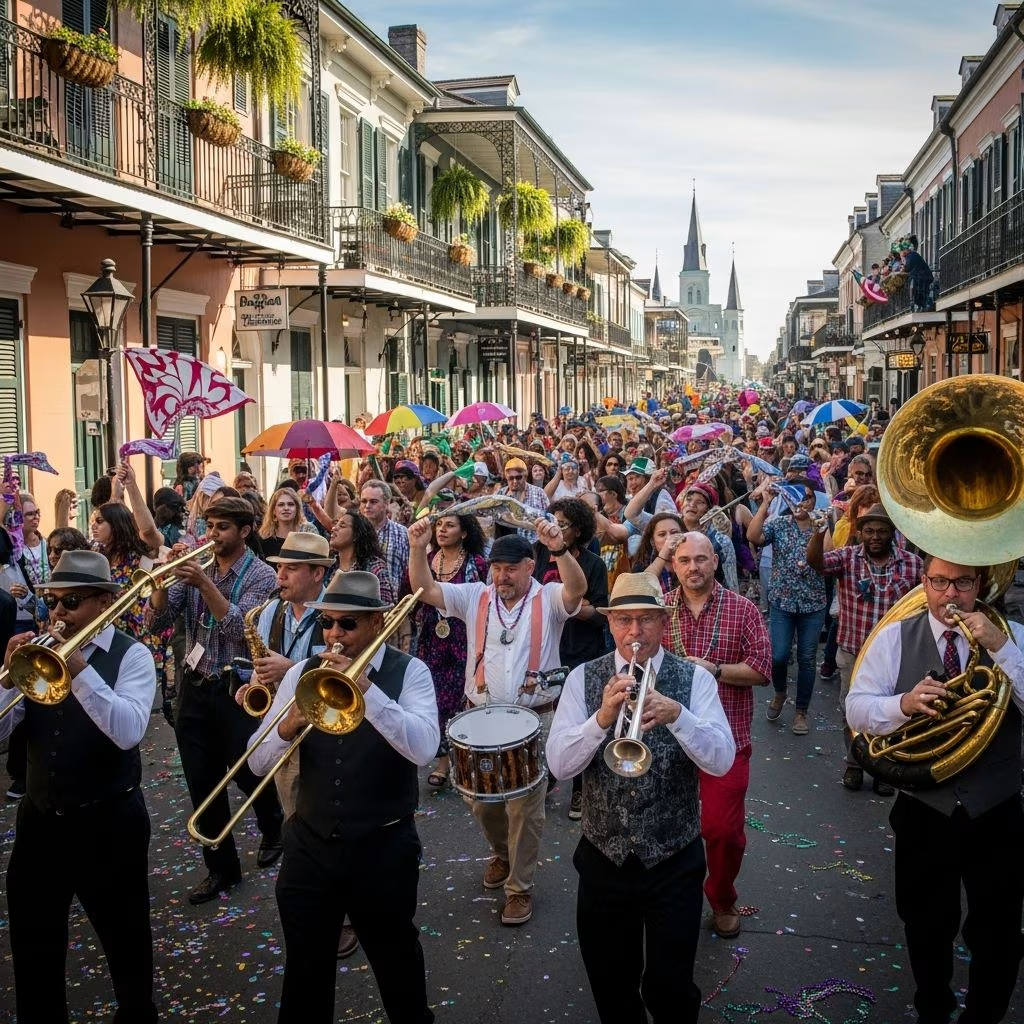
The second line parade stands as one of New Orleans’ most iconic cultural expressions, a lively procession where brass bands lead marchers through the streets in a celebration of life, community, and resilience. Originating in the African American neighborhoods, these events transform ordinary urban landscapes into vibrant festivals of music and movement.
Second line parades trace their origins to the late 19th century, emerging from the practices of mutual aid and benevolent societies formed by freed Black citizens after the Civil War. These organizations provided essential services like loans, insurance, and funeral support to members who lacked access to mainstream institutions, using parades as both community gatherings and promotional events.
Rooted even deeper in history, the tradition draws from African-derived dances and gatherings in Congo Square, where enslaved and free Blacks congregated on Sundays for drumming, singing, and ancestral honors dating back to the 18th century. This foundation evolved into structured processions, blending West African rhythms with New Orleans’ burgeoning brass band culture.
At their core, second lines developed alongside jazz funerals, where a “first line” of family, pallbearers, and band leads the procession to the cemetery in somber tones, followed by a lively “second line” of followers who erupt into dance and song on the return journey, symbolizing life’s triumph over death. This duality—mourning turning to joy—mirrors the city’s ethos of resilience.
Beyond funerals, Social Aid and Pleasure Clubs adopted second lines for annual celebrations, birthdays, anniversaries, and neighborhood pride. These clubs, numbering dozens today, host parades from late August through June, primarily on Sundays, weaving through historic areas like Tremé, Central City, and Marigny.
A typical second line features a core “first line” of club members in matching suits or T-shirts, clutching handkerchiefs or parasols, followed by the brass band blasting upbeat jazz, funk, and hip-hop infused tunes. The “second line” swells with anyone who joins—locals, tourists, children—dancing freely without barriers.
The soundtrack is New Orleans brass band music, a century-old genre born from second lines. Bands like the TBC Brass Band or Hot 8 Brass Band mix traditional dirges with contemporary beats, keeping the tradition evolving. Music serves as cultural glue, archiving neighborhood stories through improvised lyrics and routes.
These performances aren’t static; they respond to the crowd’s energy, with drummers laying down syncopated grooves that compel movement. The result is a mobile concert where streets become dance floors.
Second lines function as “culture as infrastructure,” fostering mutual aid and civic life in Black neighborhoods long underserved by formal systems. They advertise clubs’ benevolence while affirming dignity, turning grief into communal joy.
In times of crisis, like post-Hurricane Katrina, second lines reemerged as symbols of defiance and recovery, proving the tradition’s role in survival. Today, they connect generations, with Mardi Gras Indians often joining in feathered splendor.
| Era | Key Developments | Cultural Impact |
|---|---|---|
| 18th-19th Century | Congo Square gatherings; mutual aid societies form | Roots in African traditions; welfare support |
| Late 1800s | Jazz funerals evolve; clubs host parades | Blend of mourning and celebration |
| 20th Century | Annual club parades; brass band innovation | Neighborhood identity and resilience |
| 21st Century | Post-disaster revivals; modern music fusions | Global symbol of New Orleans spirit |
Contemporary second lines inspire art beyond streets. The “Second Line in the Sky” installation on Bourbon Street, from December 1, 2025, to January 18, 2026, features 1,000 hand-crafted flags and lights honoring tragedy survivors, transforming grief into luminous tribute with family input.
These events draw global visitors, yet remain neighborhood-centric, prioritizing local participation over tourism.
To join respectfully:
Respect the space: these are sacred community rites, not just spectacles.
Urban growth, noise ordinances, and gentrification threaten routes, yet clubs advocate for cultural corridors. Preservation hinges on youth involvement, with programs teaching brass playing and dance.
A spontaneous or organized street procession led by a brass band, with participants dancing through neighborhoods in celebration.
Primarily Sundays from late August to June, tied to Social Aid and Pleasure Club anniversaries.
Yes, enthusiastically—follow etiquette and immerse yourself.
First line: core group and band; second line: followers who join the dance.
Absolutely, with no barriers; tipping bands is appreciated.
These parades encapsulate New Orleans’ joie de vivre—earned through history’s trials. They invite all into a moving commons of joy, memory, and belonging, ensuring Black cultural vitality pulses through the city’s veins.
