

 Travel Essentials
 Travel Essentials

Explore the world's most vibrant New Year's Eve celebrations, from Times Square's ball drop to beach parties in Rio and traditional festivals across continents.
 Travel Essentials
The transition from one year to the next transcends borders and cultures, yet each corner of the globe has developed its own distinctive way of marking this momentous occasion. While champagne toasts and fireworks are common threads woven throughout celebrations worldwide, the methods, meanings, and memorability of New Year’s Eve festivities vary dramatically depending on geography, climate, and cultural heritage. Whether you’re drawn to massive public gatherings, intimate family traditions, or adventurous travel experiences, understanding the world’s diverse approaches to New Year’s Eve can help you decide where and how to celebrate.
Major metropolitan areas around the globe have become synonymous with grandiose New Year’s Eve productions that attract millions of visitors and viewers annually. These urban celebrations often feature synchronized countdowns, elaborate light displays, and performances by international artists.
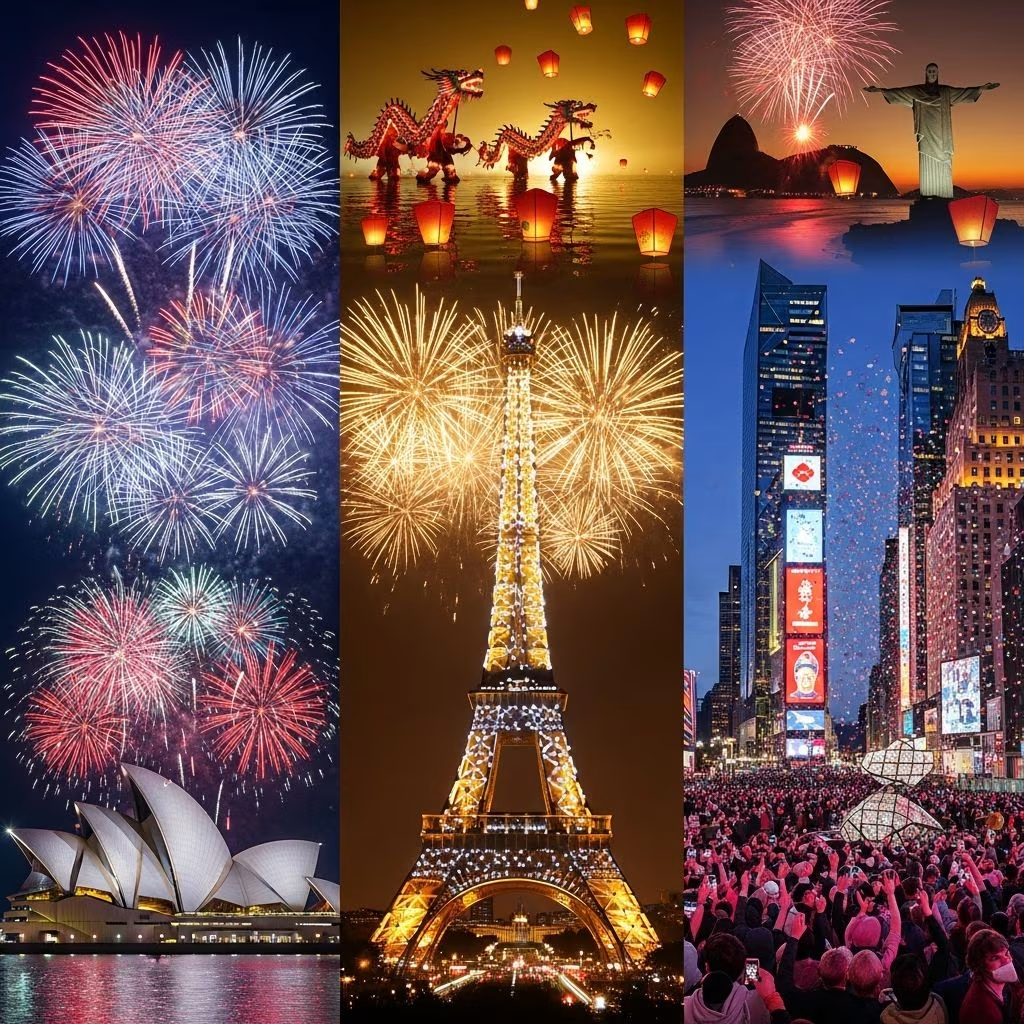
New York City’s Times Square Ball Drop remains perhaps the most recognizable New Year’s Eve moment globally. Each year, more than one million people converge on Times Square to witness an 11,875-pound crystal ball descend precisely at midnight. The spectacle extends far beyond the physical location—over one billion people worldwide tune into broadcasts of the event, with many watching Dick Clark’s New Year’s Rockin’ Eve, an annual television special featuring the ball drop and performances by popular musicians. The tradition represents American popular culture at its grandest, combining technological precision with collective anticipation.
Rio de Janeiro presents a contrasting yet equally impressive urban celebration centered on natural beauty rather than urban infrastructure. Millions of people flock to Copacabana Beach to witness a dazzling midnight fireworks display, transforming the oceanfront into a glittering venue for celebration. The beach setting creates an entirely different atmosphere than Times Square, with revelers often dressed in white—a tradition believed to bring good fortune and peace for the coming year.
Singapore’s Marina Bay hosts one of Asia’s largest New Year’s Eve fireworks shows, organized by the Urban Redevelopment Authority. The waterfront setting provides an elegant backdrop for the countdown, attracting both locals and international tourists seeking an alternative to Western celebrations.
Beyond the modern spectacles of major cities, many regions maintain time-honored customs that have been passed down through generations, often with deeper historical or spiritual significance.
Scotland’s Hogmanay represents one of Europe’s most distinctive New Year’s celebrations. This two-day festival features the Torchlight Procession, where parade participants march through streets carrying torches, culminating in the burning of a giant Viking effigy. At midnight, the bells of Edinburgh Castle toll to mark the new year’s arrival, and participants gather to sing “Auld Lang Syne,” the traditional Scottish song that has become synonymous with New Year’s celebrations worldwide.
The Czech Republic observes New Year’s Eve as “Silvestr,” named in honor of Pope Silverster who died on December 31, 335. Rather than emphasizing public spectacles, Silvestr celebrates through intimate gatherings centered on elaborate dining and toasting. As evening approaches, grand fireworks displays light up cities, with Prague offering especially impressive aerial presentations.
Hungary’s Szilveszter combines home gatherings with public street parties, featuring traditional Hungarian foods including frankfurter sausages with horseradish, lentil soup, fish, and roast pig. Champagne flows throughout the evening, and at midnight, many Hungarians sing their national anthem as a collective expression of unity and hope.
Coastal destinations leverage their natural environments to create memorable New Year’s Eve experiences distinct from urban celebrations.
Brazil’s Beach Tradition extends beyond Rio to encompass a nationwide custom of jumping over seven waves at midnight for good luck. This ritual, performed on beaches throughout the country after the stroke of midnight, represents an interactive tradition where participants make one wish per wave, totaling seven wishes for the new year. The combination of music, sun, and summer atmosphere creates a celebratory mood unique to Southern Hemisphere celebrations occurring during warm weather.
Mexico City’s Zócalo square erupts in celebration featuring costumes, dancing, and fireworks at midnight. Street vendors line the plaza, and food and drink vendors ensure the festival atmosphere continues throughout the evening. The city’s tradition encompasses both modern party elements and cultural expressions through dance and traditional music.
Not all New Year’s Eve celebrations prioritize public gatherings or commercial spectacles. Many cultures maintain traditions emphasizing family connection, spiritual observance, or communal participation.
Armenia’s Approach centers on elaborate family feasts featuring fine, rich foods including meats, pastries, fruits, nuts, and salads. Beyond gathering with immediate family, Armenians traditionally make visits to various neighbors’ and friends’ houses throughout the evening to exchange greetings and well-wishes. This practice extends the celebration beyond single households, creating a network of interconnected social interactions throughout communities.
Rwanda’s Celebrations blend modern and traditional elements, with citizens attending church services, participating in social gatherings, and organizing family activities. This approach reflects spiritual and communal values alongside secular celebration.
Ghana’s Festivities present diverse choices, with some Ghanaians attending church while others prefer nightclubs, pubs, or street celebrations. Regardless of location, fireworks illuminate major cities including Accra and Tema at midnight, providing a common focal point for celebration.
Certain New Year’s Eve traditions involve specific rituals believed to carry symbolic meaning for the coming year.
Spain’s Grape Tradition requires consuming twelve grapes at midnight, with each grape representing a month of the coming year. This practice combines elements of chance and intention, as eating the grapes in the precise timeframe while the clock strikes midnight adds an element of challenge to the ritual.
Ireland’s Pot-Banging Custom involves residents literally banging on pots as the new year arrives. This noisemaking tradition serves both practical and symbolic purposes—historically helping to drive away negative influences while simultaneously announcing the new year’s arrival to the broader community.
While the Gregorian calendar’s New Year is observed internationally, many Asian cities have developed significant celebrations alongside or instead of traditional New Year’s observances.
Vietnam’s Urban Celebrations concentrate in Ho Chi Minh City’s District 1, where main streets close to accommodate massive live concerts during New Year’s Eve. Bars, clubs, and restaurants throughout the district host festivities, creating an energetic urban celebration combining live entertainment with food and beverage service.
Thailand’s Urban Centers feature countdowns, fireworks, concerts, and major events at locations including CentralWorld Square and areas along the Chao Phraya River in Bangkok, plus Pattaya Beach in Pattaya. Hotels, pubs, restaurants, and nightclubs throughout the country organize New Year’s Eve parties providing food, entertainment, and music, typically remaining open until morning hours.
Japan’s Celebrations in major cities combine concerts, countdowns, fireworks, and other events, though many Japanese observe traditional New Year practices on different dates according to lunar calendars.
The Bahamas’ Junkanoo Parade represents a world-famous celebration combining elaborate costumes, live bands, and street performers in a Mardi Gras-style spectacle. These parades culminate at beaches just before midnight fireworks, extending celebrations well into New Year’s Day morning.
Various Caribbean islands host beach parties and water-centered celebrations, capitalizing on warm tropical climates and oceanfront venues that create natural party atmospheres.
Poland’s New Year’s Eve includes both indoor and outdoor festivities, with large open-air concerts held in major city squares. Kraków’s Main Square hosts between 150,000 and 200,000 revelers celebrating with live music and fireworks displays over St. Mary’s Basilica. Similar festivities occur throughout other Polish cities.
Bosnia and Herzegovina’s Celebrations transform city streets with decorations, fireworks, and concerts. Restaurants, clubs, cafes, and hotels throughout the country organize New Year’s Eve parties. In Sarajevo, crowds gather in the Square of Children of Sarajevo where local rock bands perform, with trumpet and rock groups continuing entertainment into early morning hours before a midnight fireworks display.
London, England hosts metropolitan celebrations featuring fireworks over the Thames River and public gatherings in central locations.
Selecting where to celebrate New Year’s Eve depends on several factors beyond simply identifying famous celebrations. Consider climate preferences—do you want summer-season beach parties or winter festival atmospheres? Evaluate crowd tolerance; some destinations attract hundreds of thousands while others maintain more intimate scales. Assess your celebration style: do you prefer organized public events, family gatherings, or adventurous travel experiences? Budget considerations vary dramatically depending on destination and timing, with some celebrations requiring advance booking for accommodations while others offer spontaneous celebrations.
Research specific destination celebrations in advance, as traditions vary year to year and COVID-19 impacts on global travel patterns have changed some traditional celebrations. Many destinations offer festival schedules, accommodation packages, and organized celebration events designed specifically for New Year’s Eve visitors.
Despite profound differences in celebration methods, traditions, and settings, a unifying element transcends all New Year’s Eve observances worldwide: the collective human desire to mark transitions, express hope for the future, and share meaningful moments with community and loved ones. Whether gathered in Times Square’s masses, jumping over Brazilian waves, singing in Edinburgh, or feasting with Armenian families, people worldwide participate in rituals acknowledging endings and beginnings. Understanding these diverse approaches to celebrating New Year’s Eve reveals not merely different customs but fundamental human values—connection, renewal, and optimism—expressed through culturally specific lenses.
