

 Travel Essentials
 Travel Essentials

A decade on from the 2016 referendum where Kiwis voted to keep the current flag, this article delves into the two-stage process, key designs, voter turnout, criticisms, and lasting impacts on New Zealand's symbols.
 Travel Essentials
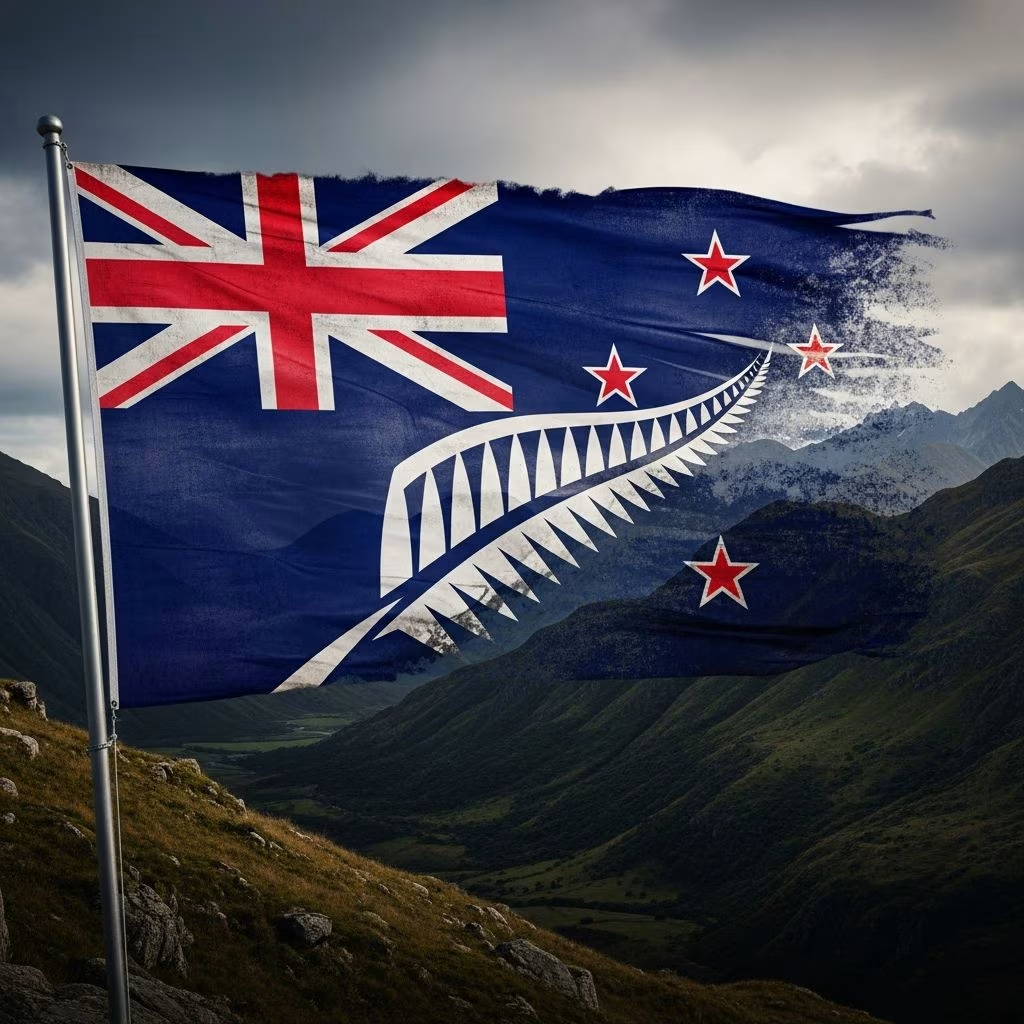
New Zealand’s 2015-2016 flag referendums marked a pivotal moment in the country’s quest for national identity, pitting tradition against modernity in a democratic showdown. Initiated by Prime Minister John Key, the process invited citizens to reimagine their flag, culminating in a decision to retain the existing design featuring the Union Jack and Southern Cross stars.
The push for a new flag stemmed from long-standing discussions about New Zealand’s evolving identity, distinct from its British colonial past. In 2014, ahead of the general election, John Key pledged a referendum if re-elected, aiming to address criticisms that the current flag—an adaptation of the 1902 design—felt outdated amid growing calls for symbols reflecting Maori heritage and local flora like the silver fern.
Post-election, the government established a cross-party Flag Consideration Panel in early 2015. This 12-member group, including figures like Malcolm Mulholland, sifted through over 10,000 public submissions to shortlist 40 designs, then four finalists, with a fifth added amid public pressure.
From November 20 to December 11, 2015, the first binding referendum asked voters: “If the New Zealand flag changes, which flag would you prefer?” Participants ranked five options using preferential voting.
| Design Name | Designer | Key Features | First Round Performance |
|---|---|---|---|
| Black, White & Blue | Kyle Lockwood | Silver fern on black, white, blue Southern Cross stars | Winner, advanced to final |
| Red Peak | Public outcry addition | Five colorful peaks symbolizing Southern Cross | Strong contender but eliminated |
| Laser Kiwi | Lucy Gray | Stylized kiwi with laser beam, koru elements | Popular online, didn’t advance |
| Other Silver Ferns | Various | Red or black ferns with stars | Competitive but outranked |
Kyle Lockwood’s black, white, and blue silver fern emerged victorious, blending sporting symbolism with celestial navigation nods. Turnout reached around 67%, lower than general elections’ 74-80%.
Between March 3 and 24, 2016, over 2 million Kiwis voted in the head-to-head: Lockwood’s silver fern versus the incumbent flag. Official results confirmed 56.6% (about 1.2 million votes) for retention, 43.1% for change, with 67.3% turnout and minimal informal votes (0.24%).
This outcome dashed hopes for immediate change, though the 43% pro-new flag surprised pollsters expecting only 20-30% support, hinting at underlying sentiment for evolution.
Despite its democratic novelty—the first transparent flag selection worldwide—the referendums faced backlash. Critics lambasted the finalists’ uniformity (heavy on silver ferns and stars), amateur aesthetics, and Key’s overt favoritism, dubbing it a costly distraction amid economic woes.
International and local media mocked designs like the Laser Kiwi, which gained meme status online despite elimination. John Key later cited the saga as a retirement regret in 2016.
Beyond the finalists, submissions highlighted Kiwi ingenuity. The Laser Kiwi by Lucy Gray, with its fiery bird motif, exploded on social media, symbolizing bold futurism. Silver fern variants evoked rugby pride, while koru spirals nodded to Maori ta moko tattoos.
These reflected tensions: retain British ties or embrace indigenous and natural emblems? The debate underscored New Zealand’s bicultural journey.
Ten years on, as of 2026, insiders revisit the episode. Vexillologist Brian Cham and panelist Mulholland defend the process as optimal, though alternatives like single-vote selection are pondered. The vote left identity queries lingering—does the flag still represent a republic-aspiring nation?
Recent polls show persistent 40%+ support for change, fueled by republicanism and ANZAC distinctions. The Department of the Prime Minister and Cabinet archives the project, preserving lessons.
New Zealand’s effort mirrors global shifts, like South Africa’s post-apartheid rainbow flag or Nepal’s recent geometric redesign. Unlike rushed overhauls, NZ’s methodical referendums set a benchmark, even in failure.
| Country | Year | Reason for Change | Process |
|---|---|---|---|
| South Africa | 1994 | End apartheid | Public competition |
| Canada | 1965 | Distinct from UK | Parliamentary vote |
| Nepal | 2020 | Modernize symbolism | Presidential decree |
The referendums illuminated democratic design: public input fosters buy-in but risks populism over expertise. They boosted vexillology awareness in NZ, with ongoing designs like Lockwood’s enduring in sports contexts.
For future bids, experts advocate clearer mandates, professional curation, and tying changes to constitutional shifts like republicanism.
To better reflect modern identity, distancing from colonial symbols while honoring Maori and natural icons.
56.6% kept the current flag; 43.1% favored the silver fern alternative.
Kyle Lockwood’s black, white, blue silver fern.
Yes, per the 2015 Flag Referendums Act.
Possible, given 43% support and evolving sentiments.
The flag debate endures as a mirror to New Zealand’s soul—rooted yet reaching forward.
