

 Travel Essentials
 Travel Essentials

Discover how to plan and execute a motorhome journey through New Zealand, including accommodation options, scenic routes, and essential travel tips.
 Travel Essentials
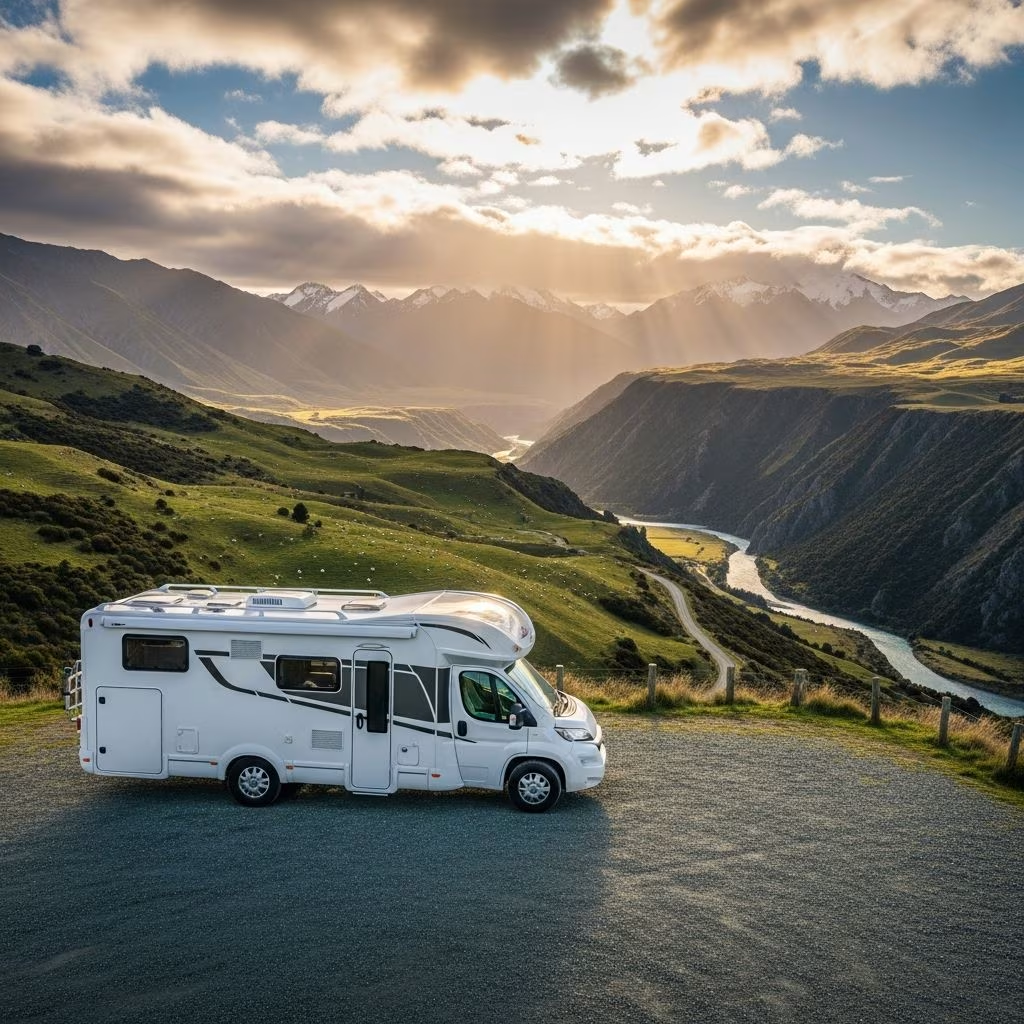
New Zealand’s diverse landscape—from volcanic plateaus to fjords to subtropical coastlines—makes it an ideal destination for motorhome and campervan exploration. The country’s well-maintained road networks, abundant accommodation options, and stunning natural attractions combine to create opportunities for independent travelers seeking flexibility and immersion in the local environment. This comprehensive guide covers everything necessary to plan and execute a successful motorhome journey across Aotearoa.
Travelers exploring New Zealand by motorhome encounter several distinct accommodation categories, each offering different amenities and cost structures. Understanding these options enables informed decisions about which locations best suit your travel style, vehicle type, and budget constraints.
Holiday parks represent the premium accommodation tier for motorhome travelers, typically situated in park-like environments with manicured grounds and landscaping. These facilities prioritize comfort and convenience, featuring powered sites where campervans can connect to mains electricity. Amenities commonly include hot showers, flush toilets, fully equipped kitchens or cooking areas, rubbish collection, and potable tap water. Many commercial parks occupy attractive locations near beaches, lakes, or rivers, taking advantage of New Zealand’s culture of waterfront recreation.
The Top 10 Holiday Parks chain operates 49 locations throughout New Zealand, representing a reliable network for motorhome travelers seeking consistent quality and service standards across the country. Beyond these major chains, independent commercial operators offer specialized experiences such as undercover parking in custom barns or eco-friendly camping integrated with working farms and vineyards.
The Department of Conservation (DOC) administers three distinct tiers of campsite infrastructure, each serving different traveler needs and environmental objectives.
Serviced DOC campsites occupy the upper tier, featuring comprehensive amenities comparable to commercial holiday parks including showers, flush toilets, cooking facilities, and reliable water supplies. These locations typically require advance booking during peak seasons (October through April) and charge modest nightly fees for access.
Standard DOC campsites provide basic infrastructure including toilets—frequently of the “longdrop” variety—water access through taps, streams, or lakes, and vehicle access. Additional amenities such as cold showers, rubbish bins, wood barbecues, or cooking shelters may be present but vary considerably by location. Nightly fees for standard campsites are minimal, with adults typically paying $6 and children $3 per night. These locations often occupy spectacular positions within conservation lands, offering access to natural attractions that commercial facilities cannot provide.
Basic DOC campsites represent the most austere option, offering only fundamental facilities including basic toilets and water sources (potentially requiring boiling before consumption). Access may require vehicular travel or boat transportation to remote locations. These sites remain free but mandate that visitors travel in fully self-contained motorhomes meeting Department of Conservation standards.
Freedom camping—overnight parking in undesignated locations—exists in a complex legal framework in New Zealand. Approximately 420 freedom camping sites are officially recognized and designated by DOC and local councils throughout the country, where overnight parking is explicitly permitted. These locations accommodate self-contained vehicles bearing official blue stickers indicating they meet self-sufficiency requirements including toilets and waste systems.
Travelers must exercise caution regarding freedom camping legality, as many locations prohibit overnight camping despite their public appearance. Signage designating prohibited areas exists throughout the country, and assumption that roadside parking is permissible can result in fines. Private operators also manage some freedom camping locations—such as roadside facilities near small towns—where purchase of food or beverages may entitle overnight parking privileges.
Vehicle selection fundamentally shapes the motorhome travel experience in New Zealand. Different vehicle classifications provide varying degrees of independence and flexibility regarding where overnight parking is permitted.
Self-contained vehicles equipped with onboard water supplies, toilet facilities, and waste systems unlock access to premium freedom camping locations throughout the country. These campervans, often featuring basic living infrastructure on small commercial truck chassis, provide the flexibility to park in remote locations outside designated campgrounds. Vehicle certification through official channels confirms compliance with self-containment standards.
Non-self-contained vehicles lacking independent facilities restrict overnight parking to designated campgrounds featuring toilet and waste disposal infrastructure. This limitation requires more frequent relocation to established facilities and reduces spontaneity regarding route planning and stop locations.
Vehicle size considerations balance driving comfort against access constraints. Larger motorhomes accommodate families comfortably but may encounter difficulties navigating steep winding roads or narrow gravel surfaces accessing certain remote DOC campsites. Conversely, compact converted vans optimize maneuverability and parking flexibility while sacrificing interior space and amenities.
New Zealand’s geographic configuration across two substantial islands with distinctive character informs route planning for motorhome travelers.
The North Island offers concentrated access to cultural attractions, geothermal phenomena, and diverse coastal environments. Rotorua serves as the gateway to New Zealand’s geothermal region, featuring accessible examples of bubbling mud pools, thermal springs, and Māori cultural experiences. The Coromandel Peninsula combines golden-sand beaches with native forest reserves accessible via short motorhome-friendly drives.
Auckland provides urban amenities and international transportation connections, while nearby Bay of Islands extends coastal exploration northward with subtropical character and historical significance. The drive between major North Island destinations follows well-maintained highways accommodating larger motorhomes, with frequent opportunities for scenic stops and heritage exploration.
The South Island encompasses the most dramatic landscapes within the motorhome travel circuit. Queenstown and Wanaka function as adventure activity hubs, situated amid alpine scenery and featuring extensive motorhome-friendly accommodation networks. Fiordland National Park constitutes New Zealand’s most iconic scenery, with the famous Milford Sound and Doubtful Sound accessible via scenic drives terminating at cruise departure points.
The Otago and Southern Lakes region combines vineyard tourism, heritage towns, and alpine landscapes within a manageable motorhome travel circuit. Southern Island roads often traverse narrower passages and steeper terrain than northern routes, requiring careful vehicle selection and conservative driving approaches.
Motorhome travel through New Zealand benefits substantially from advance planning and utilization of contemporary navigation tools.
Mobile applications streamline logistics by consolidating campsite locations, fuel stations, waste disposal facilities, and Wi-Fi access points into searchable digital databases. CamperMate and Rankers Camping NZ represent widely utilized applications providing real-time information and user-generated content regarding facility conditions and parking experiences. These tools enable route optimization around essential services rather than ad-hoc destination selection.
Physical navigation resources including the HEMA New Zealand Motorhome and Camping Atlas provide detailed mapping with specific annotation regarding vehicle access constraints, campsite classifications, and scenic route alternatives. Physical maps offer navigation redundancy during instances of limited mobile coverage in remote regions.
Advance booking requirements apply selectively depending on destination and season. Peak tourist months (October through April) necessitate early reservations for popular DOC campsites and commercial holiday parks, particularly at locations with limited capacity. Off-season travel (May through September) generally permits flexible arrival planning with same-day campsite selection at most destinations.
Water sourcing demands attention across different accommodation categories. Many New Zealand campsites provide water supplies from tap sources, streams, or lakes that require boiling before consumption for safety purposes. Travelers should carry portable water treatment systems or understand local advice regarding water potability before consumption.
Responsible waste management differentiates conscientious motorhome travelers from those creating environmental and community tensions. Designated waste disposal facilities exist at commercial holiday parks and many DOC locations, with specific facilities for grey water, black water, and general rubbish. Freedom camping areas require complete waste self-containment, necessitating regular facility visits for waste disposal.
Remote regions of New Zealand experience significant spacing between fuel stations and service facilities. Route planning should incorporate fuel availability information, particularly when venturing into South Island high country or remote North Island passages. Applications providing fuel station locations enable efficient planning preventing fuel range anxiety during scenic driving segments.
No. Only designated freedom camping sites, official DOC campsites, and private facilities permit overnight motorhome parking. Roadside parking outside designated areas may result in fines or vehicle relocation. Self-contained vehicles gain access to additional designated freedom camping locations unavailable to non-self-contained vehicles.
International visitors require valid passports and appropriate visas. Vehicle rental requires a valid driver’s license from your home country and often an International Driving Permit. Vehicle insurance is mandatory. Self-contained vehicle certification enables freedom camping access and should be verified before rental.
Summer months (December through February) offer warmest weather but experience peak tourist crowds and highest accommodation costs. Shoulder seasons (September-November and March-May) balance pleasant weather against reduced crowding. Winter (June-August) provides solitude and lower costs but colder temperatures and occasional road closures in alpine regions.
Budget depends substantially on vehicle selection, accommodation preferences, and travel duration. Vehicle rental ranges from approximately NZ$60-150 daily for compact campervans to NZ$150-300+ for larger motorhomes. Accommodation costs vary from free (basic DOC sites) to NZ$30-60 (standard DOC sites) to NZ$40-80+ (holiday parks). Fuel, activities, and dining create additional expenses varying with individual preferences.
Vehicle selection depends on travel group size, accessibility priorities, and driving comfort preferences. Compact vehicles excel at accessing remote locations and offer fuel efficiency but provide limited living space. Larger motorhomes offer comfort and amenities but encounter navigation challenges at certain scenic locations. Medium-sized vehicles (6-7 meter) provide balance between these considerations for most travelers.
Motorhome and campervan travel through New Zealand represents an accessible pathway to experiencing the country’s remarkable geographic and cultural diversity. By understanding accommodation options, planning routes strategically, and respecting local regulations regarding freedom camping and vehicle requirements, travelers create flexible itineraries accommodating personal interests while maintaining responsible environmental stewardship. Whether exploring dramatic fjords, geothermal regions, or subtropical coastlines, motorhome travel unlocks New Zealand’s landscapes at a deliberate pace impossible through conventional tourism infrastructure.
